Get bulk orders for 30% less than local suppliers, plus free samples.
Get bulk orders for 30% less than local suppliers, plus free samples.
A beautiful candle scent draws a customer in, but the label is what makes them pick it up. The wrong label material can peel, fade, or smudge, turning a luxury product into something that feels cheap. Choosing the right label is not just about looks—it is about performance, durability, and brand impression.
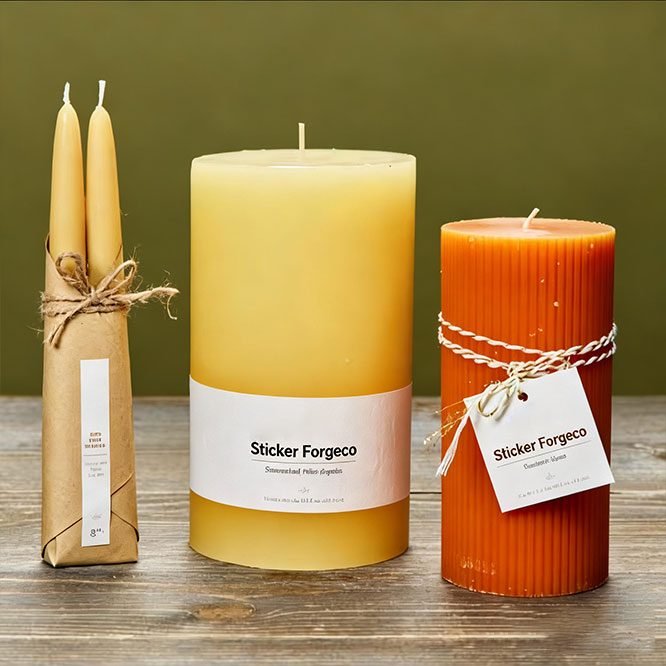
From the production floor, we see candle makers send us artwork that looks stunning on screen. But when we ask about their wax type or whether the candle will be used near water, they realize the material matters as much as the design. This guide breaks down everything you need to know about custom candle labels so your final product arrives exactly as you imagined.
Custom candle labels are self-adhesive stickers designed specifically for candle jars, tins, tubes, or boxes. They are not generic office labels. They are manufactured with specific materials, adhesives, and finishes that must withstand heat, humidity, and handling during shipping.
A standard paper label from a home printer will curl, wrinkle, or catch fire when placed near a candle's flame. Professional custom labels are engineered differently. They use specialized face stocks and adhesives that bond to glass, metal, or matte ceramic surfaces.
We print these labels on industrial equipment using CMYK or spot colors, then cut them into any shape—from simple circles to complex custom contours. The result is a label that looks professional, stays in place, and survives the life of the candle.
A custom candle label does more than just display a brand name. It serves four critical functions that directly impact your product's success.
First, it communicates essential safety information. Candle labels must include burn instructions, warnings about hot containers, and often net weight or wax type. Regulatory bodies require this information, and a professional label ensures it remains legible for the life of the candle.
Second, it reinforces brand identity. Your logo, color palette, typography, and material choice all tell a story. A kraft label suggests natural, handmade, or rustic. A clear label communicates modern, minimalist, or luxury. Customers make subconscious judgments about your brand within seconds of seeing the label.
Third, it differentiates your product on shelves. Whether online or in a physical store, candles with unique label designs—metallic finishes, custom shapes, or textured materials—stand out against plain, generic competitors.
Fourth, it protects the container surface. The label's adhesive creates a barrier that prevents scratches during shipping and handling. A removable adhesive option even allows customers to repurpose the jar after the candle burns down, which extends your brand's presence in their home.
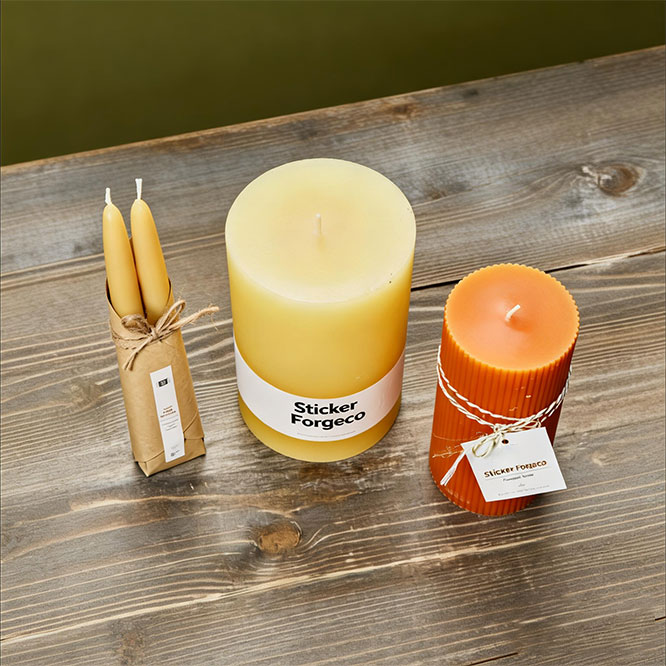
Every custom candle label we produce is made of three essential layers. Understanding these components helps you choose the right construction for your specific candle.
The face stock is the top layer that you see and touch. It can be paper (like kraft or uncoated), film (like clear polyester or white BOPP), or specialty material (like metallic or textured). The face stock determines the label's visual appearance and its resistance to moisture, oil, and tearing.
The adhesive is the middle layer that bonds the label to your candle jar or tin. Not all adhesives are created equal. A permanent adhesive creates a strong bond that is difficult to remove. A removable adhesive allows the label to peel off cleanly, which is ideal if you expect customers to reuse the jar. A high-tack adhesive is necessary for textured surfaces like matte ceramic or frosted glass.
The liner is the backing paper that protects the adhesive before application. It peels away during the labeling process. The liner's release properties affect how easily the label separates during high-speed application—whether by hand or with a labeling machine.
When these three components work together correctly, the label applies smoothly, stays in place, and performs as expected. When they do not, you get wrinkling, edge lifting, or adhesive residue.
We offer a wide range of materials for custom candle labels, but three categories consistently rise to the top for candle applications. Each has distinct characteristics, advantages, and ideal use cases.
Kraft Paper Labels
Kraft labels are made from unbleached wood pulp, giving them a natural brown or tan appearance. They have a matte, textured finish that feels organic and rustic. Kraft paper is biodegradable and often recyclable, which appeals to eco-conscious brands. However, it absorbs moisture and oils, making it unsuitable for candles that sweat or for humid environments like bathrooms. Kraft labels work best for dry-surface candles in low-humidity settings.
Clear BOPP Film Labels
Clear labels are made from biaxially-oriented polypropylene (BOPP), a thin, transparent plastic film. They create a "no-label" look that makes the candle jar appear seamless. Clear labels are completely waterproof, oil-resistant, and durable. The adhesive is typically permanent and bonds strongly to glass, metal, and smooth plastics. They let the candle color or container texture show through, creating a premium, minimalist appearance. The main limitation is that clear labels show any air bubbles or dust trapped during application.
Waterproof White BOPP or Vinyl Labels
Waterproof labels are made from synthetic materials like white BOPP or vinyl. They are opaque and available in matte or gloss finishes. These labels are 100% water-resistant, tear-resistant, UV-resistant (they will not yellow in sunlight), and compatible with extreme temperatures from -20°C to +80°C. They survive ice candle applications, bathroom humidity, and outdoor shipping conditions. The only drawback is they are not biodegradable, though some recyclable BOPP options exist.
Finishes to Consider
Beyond the base material, finishes change the label's look and feel. Gloss lamination adds shine and enhances color saturation. Matte lamination reduces glare and adds a soft, sophisticated touch. UV spot coating highlights specific design elements like logos or text. Soft-touch lamination creates a velvety, luxurious surface that feels expensive.
Candle labels come in standard shapes and sizes, but custom die-cutting allows virtually any form. The shape you choose affects application ease and visual impact.
Round labels are the most common shape for jar lids or bottom seals. Typical diameters range from 1 inch to 3 inches. A 2-inch round label fits most standard candle lid recesses.
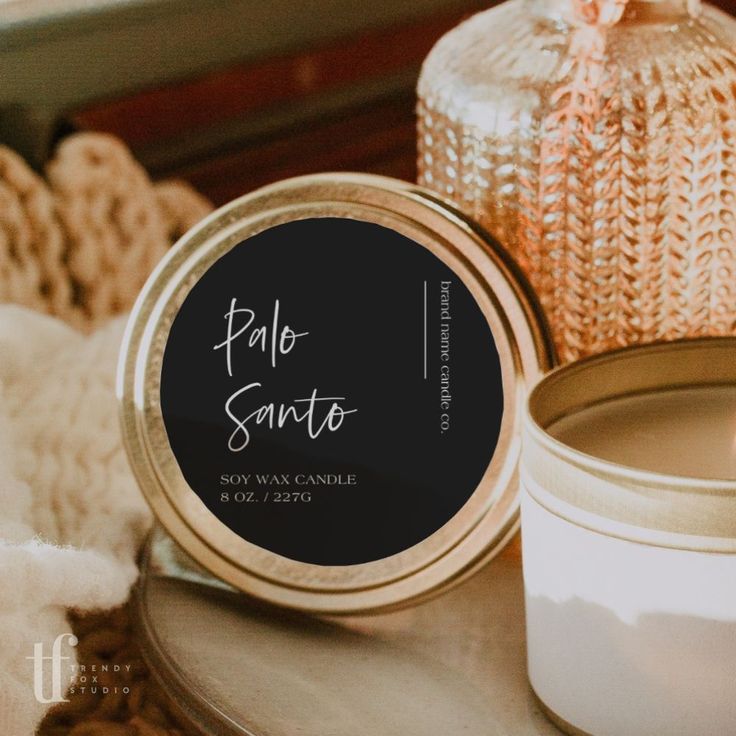
Rectangle and square labels work well for front-and-back labeling on jars. Common sizes include 2 x 3 inches for small jars, 3 x 4 inches for medium jars, and 4 x 6 inches for large vessels. Square labels from 1 x 1 inch to 4 x 4 inches offer a balanced, modern look.
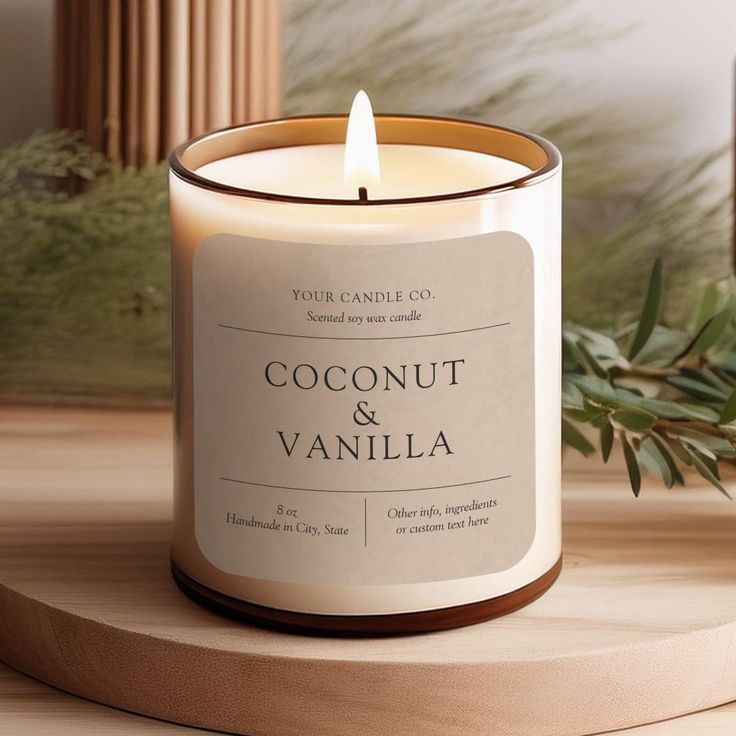
Oval labels provide a classic, elegant shape that fits naturally on curved jar surfaces. Sizes typically range from 1.5 x 2.5 inches to 3 x 5 inches.
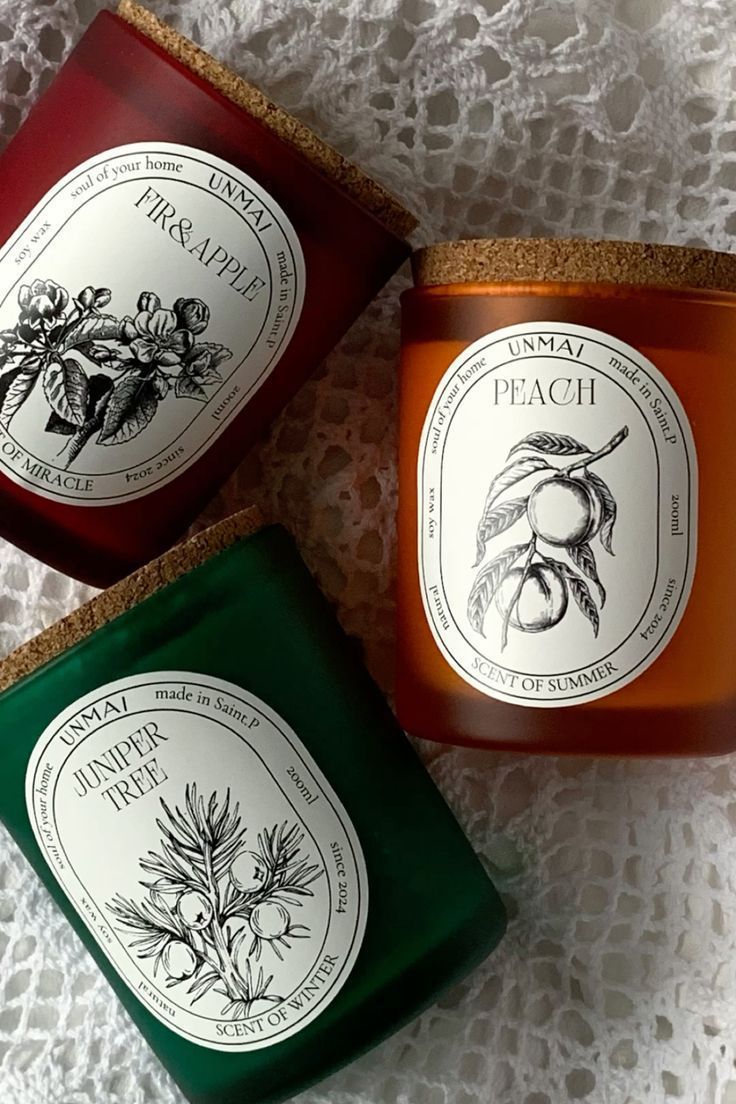
Custom shapes—like flames, diamonds, or brand logo silhouettes—create a unique, memorable presentation. However, custom shapes require a die-cutting tool that incurs an initial setup cost. For smaller orders, we often recommend standard shapes to keep costs low.
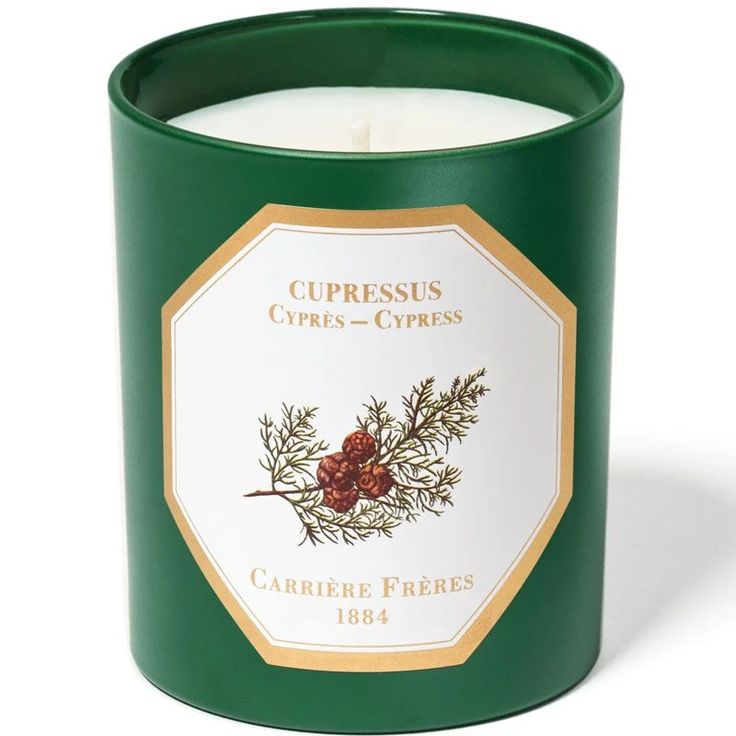
For any shape, we recommend a minimum label size of 1 inch in any dimension. Smaller labels become difficult to handle during application and may not provide enough surface area for strong adhesion.
Every candle is different, and the label material that works for one may fail for another. We ask every customer to consider these five factors before placing an order.
Factor One: Candle Surface Material
Glass, tin, ceramic, and matte finishes each require different adhesives. Glass accepts most adhesives well. Tin (metal) requires a stronger adhesive because metal surfaces have low surface energy. Ceramic and matte finishes need high-tack adhesives to bond to their rough, porous texture.
Factor Two: Operating Environment
Will the candle sit on a dry shelf, or will it be used in a bathroom or kitchen? Will it ship across different climates? High humidity causes paper labels to wrinkle. Temperature fluctuations can cause some adhesives to fail. Waterproof film labels are necessary for any moisture exposure.
Factor Three: Wax Type and Burn Temperature
Soy wax and beeswax burn cooler than paraffin or gel wax. A label placed high on the jar may never get hot. A label placed low near the base could experience temperatures above 60°C (140°F). Standard adhesives begin softening around 50°C. For hot-running candles, we recommend high-temperature adhesives rated for 80°C or higher.
Factor Four: Application Method
Will you apply labels by hand or with an automatic labeling machine? Hand application allows more flexibility with irregular shapes but takes longer. Machine application requires consistent label placement on the liner and specific liner release values. We can advise on liner specifications based on your equipment.
Factor Five: Desired Lifespan
Do you need the label to last for years on a shelf, or only until the candle burns down (typically 30-60 hours)? Paper labels yellow and degrade over time, especially in sunlight. Film labels last for years without visible change. For gift candles that will be used quickly, kraft paper is perfectly adequate. For retail inventory that may sit for 12+ months, waterproof film is safer.
After producing thousands of custom candle label orders, we see the same mistakes repeated. Avoiding these will save you time, money, and frustration.
Mistake One: Using Standard Paper Labels on Candles
We have received countless photos from customers who tried printing labels on home office paper or standard matte paper labels. The result is always the same: the label curls, the adhesive fails, and the paper absorbs any oil or moisture from the candle wax. Always use materials specifically engineered for candles.
Mistake Two: Forgetting About the Lid
Many customers design beautiful jar labels but ignore the lid. A small round label on the lid creates a finished, professional look. It also allows you to display your logo or scent name from the top-down view that customers see first.
Mistake Three: No Bleed Area on Artwork
We cannot stress this enough: always add a 3mm (0.125 inch) bleed area around your design. The cutting blade is precise but not perfect. Without a bleed, even a 0.5mm shift creates a white edge. Extending your background color past the cut line ensures a clean, edge-to-edge finish every time.
Mistake Four: RGB Color Mode
Your computer screen displays RGB. Our printing presses use CMYK. Neon colors, electric blues, and bright oranges in RGB have no equivalent in CMYK. When you send an RGB file, the color shift is inevitable. Always convert your design to CMYK before sending it to us.
Mistake Five: Ignoring Minimum Text Size
Very small text—below 6 points in size—often becomes unreadable after printing, especially on textured materials like kraft paper. We recommend a minimum font size of 8 points for body text and 6 points for disclaimers. For fine print safety labels, we can advise on the smallest legible size based on your chosen material.
Mistake Six: Assuming All Waterproof Labels Are the Same
"Waterproof" is not a single standard. Some waterproof labels resist splashes but fail when submerged. Others survive full immersion. Some resist oil and chemicals; others do not. Tell us exactly what conditions your candle will face, and we will recommend the appropriate material.
We are StickerForgeco, a trusted manufacturer of custom stickers and custom label printing. We work with candle makers of all sizes—from home-based Etsy sellers launching their first product to national retail brands scaling across multiple channels. Our factory has produced millions of candle labels, and we know exactly what works, what fails, and how to get your labels to you quickly.
Why candle makers choose StickerForgeco
No minimum order – digital printing for any quantity
Traditional label printing often forces you to order thousands of labels at once, even when you only need 100 for a test batch or a seasonal release. We use digital printing technology, which means there is no minimum order quantity. You can order 50 labels, 500 labels, or 50,000 labels. The same high quality applies to every run. This flexibility allows you to test new scents, update seasonal designs, or fulfill small-batch wholesale orders without overcommitting inventory.
Free shipping on every order
Shipping costs should not be a barrier to getting professional labels. We include free shipping on all orders, regardless of size or destination. No hidden fees, no surprise charges at checkout. The price you see is the price you pay.
9-day global delivery – from our factory to your door
We know that waiting weeks for labels delays your production and costs you sales. Our streamlined production and shipping process delivers your custom candle labels to most global destinations within 9 business days. This includes production time (typically 5-7 days) and express shipping. For urgent orders, contact us directly—we can often accommodate rush production.
What you get when you order from us
Every order includes a professional file check before printing, a digital proof for approval, precise die-cutting for any shape, and quality inspection before shipping. If a label does not meet our standards, it does not ship.
Our simple three-step process
Step One: Choose your material, size, shape, and quantity. Use our online quote form or contact us directly for complex projects.
Step Two: Upload your artwork. Our team will confirm your file meets our specifications. We will tell you exactly what needs adjustment.
Step Three: Approve your digital proof. We print, cut, inspect, and ship your custom candle labels with free shipping and 9-day global delivery.
Not sure which material is right for your candle? Describe your candle type, jar surface, and environment. We will recommend a specific material, adhesive, and finish combination based on real factory experience.
Get a quote today at StickerForgeco.com or email our team. Let us produce candle labels that look professional, perform reliably, and arrive fast—with no minimum order and free shipping.
Q1: What are the most common uses for custom candle labels?
Custom candle labels are used for retail branding, personalized gifts (weddings, birthdays, holidays), artisan handmade candles, and displaying product information like scent names, safety warnings, and burning instructions. They turn a plain candle jar into a professional, market-ready product.
Q2: What materials and finishes do you offer for candle labels?
We offer kraft paper (natural, rustic, biodegradable), clear BOPP film (transparent, waterproof, "no-label" look), and waterproof white BOPP/vinyl (opaque, tear-resistant, weatherproof). Finishes include gloss, matte, UV spot coating, and soft-touch lamination.
Q3: Can you print small quantities? What is your minimum order?
Yes. We use digital printing with no minimum order quantity. You can order 50, 500, or 50,000 labels—all with the same high quality.
Q4: How fast can I receive my custom candle labels?
We offer 9-day global delivery from proof approval, including free shipping on all orders. Rush production is available upon request.
Q5: What file format should I send for my artwork?
Send a vector PDF in CMYK color mode with 3mm bleed and fonts converted to outlines. For photo-heavy designs, a 300 DPI PNG or JPEG is acceptable.

 +8618128095554
 sales@stickerforgeco.com
 +8618128095554