
Get bulk orders for 30% less than local suppliers, plus free samples.
Get bulk orders for 30% less than local suppliers, plus free samples.
If you have ever needed a stack of identical stickers for your business, event, or packaging, you have likely encountered two common formats: loose stickers in a pile, or individual stickers arranged neatly on a larger sheet. The latter is what the industry calls singles on sheet.
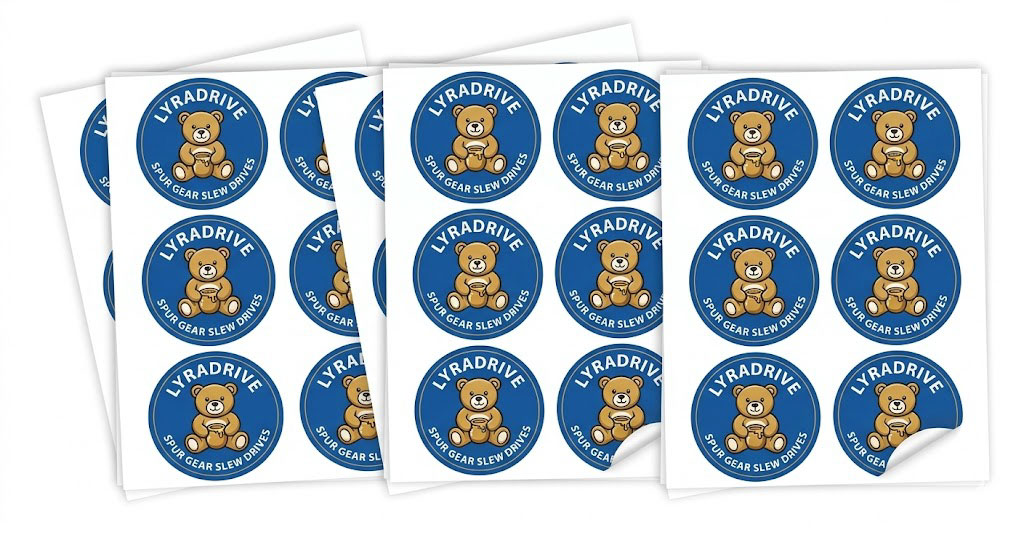
Singles on sheet refer to multiple individual stickers – all featuring the same design – that are laid out in a clean, repeated grid pattern across a single backing paper. Instead of rummaging through a messy pile of loose stickers, you get a perfectly organized sheet where each sticker is held in place until you need it.
Each sticker is typically produced using a kiss-cut technique. This means the cutting blade goes through the sticker material but leaves the backing paper intact. The result? A sticker that stays securely on the sheet during storage and shipping, yet can be peeled off effortlessly when you are ready to use it.
This format sits right between two extremes: loose stickers (which can be chaotic and hard to handle) and complex sticker sheets (which feature multiple different designs). Singles on sheet focus on one thing only: delivering repetition, convenience, and professional presentation for a single design.
For businesses that use the same logo, label, or promotional sticker again and again – from e-commerce packaging to event giveaways – singles on sheet offer the perfect balance of order and practicality.
What makes singles on sheet stand out from other sticker formats? Below are the defining characteristics that set them apart.
Repeated identical design
Unlike mixed sticker sheets that showcase illustrations, quotes, or decorative elements, singles on sheet display the same sticker repeatedly. This repetition is intentional: it maximizes efficiency when you need many copies of one design.
Kiss-cut construction
As mentioned, kiss-cutting is the industry standard for this format. It preserves the integrity of the backing sheet while making each sticker easy to remove. No scissors, no tearing – just peel and stick.
Neat grid layout
Singles on sheet are arranged in orderly rows and columns. This is not just about looks. The grid layout makes it easy to count how many stickers you have left, hand them out one by one at an event, or insert a sheet into a product package without extra wrapping.
Uniform shape and size
Because the same design is repeated, every sticker on the sheet shares the exact same dimensions and contour. This consistency is particularly valuable for branding applications, where maintaining visual uniformity across hundreds or thousands of stickers reinforces brand recognition.
Protective backing until use
The intact backing paper keeps all stickers clean, dust-free, and protected from moisture or creasing. A loose sticker can easily fold onto itself and become ruined. A sticker on a sheet stays flat and perfect until the moment of peeling.
These features collectively make singles on sheet a workhorse format – not the flashiest, but one of the most dependable for high-volume, day-to-day sticker usage.
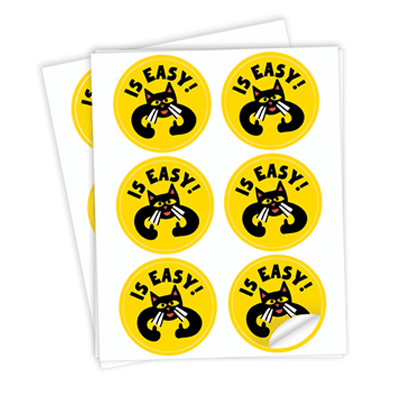
Many people use the terms "singles on sheet" and "sticker sheets" interchangeably. In reality, they serve different purposes. Understanding the distinction is essential for ordering the right product.
| Aspect | Singles on Sheet | Sticker Sheets |
|---|---|---|
| Design variety | One design repeated across the entire sheet | Multiple designs, shapes, or illustrations on one page |
| Primary purpose | Practical: branding, labeling, giveaways | Creative: storytelling, decoration, collectibles |
| Peeling method | Kiss-cut on a shared backing | Often kiss-cut individually or left in-sheet |
| Typical user | Small business owners, event organizers, product teams | Artists, scrapbookers, gift-givers |
| Reordering pattern | Repeat orders of the same design | One-off or seasonal designs |
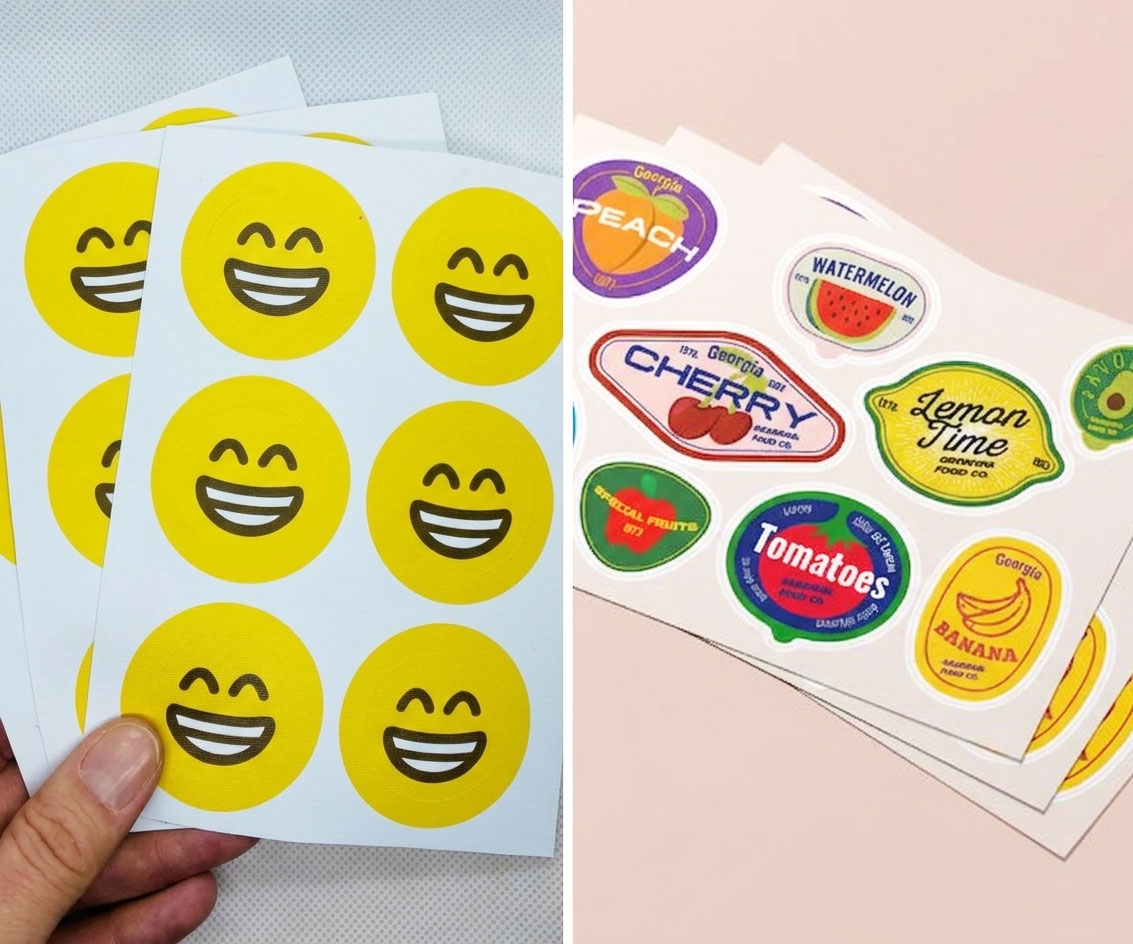
A classic sticker sheet is like a miniature poster. It might contain a central character surrounded by smaller icons, stars, and text phrases. The appeal lies in variety: one sheet gives you many different stickers to use for different purposes.
Singles on sheet, by contrast, are about repetition and efficiency. You do not buy them for artistic variety. You buy them because you need 500 copies of your logo sticker, your QR code label, or your "Handmade with care" package insert.
Here is a simple rule of thumb:
Sticker sheets = variety for creative projects.
Singles on sheet = consistency for business operations.
Both have their place. But when you are packing orders for a product launch or handing out branded stickers at a trade show booth, singles on sheet are the clear winner.
Why would a business owner or marketing manager specifically request singles on sheet instead of loose stickers or mixed sheets? The advantages fall into four categories.
Peeling a sticker off a kiss-cut sheet takes about one second. Peeling a loose sticker that has folded onto itself or stuck to another sticker can take ten seconds – plus the risk of damaging it. When you need to apply 50 labels in a single packaging session, those seconds add up.
Singles on sheet eliminate the "sticker wrestling" that slows down packing stations, event booths, and retail operations.
Imagine handing a customer a jumbled pile of loose stickers versus slipping a clean, neatly arranged sheet into their shopping bag. The difference in perceived value is immediate. A singles-on-sheet format signals professionalism. It tells the recipient that you care about details, even for a free sticker.
Storing loose stickers often means plastic bags, rubber bands, or boxes where they can shift around. Storing singles on sheet means flat stacks that are easy to count, label, and shelve. You know exactly how many sheets you have left, and each sheet contains a predictable number of stickers.
Because the same design repeats across every sheet, reordering is straightforward. You are not recreating a complex multi-design layout. You simply tell your supplier: "Same as last time, 500 sheets." This consistency is especially valuable for established brands that rely on stickers as part of their packaging or promotional strategy.
For businesses that print matte labels for a premium, non-reflective finish, or glossy labels for vibrant, eye-catching colors, singles on sheet deliver the same quality in a more usable format than loose stacks.
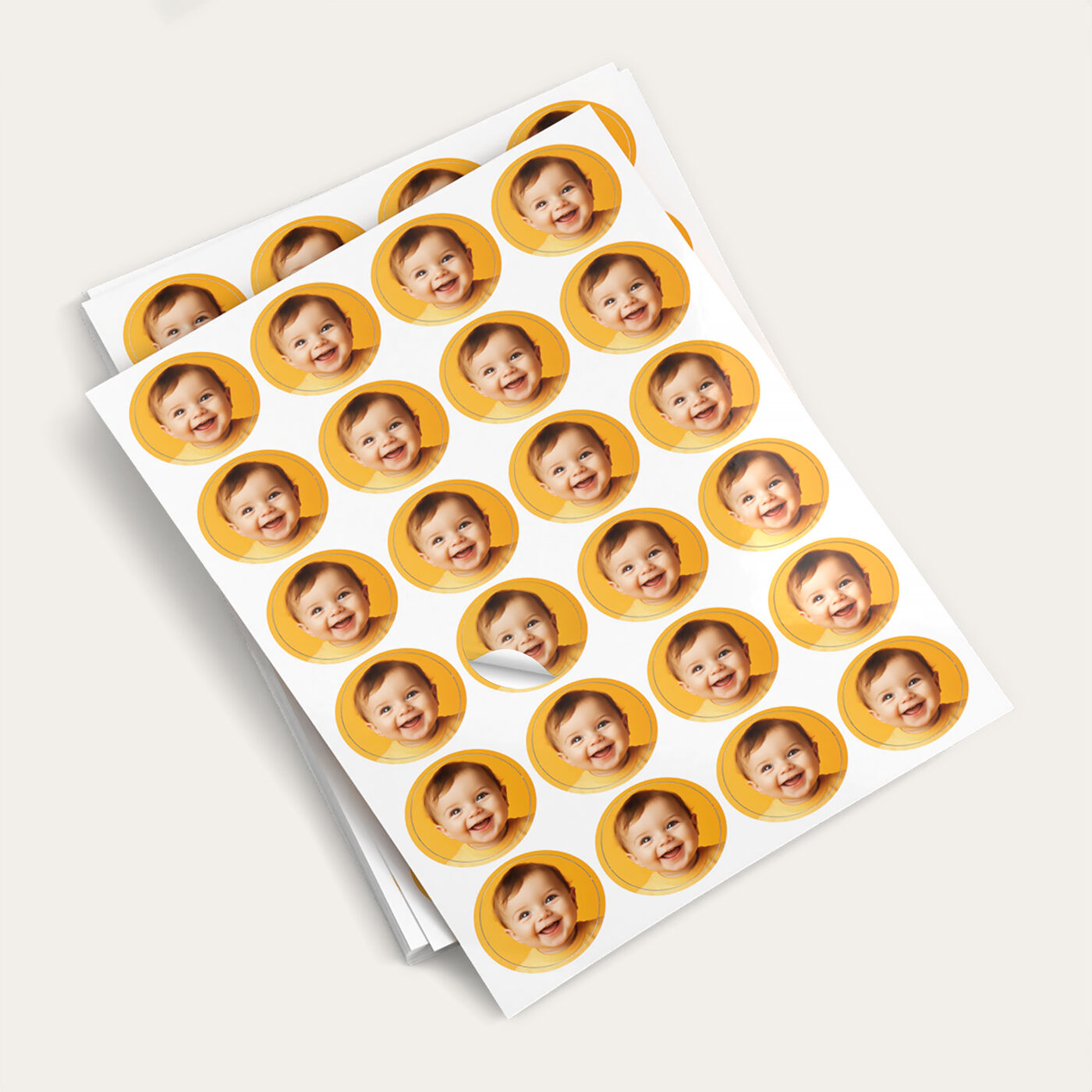
Based on industry practice, here are the most effective use cases for singles on sheet.
E-commerce packaging extras
A small sticker included in every outgoing order – featuring your logo, a thank-you message, or a social media handle – builds brand affinity. Singles on sheet allow your packing team to grab one sticker per order quickly.
Product labeling
If you sell physical products that need individual labels (for ingredients, batch numbers, or pricing), singles on sheet keep your labeling process organized. Peeling from a sheet is faster than peeling from a roll if you are doing small-batch manual application.
Branded giveaways at events
Trade shows, pop-ups, and conferences are prime sticker territory. Singles on sheet make it easy to hand out one sticker at a time without fumbling. The sheet itself can carry your brand logo at the bottom or top, doubling as a mini marketing piece.
Seasonal and limited-release packaging
For holiday editions or collaboration drops, singles on sheet offer a low-cost way to add a special touch. Because the format supports small runs, you can print exactly what you need for the season without waste.
Small business branding
From coffee shops to fitness studios, local businesses use stickers as loyalty rewards, window decals (on removable adhesive), or merchandise. Singles on sheet give them a professional format without requiring complex design work.
QR code stickers
Directing customers to a link, survey, or menu? QR code stickers on sheets allow staff to peel and stick them onto tables, flyers, or packaging in seconds.
Product tags for handmade goods
Sellers often include a "Made by" or "Care instructions" sticker. Singles on sheet keep these tags consistent and easy to apply.
In short, any scenario where you need many copies of the same functional or promotional sticker is a strong candidate for singles on sheet.
Before placing an order, evaluate these practical factors to ensure the format truly fits your workflow.
Volume and frequency
How many stickers do you need per week or month? If the answer is "a few dozen," loose stickers or even a desktop sticker maker might suffice. If the answer is "hundreds or thousands," singles on sheet become cost-effective and time-saving.
Storage conditions
Will the sheets be stored flat in a cool, dry place? Heat and humidity can affect the adhesive over time. Singles on sheet are robust, but like all stickers, they perform best when stored properly.
Peeling environment
Consider who will be peeling the stickers. Packing staff need speed; event volunteers need simplicity; customers receiving a sticker as a gift appreciate ease. The kiss-cut format works well for all three, but if your stickers are unusually small (under 0.5 inch) or unusually large (over 4 inches), test a sample first.
Design complexity
Singles on sheet work best with designs that are shape-consistent. If your sticker has a highly intricate contour with many fine details, a die-cut process might be more appropriate. However, for standard circles, squares, ovals, and custom brand shapes, singles on sheet handle them well.
Budget per sticker
Because sheets are printed and cut in a single pass, the per-sticker cost often decreases as sheet size and quantity increase. Compare pricing across different sheet dimensions. A larger sheet holds more stickers, which can lower your unit cost – but only if you can use all those stickers before they expire or go out of season.
Adhesive type
Consider where the sticker will be applied. For temporary uses (event badges, promotional samples), a removable adhesive is kind to surfaces. For long-term applications (laptops, water bottles, outdoor signage), a permanent or weather-resistant adhesive is better. Most singles on sheet suppliers offer both options.
Customization is where singles on sheet truly shine. From material selection to finishing touches, you have control over nearly every variable.
The substrate you choose affects appearance, durability, and cost.
Matte labels offer a sophisticated, non-glare surface that resists fingerprints. They are ideal for premium products, natural or organic branding, and any application where a soft, elegant feel is desired.
Glossy labels deliver high color saturation and a shiny finish that makes photos and logos pop. They are excellent for vibrant promotional stickers and product labels meant to catch light.
White vinyl is the industry standard for general-purpose stickers: durable, water-resistant, and compatible with most adhesives.
Clear (transparent) vinyl creates a "no-label" look, perfect for glass bottles, windows, or products where you want the design to float on the surface.
Specialty materials include holographic, metallic, and kraft paper options for unique effects.
Singles on sheet can be produced in almost any custom shape using a die cut process. The die cut creates the outer contour of each sticker. Common shapes include:
Circles (standard for logo stickers)
Squares and rectangles (for labels and tags)
Ovals and pill shapes (for a softer look)
Custom brand mascots or product silhouettes
Size flexibility ranges from small 0.75-inch stickers up to 4-inch or larger stickers, depending on the sheet dimensions. A typical sheet might measure 8.5" x 11" (letter size) or A4.
For best print results, follow these guidelines:
Use CMYK color mode (not RGB) to match professional printing presses.
Provide a transparent PNG or vector file (AI, PDF, EPS) with a clear cut line.
Resolution should be at least 300 DPI at final print size.
Avoid thin strokes or tiny text that may become hard to read on small stickers.
Most suppliers offer online design templates and automated layout tools. You upload your design once, specify the sticker size and sheet quantity, and the system arranges the stickers across each sheet automatically. You do not need to manually build the grid.
Beyond the sticker itself, consider:
Lamination (gloss or matte) for extra protection against scratches, water, and UV fading.
Reinforced adhesive for rough or textured surfaces.
Easier-peel backing split on larger stickers to improve removability.
When you have decided that singles on sheet are the right format for your branding, packaging, or event needs, the next question is: who should you trust to print them?
StickerForgeco is a premium custom labels manufacturer with years of experience serving businesses of all sizes. Unlike hobbyist printers or generic online shops, StickerForgeco focuses on professional-grade sticker and label production for commercial use.
Here is what makes StickerForgeco a reliable partner for your singles on sheet projects:
From 100 to 1,000,000+ units – Whether you are testing a new design with a small batch or scaling up for a national campaign, the production capacity adapts to you.
No minimum order (digital printing) – Start small. Order exactly what you need for a limited release, a seasonal promotion, or a pilot program. No penalty for low quantities.
Factory direct pricing (save 30%) – By manufacturing in-house and selling directly to customers, StickerForgeco removes middleman markups. You get professional quality without paying retail overhead.
9-day global delivery – Fast turnaround matters when you are preparing for a launch or event. StickerForgeco's streamlined production and shipping network delivers worldwide in just over a week.
Whether you need matte labels for an elegant, understated brand aesthetic or glossy labels to make your product photography and logo colors shine, StickerForgeco can produce your custom singles on sheet with consistent quality, accurate kiss-cutting, and reliable adhesive performance.
Every order is treated as a partnership. The team works with you to confirm artwork, select the right material and adhesive, and ensure the final stickers peel cleanly every time. For businesses that reorder the same design month after month, StickerForgeco offers repeat-order convenience with quality control on every batch.
When your project demands custom singles on sheet that look professional, last as intended, and arrive on time, StickerForgeco delivers.
1. Can I customize singles on sheets?
Yes, fully. You can customize the sticker size, shape, material (vinyl, clear, holographic, etc.), adhesive type (permanent or removable), and finish (matte or gloss). Most suppliers offer custom sheet dimensions beyond standard letter size.
2. What file format should I upload for best quality?
Upload a high-resolution file in CMYK color mode with at least 300 DPI. Transparent PNG or vector formats such as PDF, AI, or EPS are preferred. Include a clear cut line (usually in a separate layer or a distinct color like magenta) so the production team knows exactly where to kiss-cut each sticker.
3. What's the difference between kiss-cut and die-cut?
Kiss-cut cuts through the sticker material only, leaving the backing paper intact. This keeps multiple stickers on one sheet for easy peeling. Die-cut cuts all the way through both the sticker and the backing, producing individual, fully separated stickers – not on a sheet. For singles on sheet, kiss-cut is the correct choice.
4. Are singles on sheet more expensive than regular sticker sheets?
It depends on quantity and complexity. For the same number of stickers, singles on sheet are often comparable or slightly lower in cost because the same design repeats, reducing setup and design time. Sticker sheets with many different designs require more file preparation and quality inspection, which can increase the price. For large-volume orders of a single design, singles on sheet tend to be the more economical option.






 +8618128095554
 sales@stickerforgeco.com
 +8618128095554