Get bulk orders for 30% less than local suppliers, plus free samples.
Get bulk orders for 30% less than local suppliers, plus free samples.
Launching a food brand is 10% recipe and 90% presentation. Whether you are bottling small-batch hot sauce, jarring organic honey, or canning craft beverages, your packaging is your silent salesman. But picking the right label is about more than just a pretty design—it's about engineering.
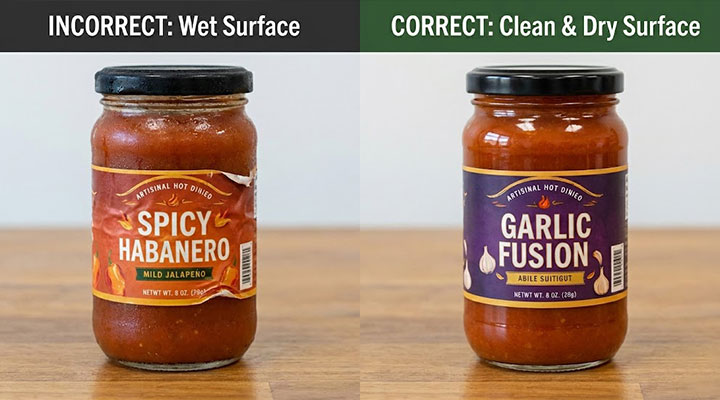
Food environments are harsh. Refrigerators create condensation; oils drip down bottles; and shipping creates friction. A standard paper sticker will wrinkle, stain, and peel before your customer even opens the jar.
To succeed on the retail shelf, you need professional-grade Custom Food and Beverage Labels that are engineered to withstand these elements. At StickerForge, we combine material science with high-definition printing to ensure your brand looks as good as it tastes.
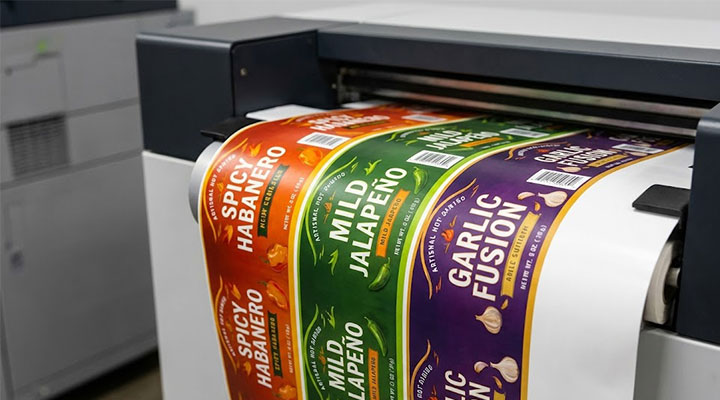
Many small business owners are curious: "How do you offer such high quality with low minimums?" The secret lies in our Digital Offset Technology.
No Printing Plates Needed: Traditional flexographic printing requires expensive physical plates for every color and design. Our digital presses eliminate this setup cost. This means you can print 5 different flavor variants (e.g., Spicy, Mild, Garlic) in a single run without paying extra fees.
High-Definition CMYK: We print at incredibly high resolutions. This is critical for FDA Compliance. Nutrition facts and ingredient lists often require font sizes as small as 5pt or 6pt. Our precision printing ensures this tiny text is crisp, legible, and legally compliant.
Computer-Controlled Cutting: Whether your label is a standard rectangle or a unique die-cut shape (like a shield or a burst), our digital cutters slice through the material with 0.1mm precision—no expensive custom dies required.
The "substrate" (material) you choose depends entirely on your product's environment:
Best for: Hot Sauce, Dressings, Refrigerated Items.
It is water-proof, oil-proof, and tear-proof. It won't bubble when the bottle "sweats."
Best for: Wine, Artisanal Honey, Coffee.
Offers a premium, "organic" tactile feel. (Note: Not recommended for very wet environments unless varnished).
Best for: Juices, Pickles, Cold Brew.
Creates a "no-label" look that lets your product's vibrant color shine through.
Even the best label can fail if applied incorrectly. To ensure a perfect bond, follow these industry best practices:
The "Clean & Dry" Rule: Never apply labels to a wet or cold bottle. Condensation acts as a barrier, preventing the adhesive from bonding. Ensure your containers are at room temperature and completely dry before labeling.
The Tapered Container Trap: Does your jar get narrower at the bottom? If so, a standard rectangular label will wrinkle and crease (the "smile effect"). You must measure the taper and design a curved label. Not sure how? Contact our design team for help.
Curing Time: After applying the label, allow the adhesive to "set" for 24 hours before putting the product into a refrigerator or ice bucket. This allows the bond to reach maximum strength.
Get factory-direct pricing on premium food labels. Low MOQs for startups and bulk discounts for established brands.
Get a Free Quote Now





 +8618128095554
 sales@stickerforgeco.com
 +8618128095554