
Get bulk orders for 30% less than local suppliers, plus free samples.
Get bulk orders for 30% less than local suppliers, plus free samples.
Sticker Sheet vs Sticker Roll: How to Choose?
You’ve finalized your artwork. You’ve picked the perfect material. Then you hit the question that stops more business owners in their tracks than almost anything else: sheets or rolls?
It seems simple. It’s not.
I’ve worked with hundreds of businesses—from solo artists shipping their first 50 orders to factories labeling millions of units—and I’ve seen the same mistake over and over. People choose the format they think looks better, without asking the one question that actually matters: who is going to peel it, and how?
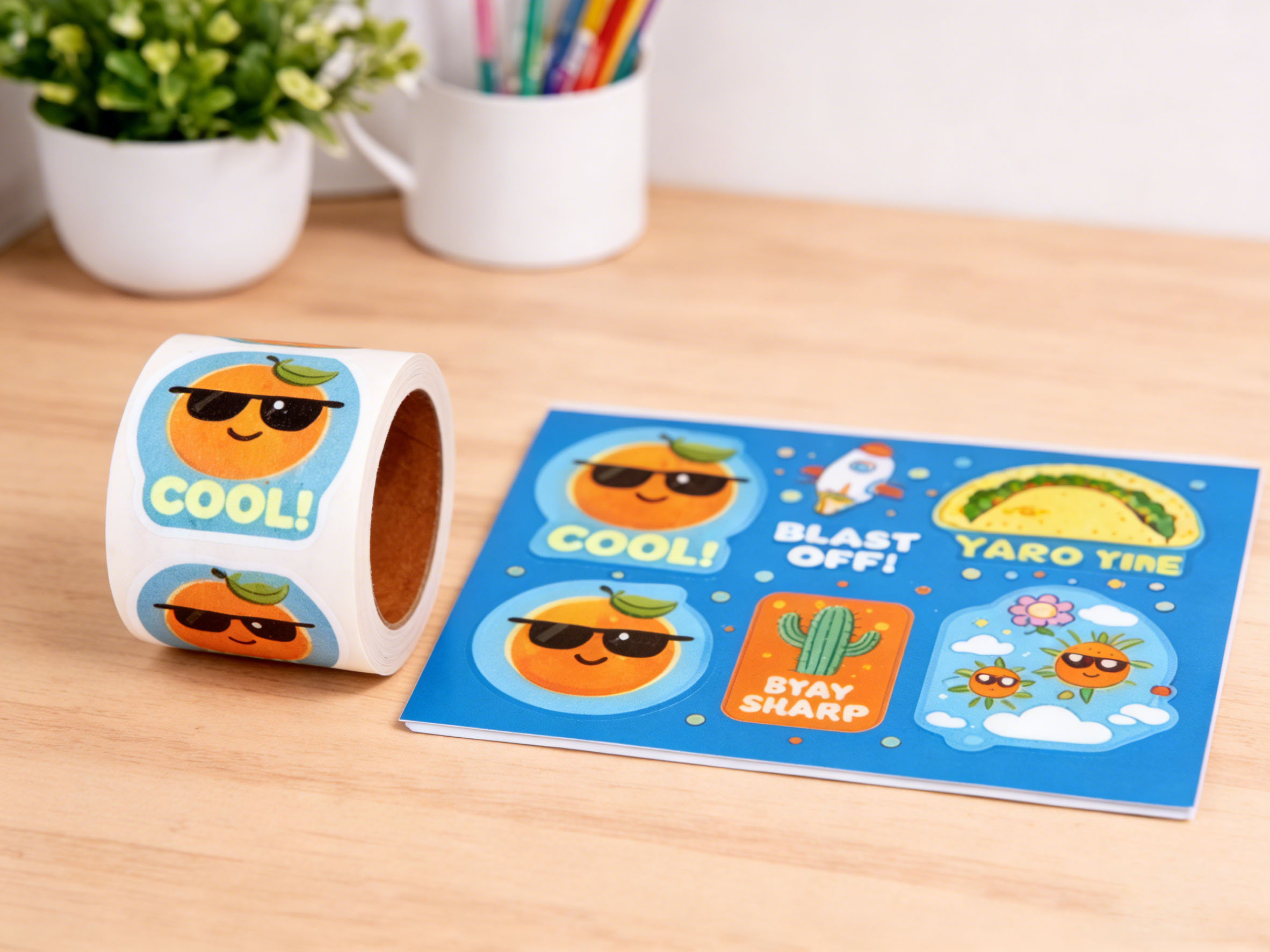
Get this decision right, and your sticker project becomes a seamless part of your operation. Get it wrong, and you’ll find yourself standing in a warehouse, peeling individual stickers off a roll by hand, wondering how you ended up here.
Let’s walk through exactly what you need to know.
Think of a sticker sheet as a curated collection. Instead of individual stickers floating loose in a bag, multiple designs are arranged on a single page of backing paper, each one kiss-cut so they peel off cleanly while staying perfectly in place until they’re needed.
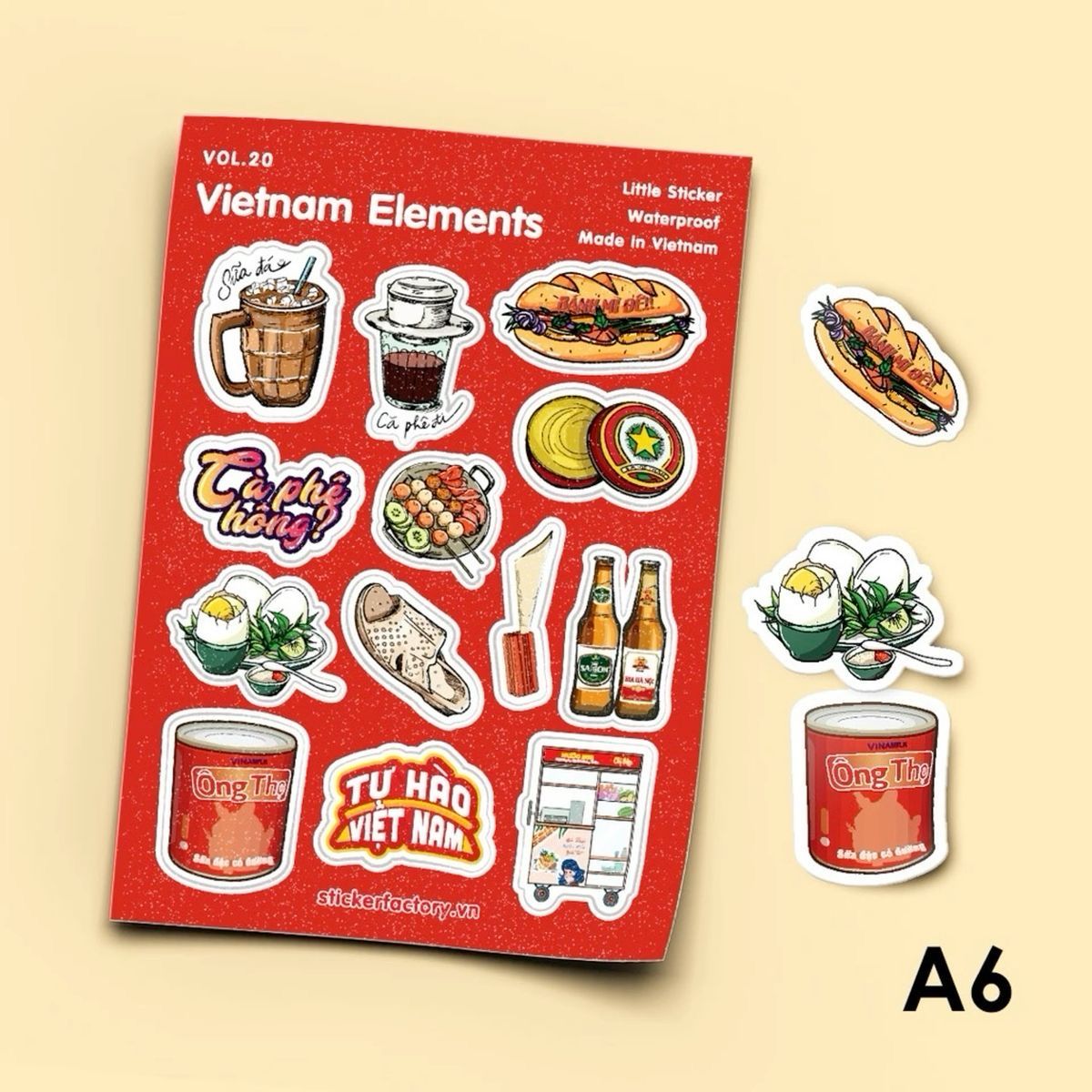
This format is built for human hands. It’s tactile, it’s visual, and it creates a moment. When someone opens a package and sees a full sheet of your artwork, they don’t see a label—they see something worth keeping.
From a production standpoint, sticker sheets are typically printed on standard-sized stock—A4, letter, or custom dimensions—and run through digital or flexographic presses depending on volume. Thekiss-cutting process allows for intricate shapes and precise placement of multiple designs on a single page.
Every format has its trade-offs. Here’s what you’re working with when you choose sheets.
Retail-ready presentation: A sheet presents your artwork as a finished product. It looks intentional, professional, and commands a higher perceived value than a pile of loose stickers.
Mixed designs made easy: Want to offer five different logo variations, a seasonal collection, or a set of matching illustrations? One sheet can hold them all. This flexibility is invaluable for brands testing new concepts or building loyalty through variety.
Simple storage and handling: Sheets stack flat. They slide into boxes, folders, or drawers without tangling, curling, or taking up excess space.
No equipment needed: The learning curve is zero. Anyone can peel and stick from a sheet without instructions or tools.
Manual application only: If you’re applying stickers to product packaging, each one requires a human hand. That’s fine for small batches, but it becomes a real bottleneck as volume grows.
Waste factor: Depending on the layout, sheet-based production can leave more unused backing material compared to the continuous format of rolls.
Not automation-friendly: Feeding sheets into a labeling machine is impractical at best. If you’re scaling to automated application, this format will hold you back.
Sticker sheets shine when the sticker itself is part of the customer experience—whether that’s as a product you sell or a memorable insert you include.
A sticker roll is exactly what it sounds like: a continuous strip of labels wound around a core, designed to feed through a dispenser or machine. Every aspect of a roll—the core size, the gap between labels (pitch), the winding direction—is engineered for one purpose: speed.
This is the format of production lines, fulfillment centers, and any operation where time equals money. Rolls aren’t meant to be admired; they’re meant to be used, quickly and consistently, in large quantities.
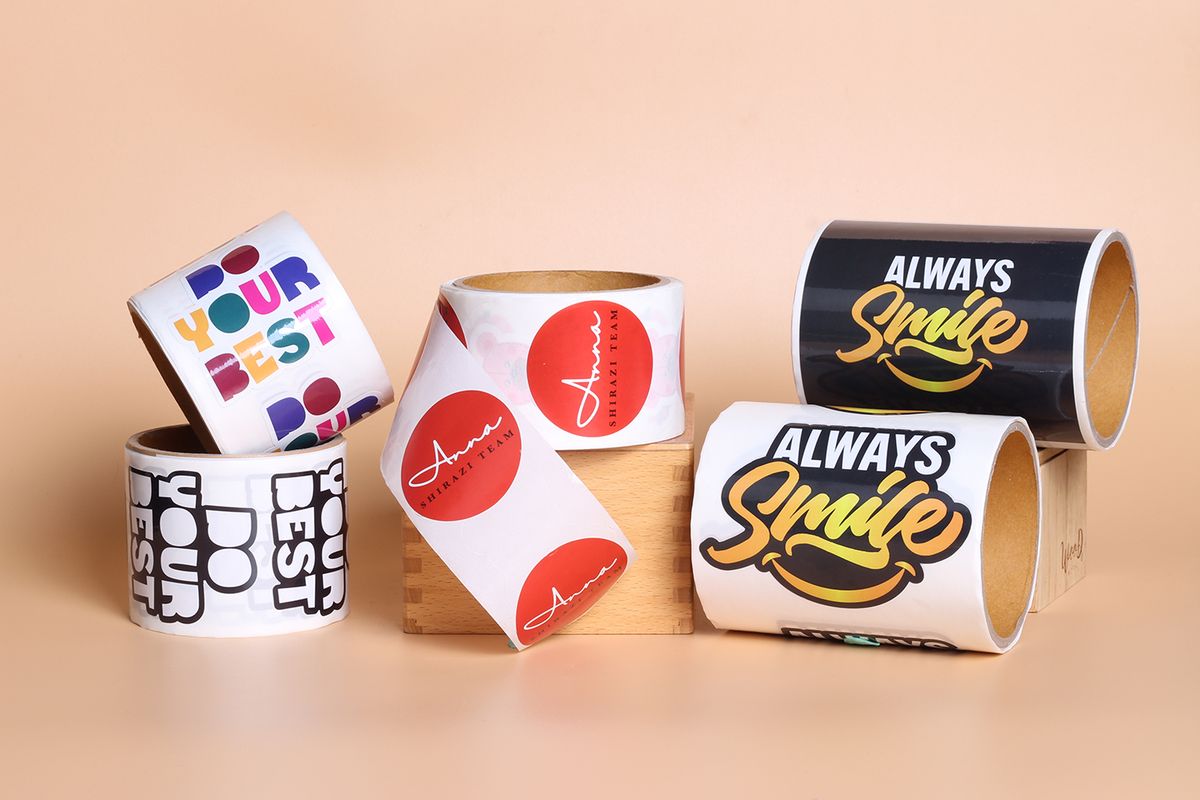
When a client tells me they’re moving into a new facility or investing in automation, the first thing we do is lock in their roll specifications. Getting those details right upfront—label orientation, liner type, core diameter—saves countless headaches down the road.
Rolls are built for efficiency. Here’s what that means in practice.
Speed at scale: A properly set up roll-fed applicator can label hundreds or even thousands of units per hour with minimal labor. That’s not just faster—it’s a fundamental shift in what’s operationally possible.
Consistent placement: Machines don’t get tired, crooked, or distracted. Every label goes on exactly where it should, every time.
Lower per-unit cost at volume: Roll production is highly automated with continuous material flow. For large runs, this efficiency translates directly into a lower price per sticker.
Dispenser-friendly: Even without a fully automated machine, a simple manual dispenser makes applying from a roll significantly faster than hand-peeling from sheets.
Awkward for hand application: Peeling individual labels off a roll by hand is slower than sheets. The natural curl of the material works against you.
Storage considerations: Rolls take up more space per sticker than sheets. They need shelving, not filing cabinets.
Upfront specification matters: Ordering rolls requires precise specifications—core size, label orientation, gap spacing. If those details aren’t aligned with your application method, you’ll run into issues.
Rolls are the professional’s choice when the sticker is a tool for production, not a customer-facing object.
Let’s get specific. Here are the scenarios where sheets are the clear winner.
You’re selling stickers directly to customers. If your sticker is the final product, sheets elevate the presentation. They allow you to bundle designs, create collections, and give your customers something they’ll be excited to open.
You’re building brand loyalty through unboxing. A well-designed sticker sheet in an order costs you pennies but creates genuine delight. It’s one of the highest-ROI marketing moves an eCommerce brand can make.
You’re hand-applying to a manageable volume. If you’re producing a few hundred units a week and applying labels yourself or with a small team, sheets are perfectly fine—and often more comfortable than rolls.
You’re prototyping or testing designs. Sheets allow you to print multiple variations on a single run without committing to thousands of pieces. This is invaluable for A/B testing packaging, seasonal promotions, or new brand directions.
Now let’s look at the other side. Rolls are the answer when your priorities shift toward volume, speed, and consistency.
You’re using automated equipment. If a labeling machine touches your production line, rolls are non-negotiable. Sheets simply aren’t designed to feed through applicators.
You’re scaling beyond hand application. Once you’re labeling more than a few hundred units per week, the labor cost of sheets starts to hurt. Rolls scale with you.
Consistency is critical. If your label needs to hit the exact same spot on every bottle, box, or bag, automation with rolls is the only reliable way to achieve that.
You’re optimizing cost at high volume. For orders in the tens of thousands or more, rolls consistently offer the best economics. The production efficiencies are real and significant.
Here’s a side-by-side look at how these two formats compare across the factors that actually matter.
| Consideration | Sticker Sheets | Sticker Rolls |
|---|---|---|
| Best suited for | Retail, customer giveaways, small-batch hand application | Production lines, high-volume fulfillment, automated application |
| Application method | Manual peeling | Dispenser or machine feed |
| Mixed designs | Easy—multiple designs per sheet | Typically single design per roll |
| Speed | Limited by hand speed | Hundreds to thousands per hour |
| Cost efficiency | Competitive at low to medium volumes | Superior at high volumes |
| Storage | Flat, stackable | Requires shelving or bins |
| User experience | Designed for the end customer | Designed for the production team |
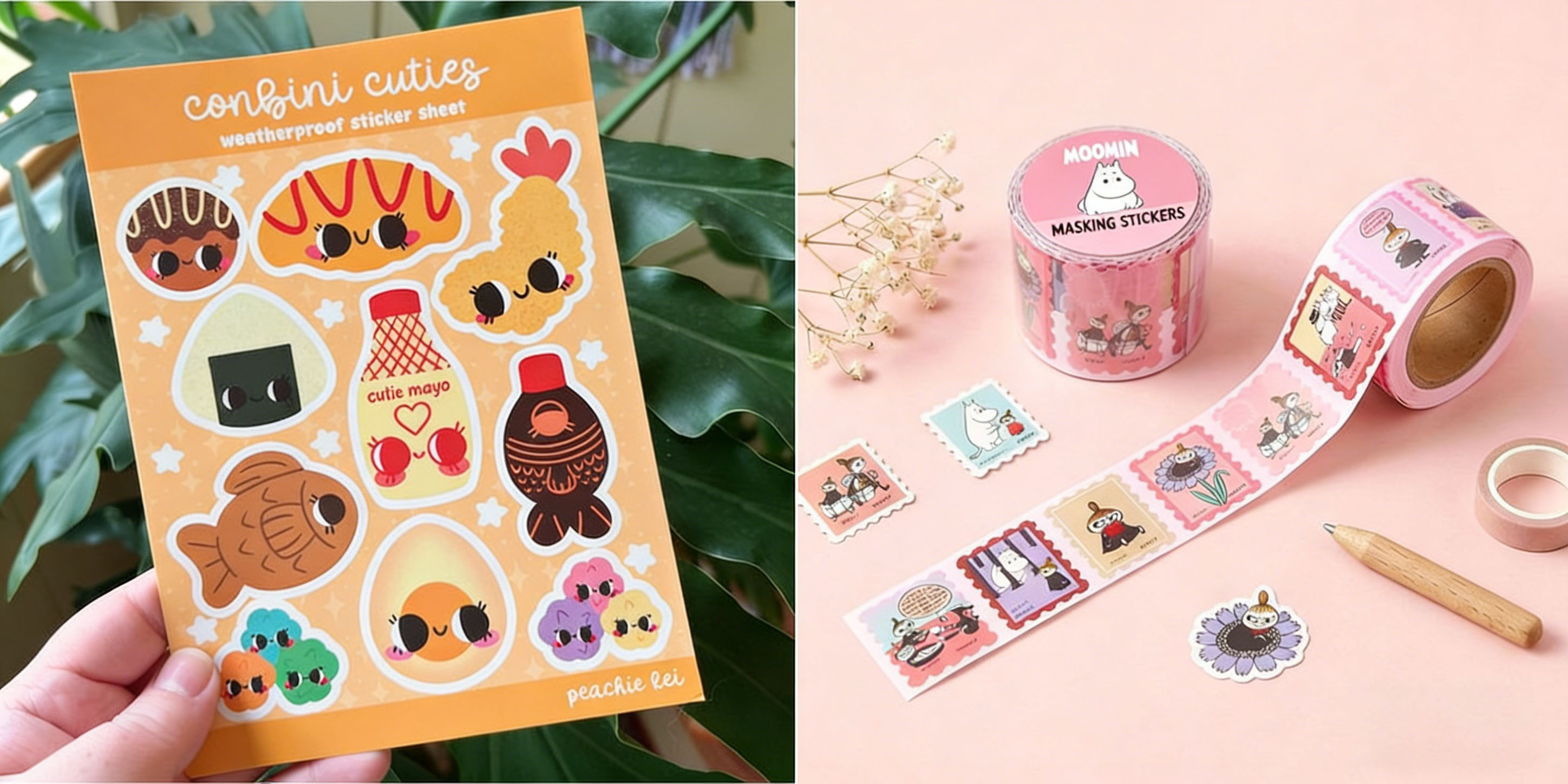
The choice comes down to one simple question: who is doing the peeling, and at what scale? If the answer is “my customer, once,” go with sheets. If the answer is “my production team, thousands of times,” go with rolls.
At StickerForgeco, we’ve built our entire operation around helping businesses get this right. We’re a dedicated custom stickerandlabel manufacturer, and we work with everyone—from solo creators launching their first collection to fulfillment teams running thousands of orders a day.
What sets us apart isn’t just our equipment. It’s how we approach every project: understanding your actual workflow and building the right solution around it. Whether that means sheets that wow your customers or rolls that keep your production line moving, we handle the details so you don’t have to.
Here’s what working with us looks like:
No Minimum Order (Digital Printing): Need a small batch to test a design? Want a mixed sheet with five different illustrations? Our digital printing setup handles it with no MOQ requirements. You order what you need, period.
Factory Direct Pricing (Save 30%): When you work directly with us, you skip the brokers and middlemen. You get wholesale factory pricing, which typically saves 30% or more compared to going through resellers. Premium materials and precision production shouldn’t require a premium markup.
9-Day Global Delivery: We know that lead times matter. Whether you’re restocking bestsellers or rushing a campaign, we’ve streamlined our production and shipping to deliver anywhere in the world in as little as 9 days.
Ready to move forward—whether on sheets or rolls? Reach out to StickerForgeco for a quote, and let’s build a solution that fits your workflow perfectly.
Q: Can I use sticker rolls without a labeling machine?
A: You can, but it’s rarely the best experience. Hand-peeling from rolls is slower than sheets. If you’re applying by hand and don’t plan to automate soon, sheets are usually the better choice.
Q: Can I print multiple designs on a single roll?
A: Technically yes, but it complicates production significantly. If you need variety, sheets are almost always the simpler, more cost-effective solution.
Q: Which format is cheaper?
A: It depends entirely on quantity. For small to medium runs, sheets are often comparable or cheaper. For large-scale orders, rolls typically offer a better per-unit price due to production efficiencies.
Q: How do I know what specifications to order for rolls?
A: We walk you through it. If you’re using a specific machine or dispenser, we’ll help you define core size, label orientation, and pitch spacing to ensure everything works perfectly out of the box.
Q: Do you offer waterproof materials in both formats?
A: Absolutely. Both sheets and rolls are available in our full range of materials—including durable, waterproof vinyl for outdoor and industrial applications. The format doesn’t limit your material options.
Q: What if I’m still not sure which format I need?
A: That’s exactly why we exist. Send us your project details—volume, application method, use case—and we’ll give you a clear recommendation. No guesswork, just experience






 +8618128095554
 sales@stickerforgeco.com
 +8618128095554