
Get bulk orders for 30% less than local suppliers, plus free samples.
Get bulk orders for 30% less than local suppliers, plus free samples.
Matte recycled paper labels are pressure-sensitive labels made from paper stock that contains post-consumer or post-industrial recycled fiber, finished with a non-glossy, low-reflectivity surface. Unlike standard glossy labels, which reflect light and create a shiny appearance, matte recycled paper labels diffuse light, resulting in a soft, natural look and a pleasant tactile feel.
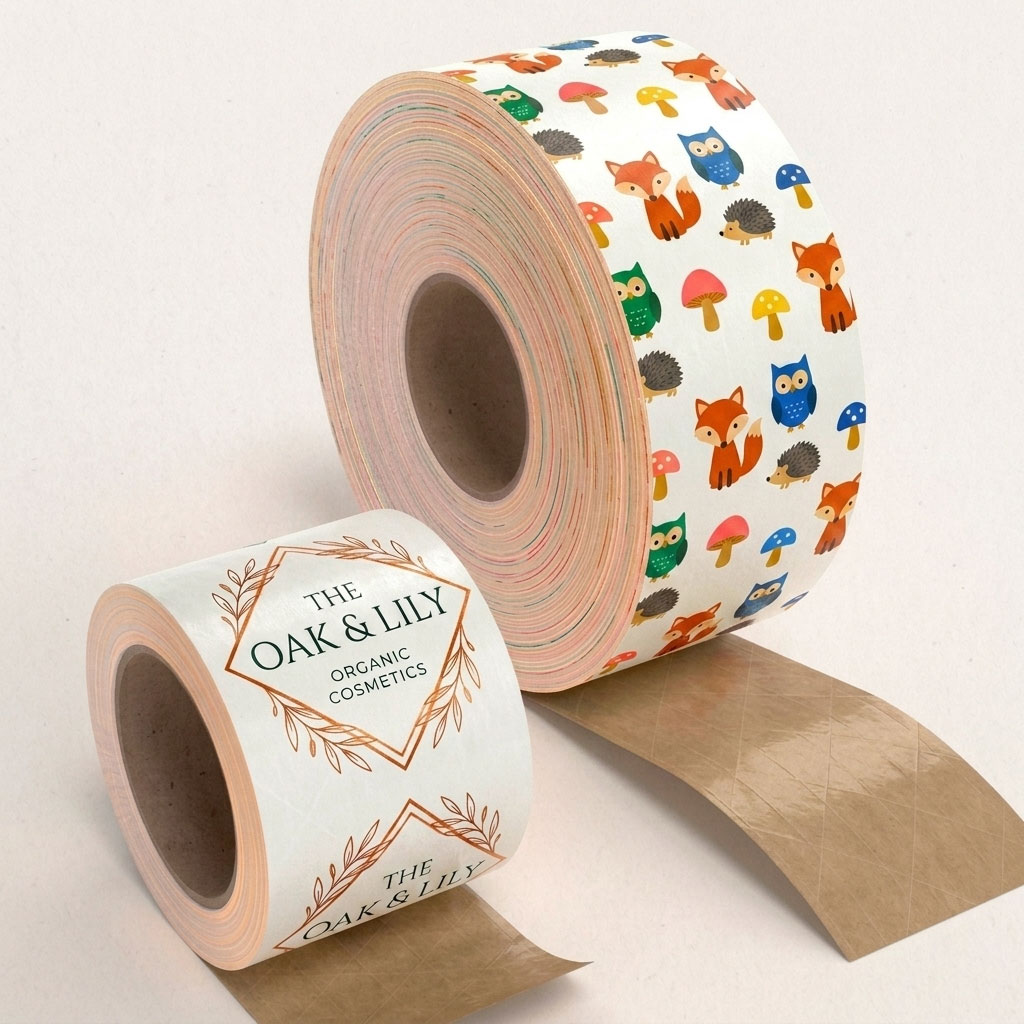
These labels are manufactured by taking recycled paper — sourced from discarded office paper, cardboard, newspapers, or other paper products — processing it into new paper sheets, applying a matte coating or finish, and then laminating it with adhesive and a release liner. The result is a sustainable, printable, and durable label solution suitable for a wide range of industries.
For brands looking to reduce their environmental footprint without compromising on label quality or aesthetics, matte recycled paper labels offer a compelling alternative to conventional virgin paper or synthetic label materials.
Matte recycled paper labels possess several defining characteristics that make them stand out in the labeling industry:
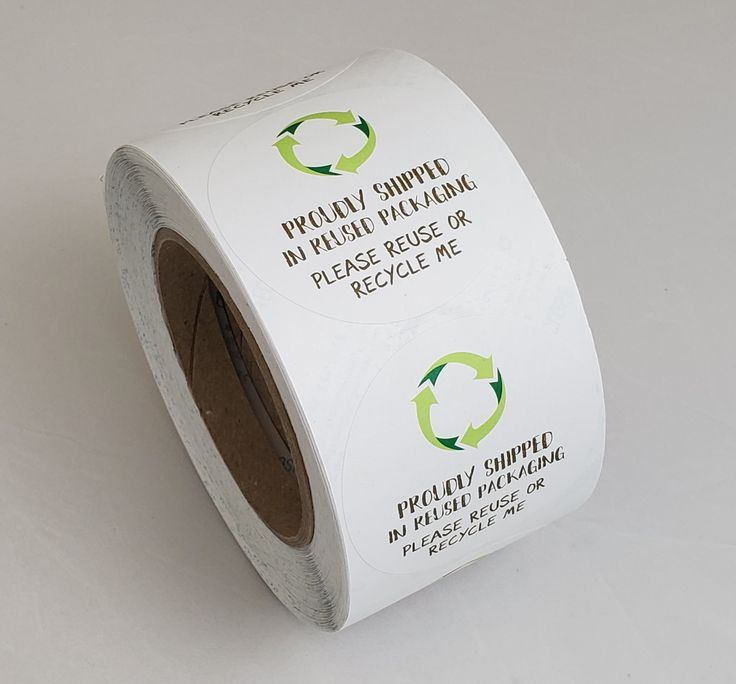
Low Surface Gloss: The matte finish eliminates glare, making barcodes, ingredient lists, and fine print easy to scan and read under any lighting condition — from retail shelves to warehouse scanners.
Smooth Yet Natural Texture: While smoother than uncoated recycled paper, these labels retain a subtle, organic feel that signals authenticity and environmental responsibility.
Excellent Ink Absorption: Matte surfaces absorb ink quickly, enabling fast drying times in digital, laser, and thermal transfer printing. This reduces smudging and allows for immediate handling after printing.
Reduced Light Reflection: Ideal for products displayed under bright retail lighting or photographed for e-commerce, as the label won't create distracting hot spots.
Eco-Friendly Composition: Typically contains 30%–100% post-consumer waste (PCW), with many options carrying FSC Recycled, SCS Recycled Content, or similar certifications.
Recyclable and Compostable: Unlike plastic labels, matte recycled paper labels can be recycled again with paper streams or composted under industrial conditions (depending on adhesive type).
These characteristics make matte recycled paper labels a practical, attractive, and responsible choice for product packaging.
Not all matte recycled paper labels are identical. Depending on the application and printing method, several distinct types are available:
Standard Matte Recycled Paper Labels: Lightly coated or uncoated, designed for general-purpose use on dry, indoor products such as boxes, paper bags, and glass bottles. Compatible with laser, inkjet, and offset printing.
Thermal Transfer Matte Recycled Labels: Specifically engineered for thermal transfer printers (e.g., Zebra, Sato, Honeywell). The matte coating accepts ribbon ink evenly, producing durable, scratch-resistant barcodes and text.
Direct Thermal Matte Recycled Labels: Treated to develop color when heated, without a ribbon. Used for shipping labels, short-term shelf marking, and e-commerce packing slips. Note that direct thermal labels can darken over time when exposed to heat or sunlight.
Removable Matte Recycled Paper Labels: Feature a low-tack adhesive that allows clean removal without residue. Ideal for temporary promotions, reusable containers, or pricing stickers.
Freezer-Grade Matte Recycled Labels: Designed to adhere to frozen surfaces (as low as –20°C) and resist moisture condensation. A specialized top coating protects the paper from becoming soggy.
Heavyweight Matte Recycled Cardstock Labels: Thicker (e.g., 180–300 gsm) and stiffer, used for hang tags, wine labels, premium product labels, and craft packaging.
Each type is optimized for different substrates, environments, and printing technologies.
Choosing matte recycled paper labels offers a range of strategic, operational, and environmental benefits:
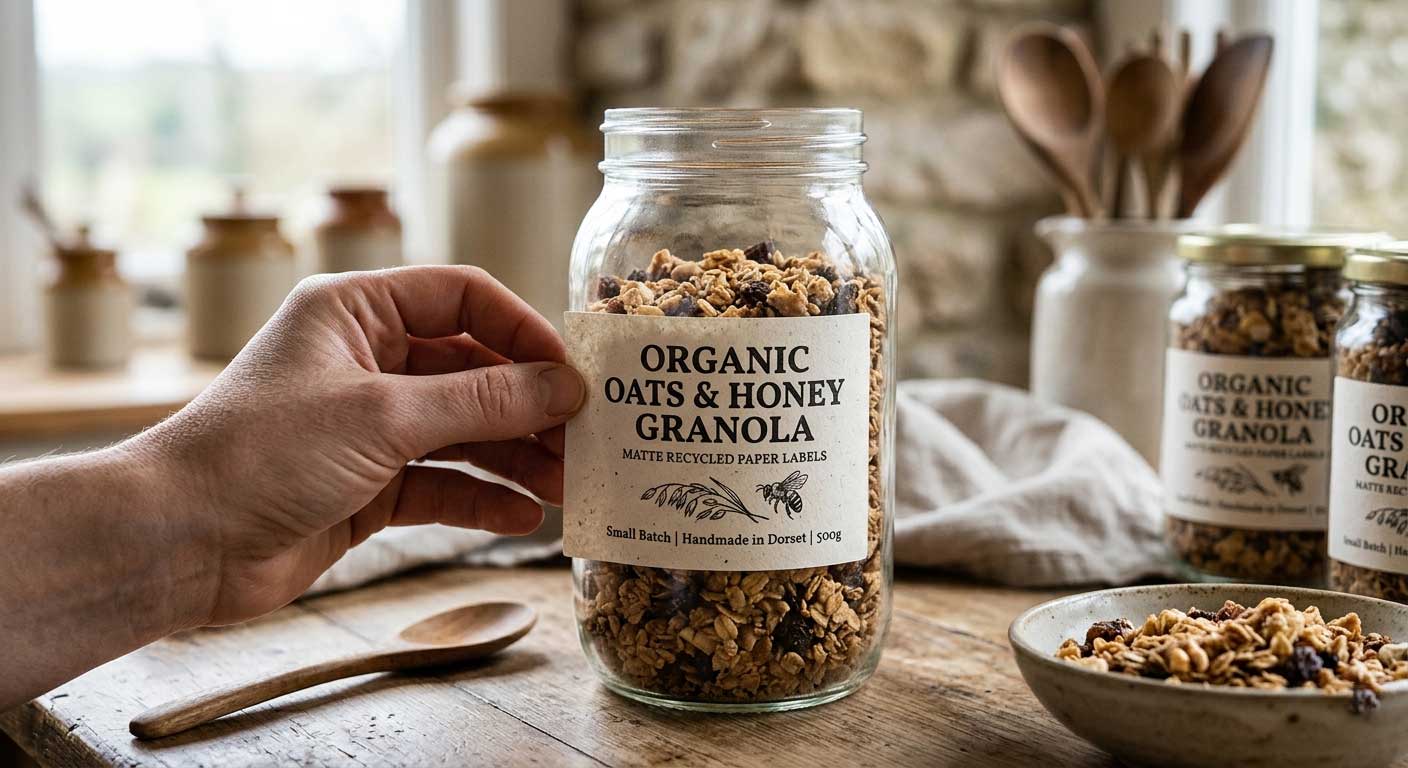
Environmental Responsibility: Each roll of matte recycled paper labels diverts waste from landfills, reduces virgin tree harvesting, and lowers carbon emissions compared to virgin paper production. For brands, this directly supports ESG goals and circular economy commitments.
Superior Readability and Scanability: Because matte surfaces don't reflect light, barcode scanners and QR code readers perform reliably even under challenging lighting conditions. This reduces checkout errors and improves inventory tracking.
Printing Versatility: Matte recycled paper labels work with most common printing technologies: laser printers, inkjet printers, thermal transfer printers, and even screen printing for specialty applications.
Premium Tactile Experience: The combination of recycled fiber and matte finish creates a soft, velvety feel that consumers increasingly associate with quality, authenticity, and natural brands.
Cost-Effective Sustainability: Compared to specialty eco-materials like biodegradable films, stone paper, or grass paper, matte recycled paper labels offer a much more affordable entry point into sustainable packaging.
Regulatory and Retailer Compliance: Major retailers (e.g., Walmart, Target, Aldi) and B Corp certification increasingly require packaging with recycled content. Matte recycled paper labels help brands meet these requirements without a complete packaging overhaul.
Brand Differentiation: A matte recycled paper label tells a story. It signals to customers that your brand cares about materials, waste reduction, and thoughtful design.
For small and medium-sized businesses, these advantages make matte recycled paper labels a practical first step toward more responsible packaging.
To determine whether matte recycled paper labels are suitable for your product and environment, it's essential to understand their material performance metrics:
Tensile Strength: Slightly lower than virgin fiber paper due to fiber shortening during the recycling process. However, modern recycling technology blends recycled fibers with a small percentage of virgin fiber (typically 10–30%) to achieve sufficient strength for most labeling applications — including high-speed automatic labeling lines.
Opacity: High-quality matte recycled paper labels achieve 88–95% opacity, which prevents show-through of adhesives or underlying packaging graphics. This is particularly important for clear or white glass bottles and light-colored packaging.
Surface Roughness (PPS): Measured in Parker Print-Surf units. Premium matte recycled label stock typically has a PPS of 3–6 µm, ensuring clean printing without excessive ink bleed or uneven toner adhesion.
Adhesion Performance: Matte recycled paper bonds well with a variety of adhesives — permanent, removable, freezer-grade, and high-tack acrylic adhesives. Surface energy is generally high enough for reliable adhesion to cardboard, kraft paper, glass, and certain plastics (HDPE, PP).
Moisture Resistance: Standard matte recycled paper labels have moderate moisture resistance. For refrigerated products (2–8°C) or brief exposure to condensation, standard stock often works. For freezers, wet environments, or ice baths, a moisture-resistant top coating or laminate is required.
Aging and Yellowing: Lower-grade recycled paper containing lignin may yellow over time when exposed to direct sunlight. Premium matte recycled paper labels use lignin-reduced or lignin-free pulp, improving archival stability for up to several years indoors.
Temperature Range: Most matte recycled paper labels perform reliably from –20°C to 60°C for indoor and limited outdoor use. For extreme heat or prolonged UV exposure, synthetic or polypropylene labels are more appropriate.
When sourced from reputable manufacturers and matched to the correct adhesive and coating, matte recycled paper labels deliver reliable performance across the majority of common product labeling scenarios.
From a functional perspective, matte recycled paper labels work through three interconnected mechanisms:
1. Fiber Reclamation and Paper Formation
Used paper products — such as office paper, corrugated cardboard, and newspapers — are collected, sorted, and processed at a recycling facility. The paper is mixed with water and chemicals to break it down into individual cellulose fibers. Inks, coatings, and contaminants are removed through de-inking and screening processes. The cleaned fibers are then blended (sometimes with a small percentage of virgin fiber for strength) and formed into new paper sheets. The matte finish is achieved by controlling the calendering process — less intense pressing between rollers preserves a diffuse, light-scattering surface rather than a shiny, polished one.
2. Ink and Toner Interaction
When ink or toner is applied to the matte surface, the paper's microscopic irregularities trap the printing medium while absorbing vehicle (solvent or water) quickly. This results in sharp, dry prints with minimal dot gain (the spreading of ink dots that reduces detail). Unlike glossy paper, where ink sits on a smooth, sealed surface and reflects light, the matte surface scatters light in multiple directions, eliminating glare and making fine details readable.
3. Adhesive Integration and Liner Construction
For pressure-sensitive labels, the matte recycled paper face stock is laminated to a silicone-coated release liner with an adhesive layer. The paper's porosity allows solvents from water-based or solvent-based adhesives to evaporate properly during curing, ensuring strong fiber-to-adhesive bonding. The release liner (typically glassine, PET, or kraft paper) protects the adhesive until application. When the label is applied to a substrate, pressure activates the adhesive, forming a bond that can be permanent, removable, or repositionable depending on the adhesive formulation.
In practical terms, this means matte recycled paper labels function identically to conventional paper labels — but with significantly lower environmental impact and a distinct aesthetic character.
When choosing matte recycled paper labels for your products, consider the following seven factors to ensure optimal performance and value:
Recycled Content Percentage: Confirm the exact percentage of post-consumer waste (PCW). Options range from 30% to 100%. Higher PCW is more sustainable but may result in slightly lower whiteness or strength. For most product labels, 60–90% PCW offers an excellent balance.
Certifications: Look for FSC Recycled, PEFC, SCS Recycled Content, or Cradle to Cradle certifications. These provide third-party verification of environmental claims and are often required for retail or B Corp documentation.
Adhesive Type and Performance: Select based on your application surface and environment:
Permanent adhesive – For long-term bonding on dry surfaces.
Removable adhesive – For temporary labels or reusable containers.
Freezer adhesive – For frozen food, cold storage, or refrigerated products.
High-tack adhesive – For difficult surfaces like rough cardboard or low-energy plastics.
Liner Compatibility: For automatic label dispensing machines, ensure the liner material (glassine, PET, or kraft) and liner thickness match your equipment specifications. Incompatible liners can cause misfeeds or label waste.
Printing Method Compatibility: Confirm that the label stock is rated for your specific printer:
Laser printers – Require heat-resistant adhesive and paper.
Inkjet printers – Require coatings that absorb water-based ink without bleeding.
Thermal transfer – Requires a matte coating that accepts ribbon ink evenly.
Direct thermal – Requires a heat-reactive coating (note: not all matte recycled labels are thermal-compatible).
Moisture, Oil, and Chemical Resistance: If the label will be used on food, cosmetic, or beverage containers exposed to grease, oil, or frequent handling, consider a matte recycled label with a protective varnish or top coating. For wet or icy environments, a laminate may be necessary.
Lead Time, Minimum Order Quantity (MOQ), and Cost: Small-batch buyers and startups should prioritize suppliers offering digital printing with no minimum order. Compare factory-direct pricing versus distributor pricing — savings of 20–30% are common when buying directly from a manufacturer like StickerForgeco.
By carefully evaluating these factors, you can select a matte recycled paper label that meets both your sustainability goals and your operational requirements.
Matte recycled paper labels excel in a wide range of applications where sustainability, readability, and natural aesthetics are valued. Below are the most common and effective use cases:
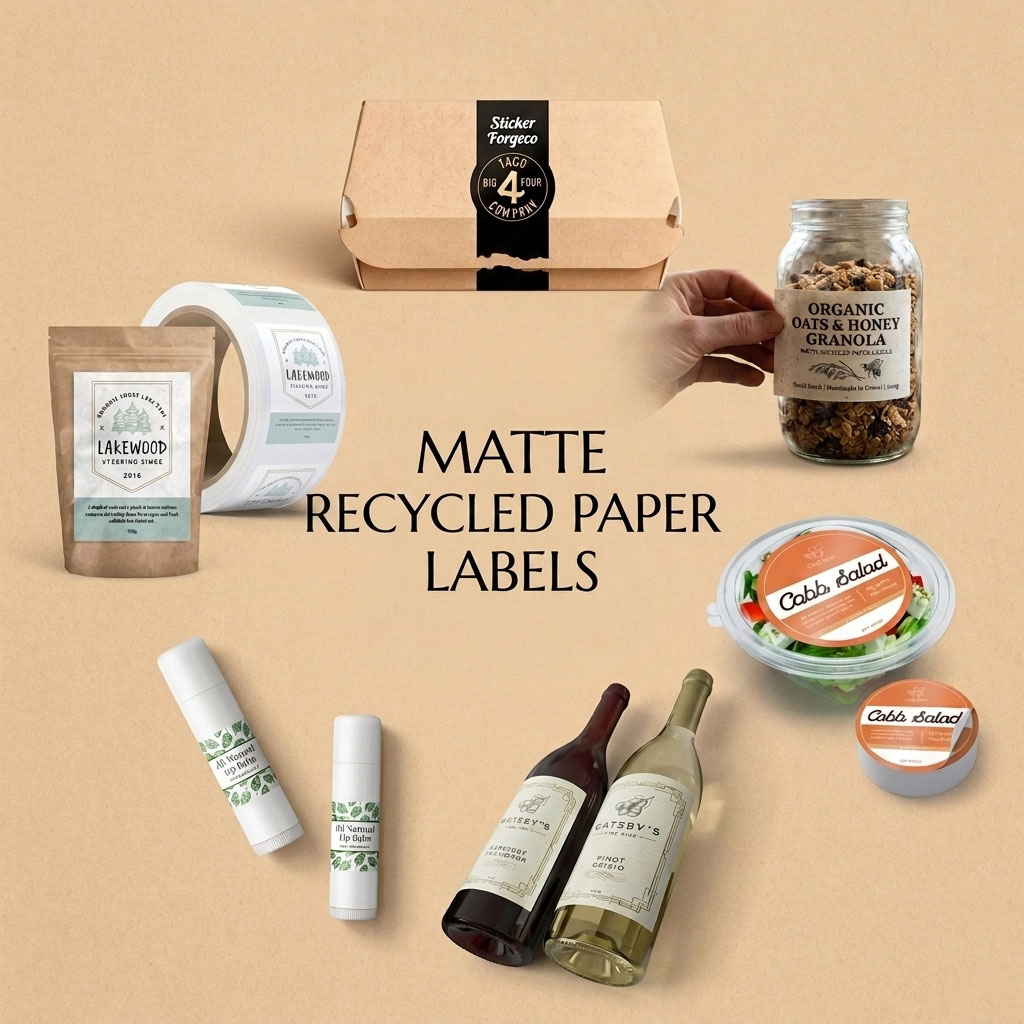
Product Labels for Organic and Natural Goods: Glass bottles (cold brew coffee, olive oil, kombucha), cardboard boxes (tea, snack bars, supplements), and paper bags (flour, coffee beans, dried goods). The matte finish reinforces the natural, unprocessed message of organic brands.
Wine, Beer, and Spirits Labels: Many craft beverage brands choose matte recycled paper labels for their premium tactile feel and vintage aesthetic. The matte surface pairs exceptionally well with embossing, foil stamping, and letterpress printing.
E-Commerce and Shipping Labels: Major online retailers and fulfillment centers increasingly require or incentivize recycled-content shipping labels. Matte recycled paper labels work with thermal transfer and direct thermal printers, making them suitable for warehouse automation.
Cosmetics and Skincare Labels: For brands emphasizing clean ingredients, cruelty-free practices, or zero-waste packaging, matte recycled paper labels align perfectly with the brand narrative. The soft texture feels good on the hand and looks premium on frosted glass or bamboo packaging.
Hang Tags and Care Labels for Fashion: Clothing, accessories, and footwear brands use matte recycled hang tags to communicate ethical production claims. The material can be sewn into garments as care labels or attached with recycled cotton strings.
Restaurant Menus and Food Packaging: Menus printed on matte recycled paper with a protective coating are easy to clean, glare-free, and environmentally responsible. Food containers, takeout boxes, and coffee cups can also carry matte recycled labels.
Subscription Boxes and Gift Packaging: Unboxing experiences benefit from the tactile quality of matte recycled paper labels. They photograph well, feel premium, and convey thoughtfulness to the recipient.
Stationery and Office Labels: Notebooks, folders, envelopes, and office filing labels made from matte recycled paper support corporate sustainability initiatives while performing reliably in daily use.
Industrial and Warehouse Labels: For bins, shelves, pallets, and inventory tracking, matte recycled paper labels offer a cost-effective, recyclable alternative to synthetic labels — as long as moisture and abrasion exposure are low.
Each of these applications leverages the unique properties of matte recycled paper labels: printability, texture, sustainability, and readability.
At StickerForgeco, we specialize in custom stickers and custom labels for businesses across all industries. Whether you need product labels, packaging stickers, or branding materials, we provide reliable, high-quality solutions tailored to your needs.
Our service advantages include:
No Minimum Order (Digital Printing) – Ideal for startups, small batches, or test runs.
Factory Direct Pricing (Save 30%) – Competitive pricing without middlemen.
9-Day Global Delivery – Fast and dependable turnaround worldwide.
We can help your brand go green with custom matte recycled paper labels that combine sustainability, premium texture, and professional performance. Let your eco-friendly commitment show on every label.
Partner with StickerForgeco — where quality meets sustainability.
Q1: Are matte recycled paper labels waterproof?
No, standard matte recycled paper labels are not waterproof. They offer moderate moisture resistance but will absorb water over time. For refrigerated products, brief condensation is usually acceptable, but for freezers, wet environments, or ice baths, you need a moisture-resistant top coating, a varnish, or a laminate. StickerForgeco offers treated matte recycled labels for cold and damp conditions.
Q2: Can I print matte recycled paper labels on a standard office laser printer?
Yes, most standard matte recycled paper label sheets are compatible with laser printers. However, always check the product specification for "laser-compatible" labeling. Avoid using labels with excessive edge adhesive bleed, which can damage printer rollers. For best results, use label sheets specifically designed for laser or copier use. StickerForgeco provides printer-tested matte recycled label sheets.
Q3: Are matte recycled paper labels more expensive than regular paper labels?
It depends on volume, certification, and supplier. Basic matte recycled paper labels can be comparable in price to standard uncoated paper labels. Premium options with 100% PCW and FSC certification may cost 10–30% more than virgin paper labels. However, with factory-direct suppliers like StickerForgeco, you can save up to 30% compared to traditional distributors, making sustainable labels more affordable than many assume.
Q4: How should I store unused matte recycled paper labels?
Store matte recycled paper labels in a cool, dry environment (40–60% relative humidity, 15–25°C). Keep them in their original packaging until use, away from direct sunlight, dust, humidity extremes, and heat sources. Improper storage can cause label curling, adhesive degradation, liner curling, or feeding issues in printers and automatic applicators. Properly stored, most matte recycled paper labels have a shelf life of 12–24 months.






 +8618128095554
 sales@stickerforgeco.com
 +8618128095554