
Get bulk orders for 30% less than local suppliers, plus free samples.
Get bulk orders for 30% less than local suppliers, plus free samples.
You spend months perfecting your recipe. You design a beautiful logo. You finally launch your product—and three weeks later, a customer emails you a photo of their bottle: the label is peeling off, wrinkled, covered in condensation gunk. It looks cheap. It feels embarrassing. And now that customer is wondering what else you cut corners on.
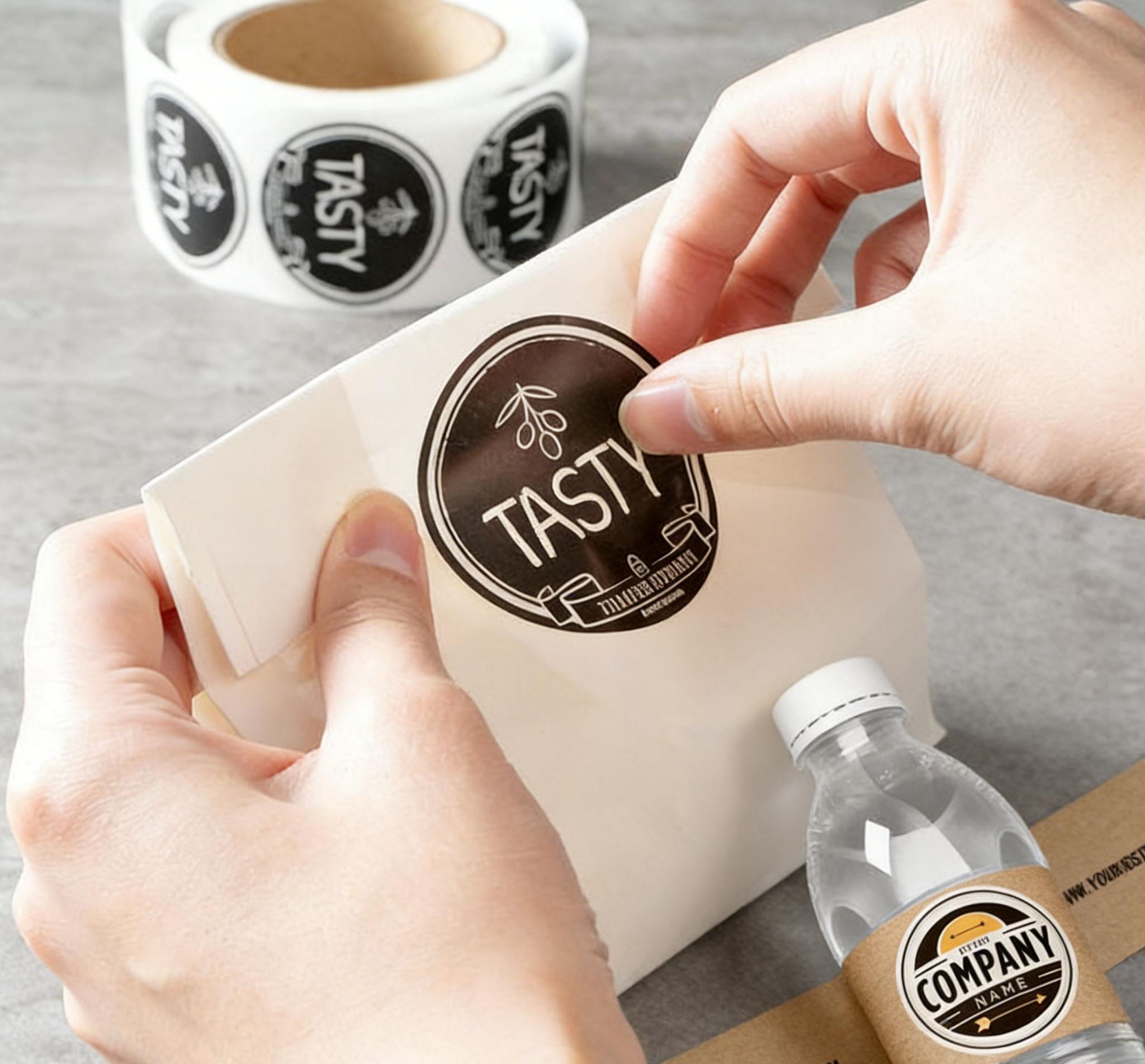
For food and beverage products, the right label isn't just about looking good on day one. It's about surviving the refrigerator, the ice bucket, the delivery truck, and the customer's sticky fingers—all while keeping your brand looking exactly as you intended.
As someone who prints labels every day for food and drink brands, I can tell you: the secret isn't picking a "waterproof label" off a checklist. A truly reliable label is a system where the material, adhesive, ink, and finish all work together for your specific product. A vinyl label with the wrong adhesive will fall off a cold bottle. A beautifully printed paper label will turn into a soggy mess on a hot sauce jar. If you want labels that actually perform in the real world, you have to look at the whole package.
Let's break down what really matters.
You probably think of a label as just a sticker. And technically, you're not wrong. But if you're selling food or drinks, thinking of it as "just a sticker" is the fastest way to end up with peeling edges and disappointed customers.
A professional food label is actually a three-layer engineered system:
Face Stock: The top layer. This is what you print on. It can be paper (cheap, looks great, dies in moisture) or plastic films like vinyl, PP, or PET (tough, waterproof, costs more).
Adhesive: The middle layer. This is the invisible workhorse. It determines whether your label stays stuck through condensation, freezer temperatures, or oily surfaces.
Liner: The backing paper you peel off. It matters more than you think—especially if you're using automatic labeling machines that need precise liner tension to dispense correctly.
In my shop, I tell clients: a label is only as strong as its weakest layer. You can put the most expensive vinyl on top, but if the adhesive fails in the refrigerator, you've wasted your money.
I've seen beautiful products fail on shelves because of one mistake: underestimating the label.
Here's why labels are non-negotiable for food and beverage:
They're Your Silent Salesperson
Your customer picks up your bottle before they taste what's inside. The label's texture, finish, and visual quality tell them whether this is a premium product or a cheap impulse buy—before they even read the ingredients.
They Keep You Out of Legal Trouble
Food labels are regulated. In China, that means GB 7718 (the national standard for food labeling). In the US or EU, it's different rules. If your label doesn't display net weight, ingredients, allergen info, and storage instructions correctly—and with the right font size—your product can be pulled from shelves or held at customs. I've seen it happen.
They Survive the Supply Chain
Your product goes through a lot before it reaches a customer. Refrigerated trucks. Condensation. Stacked boxes rubbing against each other. A good label is designed to survive all of that and still look fresh.
They Protect Your Customer's Experience
When a customer buys your product and the label peels off in their fridge, they don't think "bad label." They think "cheap brand." That single moment of frustration erodes trust you worked hard to build.
Not all labels are created equal. The ones that actually perform in real-world food environments share five technical characteristics:
| Feature | What It Means |
|---|---|
| Moisture Resistance | The face stock and adhesive can handle condensation, refrigeration, and even ice buckets without failing. This usually means a plastic face stock (PP, PET) and an acrylic adhesive. |
| Temperature Tolerance | The adhesive stays sticky at low temperatures (frozen goods need adhesives rated to -18°C or lower) and doesn't soften or ooze at higher temperatures (like hot-fill bottling). |
| Oil & Chemical Resistance | For sauces, dressings, or anything with fat content, the label needs an adhesive that won't break down when exposed to oil. Regular adhesives will turn into goo. |
| Print Durability | The ink has to survive handling, rubbing against other packages, and UV light. UV-cured or eco-solvent inks bond to the material rather than sitting on top. |
| Regulatory Readiness | The material and printing method must allow for small, legible text, variable data (batch numbers, expiry dates), and sufficient space for mandatory information. |
In my experience, the most common failure I see isn't from choosing the wrong face stock—it's from mismatching the adhesive to the environment. A beautiful vinyl label with a standard permanent adhesive will peel right off a cold kombucha bottle after three days in the fridge. The material isn't the problem; the glue is.
Before you even look at material samples, you need to answer four questions about your product. I ask these questions to every client, because the answers determine everything else.
Is it high-fat? Oil-based products need oil-resistant adhesives. Regular adhesives will soften and the label will slide around.
Is it acidic? Citrus, vinegar, tomato—these can affect some adhesives over time.
Is it carbonated? Pressure changes can stress labels, especially on plastic bottles that expand slightly.
Storage: Room temperature? Refrigerated? Frozen?
Transport: Will it go through temperature swings? Humidity?
End-use: Will customers put it in an ice bucket? A cooler full of melted ice water? The refrigerator door where it gets opened and closed a hundred times?
I had a client once making cold brew coffee. They stored it refrigerated but shipped it unrefrigerated. By the time it reached stores, condensation had formed inside the packaging—and their paper labels were ruined. We switched to a PP material with a freezer-grade adhesive, and the problem disappeared.
Manual application: A worker peels and sticks by hand. This is forgiving on material choice.
Automatic labeling machines: These run at high speed. The liner material, label stiffness, and roll configuration all matter. A label that's too flimsy or a liner that's too sticky will jam the machine and stop production.
Premium brand: You want textured paper, metallic foils, embossing—tactile finishes that signal quality.
Everyday brand: You want durability and cost-efficiency. Glossy film with strong adhesive.
Eco-conscious brand: You might want recycled paper or compostable materials. Just know that "eco" and "durable in wet conditions" are often trade-offs.
I've printed labels for hundreds of food and beverage brands. This is the process I use to narrow down options without wasting time on materials that won't work.
Write down every environment your product will touch:
Filling line temperature
Storage (temperature, duration)
Shipping conditions
Retail display (refrigerated or ambient)
Consumer use (fridge, freezer, ice bucket, microwave)
This document becomes your technical brief. If you skip this step, you're guessing.
Here's my cheat sheet based on what actually works:
| Application Scenario | Recommended Face Stock | Recommended Adhesive |
|---|---|---|
| Ambient dry goods (snacks, dry spices) | Semi-gloss paper | Permanent acrylic |
| Refrigerated beverages (juice, kombucha, dairy) | White or clear PP | High-tack acrylic, freezer-grade |
| Frozen products | PE or PP (flexible) | Low-temperature acrylic (rated to -25°C) |
| Hot-fill (over 85°C) | PET (polyester) | Heat-stable permanent adhesive |
| High-fat sauces, oils | Oil-resistant PP | Oil-resistant permanent adhesive |
| Glass bottles (wine, spirits, premium goods) | Clear BOPP or textured paper | Permanent clear adhesive |
A note on glass vs. plastic: Glass is high-energy—most adhesives stick well. Plastic bottles (especially polypropylene) are low-energy and require specially formulated adhesives. Use the wrong one, and your label will peel within days.
Ink type: For short runs or variable data (batch numbers, QR codes), digital printing is flexible. For large volumes, flexographic printing with UV inks gives the best durability.
Laminate: This is the clear layer on top. It's your label's armor. A laminated label resists scratches, moisture, and UV fading. An unlaminated label is unprotected. In my shop, I don't recommend skipping laminate for any product that will see handling or moisture.
Finish: Glossy makes colors pop. Matte gives a modern, non-glare look. Functionally, both offer the same protection if they're properly laminated.
Before you approve a design, confirm:
All mandatory information is present (product name, net quantity, ingredient list, nutrition facts, allergen declaration, date marks, storage instructions)
Font sizes meet minimum requirements (typically 1.2mm for most text, 1.8mm for net quantity)
There's sufficient contrast between text and background
I've had clients submit beautiful designs that had no room for the legally required nutrition panel. We had to go back to layout, which cost time and money. Check this before you finalize artwork.
This step saves more headaches than any other.
Print a small batch. Apply them to your actual containers. Put them through the worst-case conditions: refrigerate for a week, put one in an ice bucket, rub the surface with a damp cloth. If the label survives your test, it'll survive the real world.
If you're using automatic labeling equipment, run a test roll through the machine. Check for jams, mis-feeds, and consistent application.
Here's how this plays out in real products. I've printed labels for all of these categories, and these are the combinations that consistently perform:
| Application | Recommended Solution | Why This Works |
|---|---|---|
| Craft beer / glass bottles | Clear BOPP + hot stamping + laminate | Clear material shows off glass quality; metallic accents elevate premium positioning; laminate protects during refrigeration and handling |
| Cold-pressed juices / dairy | White or clear PP + gloss laminate | PP resists condensation; gloss laminate keeps colors vibrant even when wet |
| Coffee bags / tea tins | Kraft paper + matte laminate | Natural texture aligns with artisanal branding; matte laminate provides scuff resistance without losing the handmade feel |
| Hot sauces / sriracha | Oil-resistant PP + high-tack permanent adhesive | Oil-resistant adhesive prevents breakdown from the sauce; high-tack ensures it stays on squeeze bottles through repeated use |
| Baked goods / cookies | Paper + gloss laminate + custom die-cut | Paper gives a classic bakery feel; laminate protects against handling; custom shapes stand out on crowded shelves |
| Frozen ready meals | PE + low-temperature adhesive | PE remains flexible at freezing temperatures; adhesive rated for -18°C ensures labels stay attached through freezer to microwave |
I run StickerForgeco, and I've been printing food and beverage labels for years. Here's what sets us apart—and why clients stick with us after their first order.
We Start with Questions, Not a Price List
When you contact us, I don't immediately ask for your artwork and tell you a price. I ask what you're making, where it's stored, how it's shipped, and how it's used. Those answers determine the right material and adhesive—and that saves you from ordering the wrong label and having to reorder.
We Understand the Technical Details
I can tell you which adhesive works on polypropylene bottles. I know which laminates hold up in ice buckets and which don't. I've tested materials in freezers, refrigerators, and hot-fill lines. This isn't theory—it's experience from printing thousands of label rolls.
We Test Before We Run
For every new project, we print samples and recommend real-world testing before full production. It adds a few days to the timeline, but it eliminates surprises.
We Work Within Your Reality
Not every brand needs the same label. A small-batch hot sauce maker testing a new flavor doesn't need a 50,000-roll run. We offer flexible quantities—small runs for testing and scaling, large runs for established products.
We Know the Rules
We can't provide legal advice, but we know the technical requirements of food labeling standards. We'll flag potential issues with layout, font sizes, and material compatibility before you go to print.
Q: What's the minimum order quantity?
It depends on the material and printing method. Digital printing allows smaller quantities—we've done runs as low as 500 labels for testing. Flexographic printing is more cost-effective at higher volumes, typically starting around 10,000+.
Q: How long does sampling take?
For digital samples, 3–5 business days. For custom tooling (die-cut shapes, embossing dies), add another 5–7 days. Sample charges apply but are credited toward the final order.
Q: Are your labels waterproof? Can they go in the refrigerator?
Yes, if we select the right materials. A paper label won't survive a refrigerator. But a laminated vinyl or PP label with the correct adhesive will handle condensation, ice buckets, and repeated refrigeration without issues.
Q: Can they go through the dishwasher?
This depends. A laminated PET label with heat-resistant adhesive can survive a dishwasher. Standard vinyl labels generally cannot—the heat of the drying cycle can cause shrinkage or adhesive failure. If dishwasher use is a requirement, tell me upfront and I'll spec accordingly.
Q: What if a label is applied crookedly? Can it be reapplied?
Most permanent adhesives are designed for one-time application. If you need repositionable labels for manual application, we can use a removable adhesive formulation. Just note that removable adhesives have lower ultimate holding strength.
Q: Can you help ensure our label meets regulations?
We review technical layout—font sizes, space allocation, material compatibility—against the relevant standards (GB 7718 for China, FDA for US, etc.). Final legal approval should come from your compliance team, but we'll flag obvious issues before production.
Q: What's the difference between your materials and cheap stickers on Amazon?
The short answer: we engineer for your specific application. Amazon stickers are often printed on standard vinyl with generic adhesive and no laminate. They look fine on a laptop but fail in a refrigerator. Our labels are built with the right combination of material, adhesive, ink, and laminate for your product's real-world conditions.
Choose the right label—start with the right conversation.
Contact StickerForgeco to discuss your food and beverage labeling project.






 +8618128095554
 sales@stickerforgeco.com
 +8618128095554