




How to Choose the Right Glossy Paper Labels for Your Products?
In today’s hyper-competitive retail landscape, product packaging is no longer just a protective container; it is a critical marketing vehicle. First impressions matter immensely. When a consumer walks down a crowded retail aisle, your product label is often the very first touchpoint they have with your brand. Research consistently shows that consumers make an initial judgment about a product within a mere few seconds of spotting it on a shelf. In those crucial ticks of the clock, your label acts as a silent salesman, working hard to grab attention, convey quality, establish emotional resonance, and drive final purchase decisions.
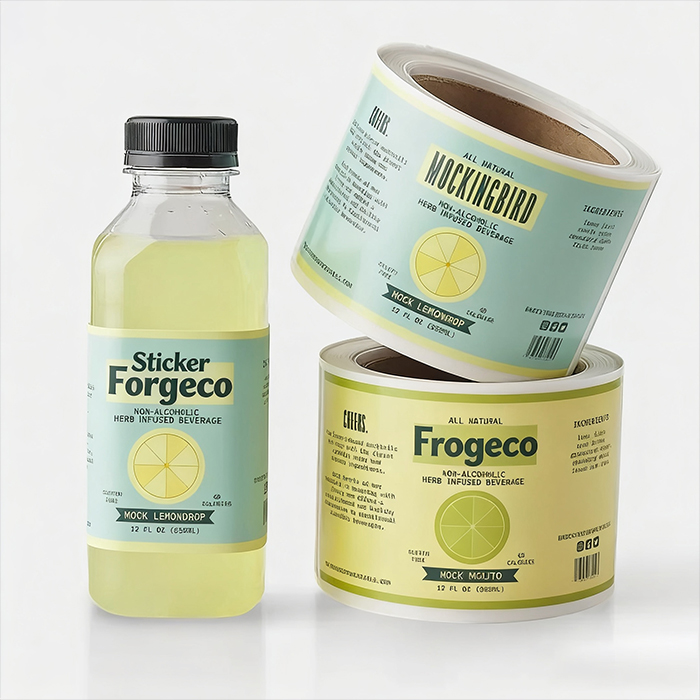
Among the vast array of material finishes available to modern brands, glossy labels remain an absolute standby for their exceptional ability to instantly elevate product aesthetics. A high-gloss finish brings a dynamic energy to artwork, giving packaging a polished, premium look that speaks volumes about the quality of the product inside. However, navigating the world of label procurement is not always straightforward, and not all shine is created equal. Choosing the wrong paper grade, selecting an incompatible adhesive, or neglecting environmental vulnerabilities can quickly result in peeling edges, faded colors, or a cheapened brand image. This ultimate, in-depth guide will walk you through every essential factor—from environmental stress analysis to precise adhesive matching—to ensure you choose the perfect glossy label for your unique product lineup.
What Are Glossy Paper Labels?
To make an informed purchasing decision, it helps to understand exactly what goes into the manufacturing of glossy paper labels. At their core, these are premium engineering solutions consisting of a high-quality, paper-based face stock paired with a specialized, light-reflecting topcoat or varnish. During production, a smoothed paper base is treated with a liquid compound—often a UV-curable or water-based acrylic coating—which is then rapidly dried or cured under intensive light. This process seals the porous fibers of the paper, creating an ultra-smooth, glass-like top layer.
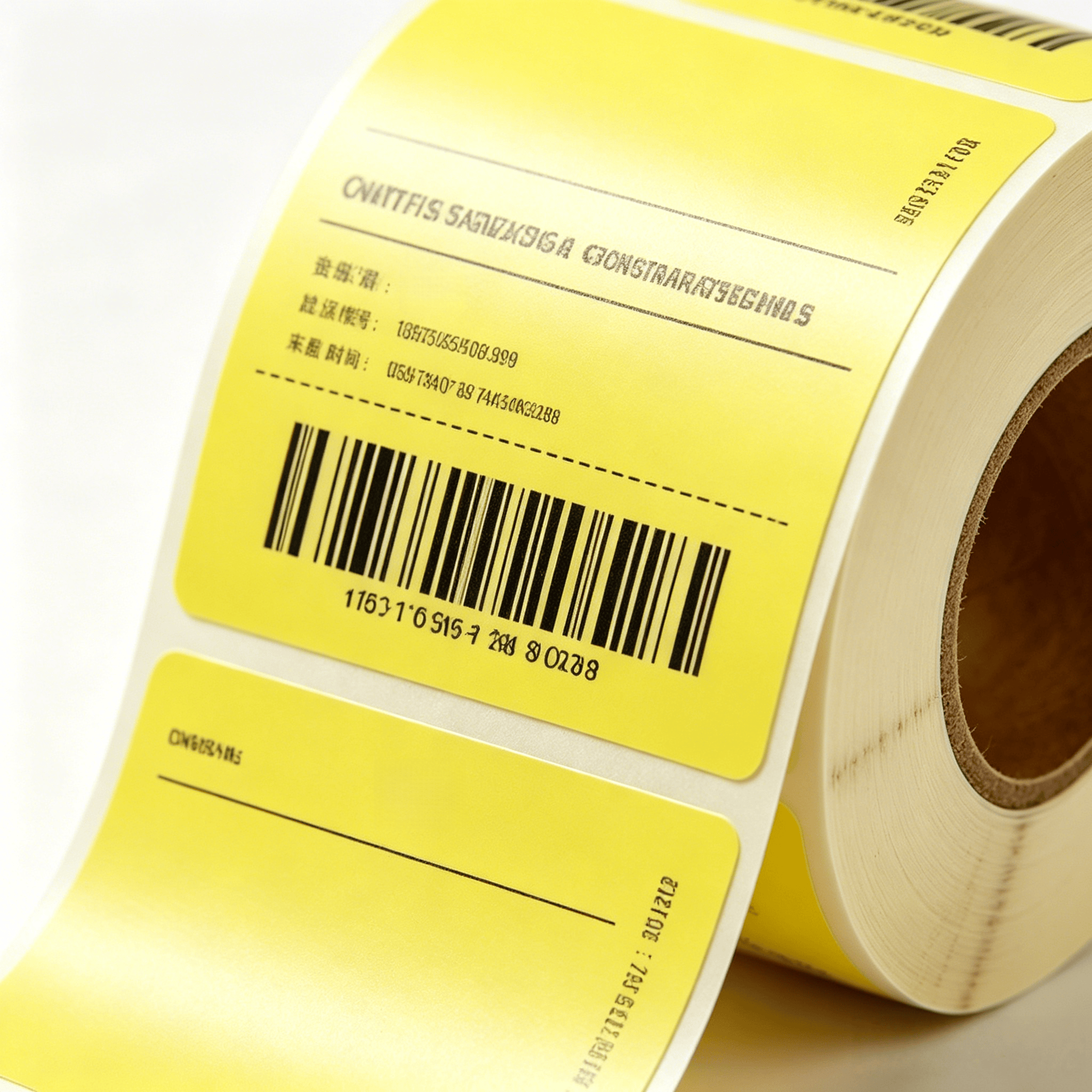
This shiny, uniform surface acts much like a magnifying glass for your custom artwork. By preventing printing inks from sinking too deeply into the paper fibers, the glossy topcoat locks the pigments right at the surface layer. The result is a stunning enhancement of ink saturation: blacks become deeper and more absolute, white spaces look brilliantly clean, and colors appear significantly more vibrant than they would on an untreated substrate.
Unlike matte finishes that intentionally diffuse and absorb light to create a soft, muted, and understated appearance, the high-gloss surface actively reflects light. This creates a crisp, high-contrast visual display. It is the definitive choice for brands that want their intricate graphics, corporate logos, and essential product names to pop with maximum clarity and definitions, ensuring that no detail of the graphic design is lost to the eye.
Why Are Glossy Paper Labels So Popular?
If you take a deliberate walk down any modern supermarket, boutique retail shop, or big-box store aisle, you will immediately notice that high-shine packaging systematically dominates the shelves. This widespread preference is not accidental; it is driven by human psychology, manufacturing economics, and modern printing capabilities. There are three core reasons why these labels remain a foundational favorite across diverse global industries:
Unmatched "Shelf Appeal" and Consumer Psychology
The human brain is evolutionarily wired to notice light-reflecting objects—a trait psychologists often trace back to our primitive need to locate clean, shimmering water sources. In a commercial retail environment, this translates directly into a concept known as "shelf appeal." A glossy finish catches the harsh, ambient overhead fluorescent or LED lighting of a retail store. As a consumer walks past, the shifting angles cause the label to glimmer slightly, naturally drawing the consumer's gaze away from adjacent, flat-finished items. By successfully breaking through the visual noise of a crowded shelf, you clear the first and hardest hurdle in retail marketing: getting noticed.
A Highly Cost-Effective Path to Premium Aesthetics
Every brand manager dreams of giving their product a luxury, top-shelf look, but operating margins require strict budget discipline. Synthetic film materials, such as vinyl, polyethylene, or biaxially-oriented polypropylene (BOPP), are excellent for specific use cases but come with a steeper price tag. Glossy paper-based options provide a brilliant compromise. They deliver a high-end, upscale, and pristine appearance that rivals the look of expensive plastics, but at a fraction of the raw material cost. This enables small startups and mid-sized enterprises to achieve professional, commercial-grade branding without destroying their manufacturing margins.
Superior Compatibility with Modern Printing Infrastructure
The physical composition of treated glossy paper makes it an exceptionally cooperative medium for a wide range of industrial printing machinery. Because the face stock is uniform and stable, it handles high-speed printing presses beautifully. Whether your manufacturing partner utilizes digital printing for short-run agility, flexographic presses for massive bulk efficiency, or high-definition laser and inkjet systems, glossy paper yields exceptional results. It prevents ink bleeding and feathering, ensuring that micro-text, regulatory ingredient lists, barcodes, and complex photographic gradients are rendered with flawless, razor-sharp accuracy.
Key Benefits of Glossy Paper Labels
Opting for a glossy paper finish brings several distinct advantages to your product packaging strategy, balancing aesthetic triumphs with practical, day-to-day functional performance:
✔Maximization of Contrast and Visual Impact: High-gloss finishes maximize the dynamic range of your printed artwork. Jewel tones like emerald green, sapphire blue, and ruby red look dramatically richer; pastels look crisper; and complex geometric designs maintain perfect visual separation.
✔Enhanced Smudge and Scratch Resistance: Compared to raw, uncoated, or untreated classic paper labels, the protective glossy topcoat or varnish layer acts as a vital structural shield. During packing, boxing, and shipping, items inevitably rub against one another. A raw paper label can easily scuff, leave ink trails, or pick up oil from a handler's fingertips. The glossy finish shrugs off these hazards, protecting the underlying ink from rubbing off and guarding against unsightly fingerprint smudges.
✔Excellent Adhesive Formulation Bonding: The fibrous backside of a paper face stock is highly receptive to adhesive compounds. Whether a formulation uses a hot-melt, acrylic, or rubber-based adhesive, it easily penetrates the paper backing to form an incredibly strong, uniform bond. This ensures that once the label is pressed onto a standard packaging substrate like glass, plastic, or metal, it stays locked in place.
✔Eco-Friendly and Sustainable Foundations: Environmental responsibility is a major selling point for modern consumers. Because the core material layer of these labels is derived from wood fibers, they are fundamentally more bio-degradable and easier to process in traditional recycling streams than 100% synthetic plastic film alternatives. By pairing paper face stocks with eco-conscious adhesives, brands can easily align their high-shine packaging with sustainable corporate goals.
Applications: Where Are Glossy Paper Labels Used?
Thanks to their unique combination of structural versatility, economical pricing, and striking appearance, glossy paper-based labels are utilized across a massive spectrum of commercial and industrial sectors:
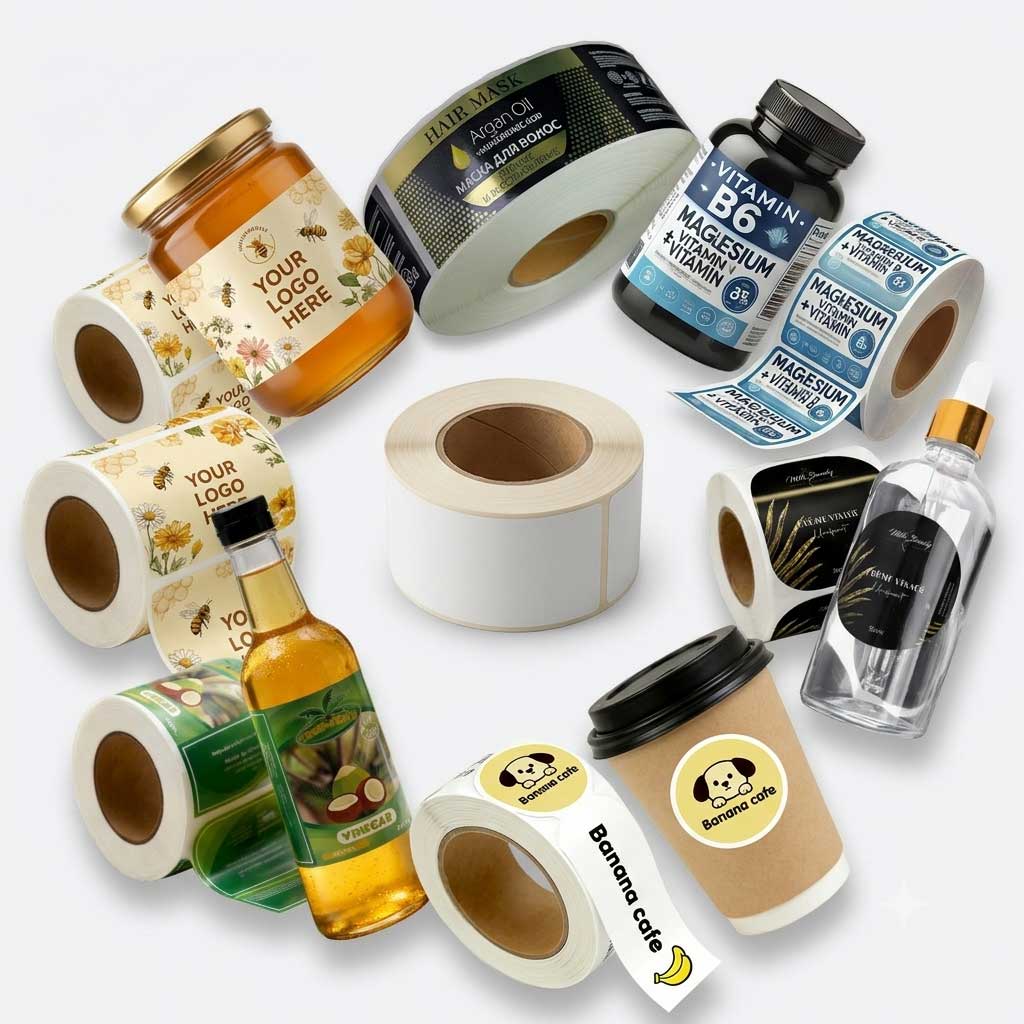
Food and Beverage Packaging
In the culinary market, taste appeal is heavily dictated by visual presentation. Glossy finishes are widely used for gourmet sauces, hot-fill honey jars, specialty spice blends, artisanal coffee bags, organic jams, and high-end confectionery boxes. The high shine gives the packaging a clean, premium feel that implies freshness and culinary excellence, making the food imagery printed on the label look genuinely appetizing.
Cosmetics and Personal Care
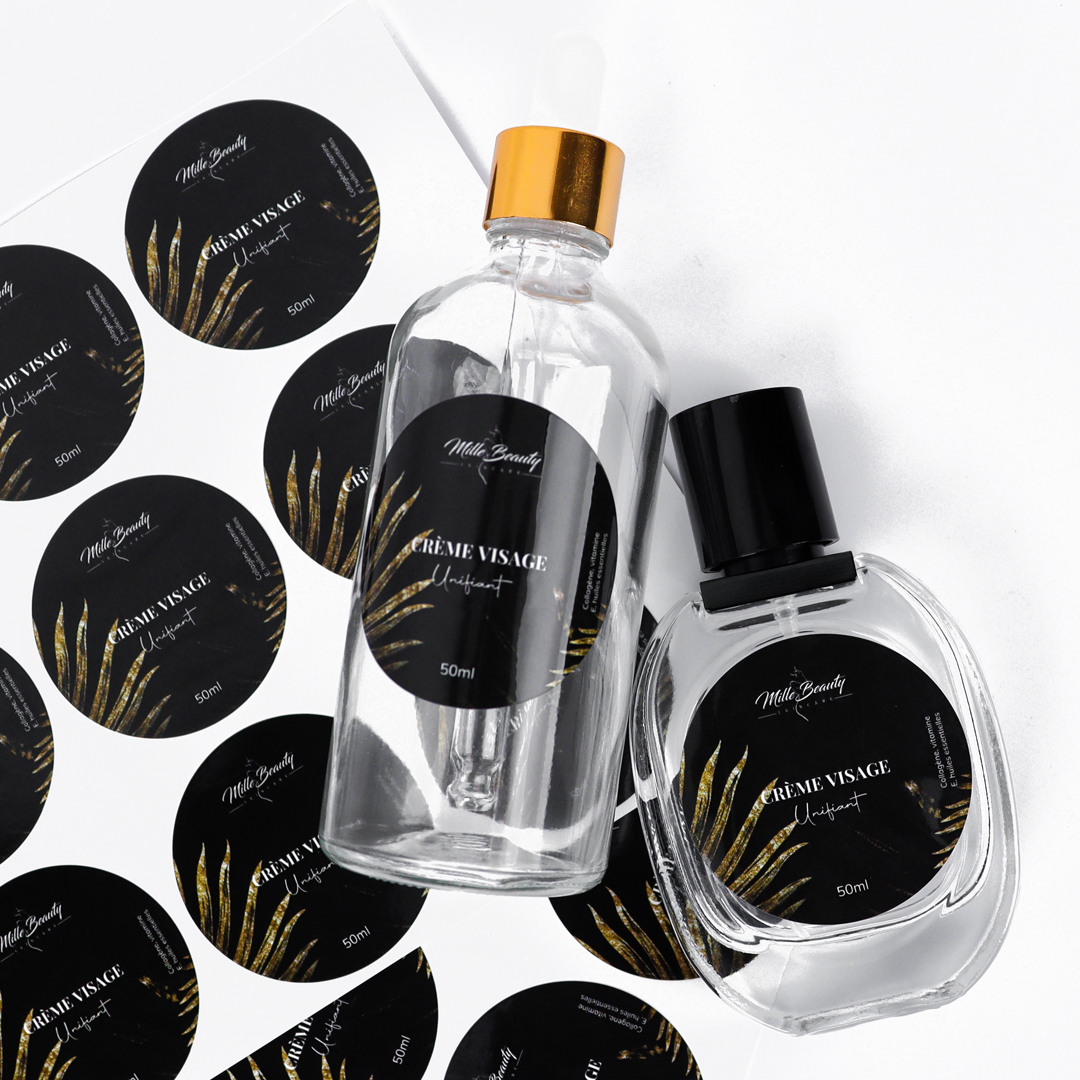
The beauty industry thrives on the perception of luxury, hygiene, and self-care. Glossy labels are the standard choice for luxury lotion bottles, body scrubs, bath salt containers, lip balm tubes, and premium soap wrapping. The smooth, reflective surface projects a sleek, high-end, and ultra-clean aesthetic that reassures consumers of the product’s quality before they ever open the cap.
Vitamins, Supplements, and Nutraceuticals
Health and wellness products must strike a fine balance between professional authority and visual appeal. Supplement bottles, protein powder tubs, and vitamin jars frequently utilize glossy face stocks. The material allows for high-density printing, meaning that extensive regulatory data, nutritional panels, and usage instructions remain perfectly legible while the vibrant branding elements still pop on the shelf.
E-Commerce, Promotional, and Corporate Retail Branding
In the digital age, the unboxing experience is a vital branding moment. Companies use glossy paper to print custom e-commerce box seals, branded shipping labels, promotional event stickers, and corporate gifting wraps. When a customer receives a package sealed with a sample, shiny custom label, it instantly elevates their perception of the brand from an ordinary online seller to an elite retail service.
How to Choose the Right Glossy Paper Labels for Your Products?
To ensure your custom labels perform as beautifully in the real world as they look on a digital design proof, you must evaluate a series of technical specifications. Following these four structured steps before placing a bulk manufacturing order will prevent costly errors and guarantee a flawless product rollout:
Step 1: Assess the Absolute Product Life-Cycle Environment
You must critically analyze where your product will live, travel, and be used by the end consumer. If your items are destined for dry, temperature-controlled retail shelves and ambient household environments, a standard glossy paper label is absolutely perfect.
However, you must account for moisture, humidity, and thermal fluctuations. Will your product sit in a steamy bathroom (like a hair conditioner) or undergo rapid temperature drops in cold-storage units or freezers (like craft beer or frozen foods)? While glossy coatings offer standard moisture barrier protection, severe environments require a heavier paper grade, specialized water-resistant varnishes, or synthetic film bases.
It is also worth comparing alternatives during this evaluation stage. If you are designing packaging for a rustic, vintage, or organic product line where you actively want to avoid reflection and completely hide handling marks, soft matte labels might be the strategic answer your brand needs. But if your goal is bold, modern, and high-energy visibility, gloss remains the undisputed king.
Step 2: Match the Adhesive to the Specific Substrate
The container surface material—known technically as the substrate—dictates how well your label will stick over time. Smooth, non-porous surfaces like molded glass jars, aluminum cans, and rigid polyethylene (PET) plastics pair beautifully with glossy paper, but they require precision application techniques to completely avoid trapped air bubbles.
Conversely, textured or highly porous surfaces, such as rough corrugated cardboard boxes, unvarnished wooden cases, or fibrous kraft paper pouches, present less surface area for the glue to grab. For these materials, you must choose a label adhesive with a high initial tack and excellent fluid penetration to ensure the label fibers lock deeply into the packaging surface.
Step 3: Select the Correct Functional Adhesive Classification
Adhesives are broadly divided into categories based on their long-term performance profile:
Permanent Adhesives: This is the universal industry standard for retail products. Once applied and allowed to cure, a permanent adhesive forms an unbreakable, long-term bond with the container. Any attempt to peel the label off will result in the structural tearing of the paper base, ensuring tamper-evident security throughout the product's lifespan.
Removable Adhesives: These are temporary bonding agents. They provide enough initial stick to hold the label firmly in place during shipping and shelf display, but they allow the end consumer to cleanly peel the label off without tearing the paper or leaving a frustrating, sticky residue behind. This is ideal for promotional price tags, warranty overlays, or reusable glass containers.
Step 4: Determine the Proper Finishing Enhancements
To maximize the lifespan of your printed design against heavy physical handling, you need to choose the appropriate defensive topcoat:
UV Varnish: This liquid coating is flooded across the label and cured using intense ultraviolet light. It provides a fantastic, budget-friendly baseline shine, sharpens print colors, and offers reliable protection against light scratching and dust.
Film Lamination: This technique involves heat-bonding a microscopically thin layer of clear plastic film directly over the printed glossy paper. While slightly more expensive, lamination provides the ultimate defense system, making the label highly resistant to tearing, moisture exposure, household oils, and heavy friction during cross-country shipping.
Conclusion
Selecting the right glossy label for your product line is a careful, rewarding balance of striking visual graphic design and disciplined technical functionality. By taking the time to accurately chart your product’s storage and shipping environments, matching the physical properties of your adhesive to your specific packaging substrate, and optimizing your graphic elements to leverage high-contrast light reflections, your label will successfully drive retail sales while vigorously protecting your brand’s hard-earned market reputation. Investing in high-quality, professional labeling solutions is, ultimately, a direct investment in your brand’s perceived value and long-term commercial success.
Partner with StickerForgeco: Premium Custom Labels Manufacturer
When it comes to executing your product packaging strategy, you cannot afford to leave your printing quality to chance. You need an established, reliable manufacturing partner who can bring your brand's creative vision to life with absolute technical precision, rapid turnaround speeds, and factory-direct cost-efficiency.
That is where StickerForgeco comes in. As a premium custom labels manufacturer, we specialize in delivering elite, commercial-grade branding and packaging solutions tailored precisely to the needs of businesses of all shapes and sizes. From small, artisanal test batches for local markets to massive, multi-million unit retail distributions across the globe, we provide the cutting-edge printing technology, premium raw materials, and deep engineering expertise required to ensure your products look unforgettable on the shelf.
Why Choose StickerForgeco for Your Brand?
★From 100 to 1,000,000+ Units: Our flexible, advanced production facilities are uniquely structured to scale seamlessly alongside your business growth. We handle low-volume marketing trials and massive industrial rollouts with identical consistency and care.
★No Minimum Order Requirements (Advanced Digital Printing): Thanks to our substantial investments in state-of-the-art digital printing presses, startup brands can enjoy the freedom of zero minimum order quantity (MOQ) restrictions. You can print exactly the quantity you need today, allowing you to iterate your designs freely without tying up vital capital in slow-moving warehouse inventory.
★Factory-Direct Pricing (Save Up to 30%): We manage the entire manufacturing process in-house. By completely eliminating middleman brokers, trading agents, and third-party markups, we pass 100% of the financial efficiency down to you—allowing you to save up to 30% on your total packaging costs compared to standard industry brokers.
★9-Day Global Delivery Guarantee: In a fast-moving retail market, supply chain speed is a critical competitive edge. Our highly optimized logistics framework ensures that your custom label orders are rapidly printed, rigorously quality-checked by our engineering team, packaged, and delivered straight to your business doorstep within a strict 9-day global shipping window.
Drive Real Market Results with Premium Custom Glossy Paper Labels
Ready to transform your retail packaging from ordinary to extraordinary? StickerForgeco proudly offers fully customized glossy paper labels meticulously engineered to make your corporate logo stand out, your product text look razor-sharp under store lights, and your brand colors look breathtakingly vibrant. Our specialized engineering team is standing by to help you choose and calibrate the absolute perfect adhesive composition and defensive topcoat for your specific product ecosystem.
Don't settle for mediocre, uninspired packaging that gets ignored on the shelf. Contact the customer success team at StickerForgeco today to request a free material sample pack or to receive an instant, transparent custom quote. Let’s collaborate and build something beautiful for your brand today!
FAQs About Glossy Paper Labels
Q1: Are glossy paper labels fully waterproof?
A: While the specialized glossy topcoat or varnish layer offers highly effective water-resistance against casual moisture, light spills, condensing sweat, and damp hands, pure paper-based labels are not fundamentally 100% waterproof. If a paper label is completely submerged in water for extended periods or left exposed to heavy outdoor downpours, the raw edges of the paper base will eventually absorb liquid, leading to soft wrinkling. For products that require absolute, long-term underwater submersion, ask our engineering team about our synthetic plastic BOPP or vinyl options.
Q2: Can I manually write on custom glossy paper labels using a regular pen?
A: Because of the ultra-smooth, non-porous protective coating applied to generate the high-shine effect, standard ballpoint pens or water-based gel pens will struggle to anchor their ink, frequently resulting in smudging. If your production workflow requires warehouse staff to manually write expiration dates, unique batch numbers, or artisan signatures directly onto your labels, we highly recommend using an oil-based permanent marker (such as a Sharpie) and allowing it to air-dry for a few seconds to lock the ink into place.
Q3: What is the primary difference between choosing a glossy vs. a matte paper label?
A: The fundamental difference lies in how the surface treats light reflection. Glossy labels are designed to specularly reflect light, resulting in a high-intensity shine, deeply saturated color profiles, and a striking visual impact that commands attention. Matte finishes work in the opposite manner; they scatter and absorb light rays, delivering a completely flat, non-glare surface with a soft, elegant, and organic texture that projects an understated, artisanal, or heritage brand feel.
Q4: Can these high-gloss paper labels be applied securely to highly curved container surfaces?
A: Yes, absolutely! High-quality glossy paper stock possesses excellent tensile flexibility, allowing it to conform smoothly to tight cylindrical curves, small cosmetic tubes, tapered glass jars, and contoured wine bottles. To ensure application success and prevent "flagging" (a term for when the edges of a label peel up over time), always ensure that the container surface is completely clean, dry, and entirely free of manufacturing dust, oils, or fingerprint grease before pressing the label down firmly.
 +8618128095554
 sales@stickerforgeco.com
 +8618128095554