
Get bulk orders for 30% less than local suppliers, plus free samples.
Get bulk orders for 30% less than local suppliers, plus free samples.
Walk into any market, and you’ll see them: on water bottles, laptop lids, bakery boxes, and car bumpers. Stickers are one of the most versatile, high-return branding tools available. But while ordering a sticker seems simple, the gap between “a sticker that sticks” and “a sticker that performs perfectly for your specific application” is surprisingly wide.
You’re not just picking a shape and a color; you’re engineering a small piece of branding that must survive friction, moisture, sunlight, and application curves. In this guide, we’ll move beyond the basic definitions. We’ll dive deep into the technical specs that actually matter, the cost drivers that impact your bottom line, and—most importantly—how to navigate these choices to ensure your sticker works as hard as you do.
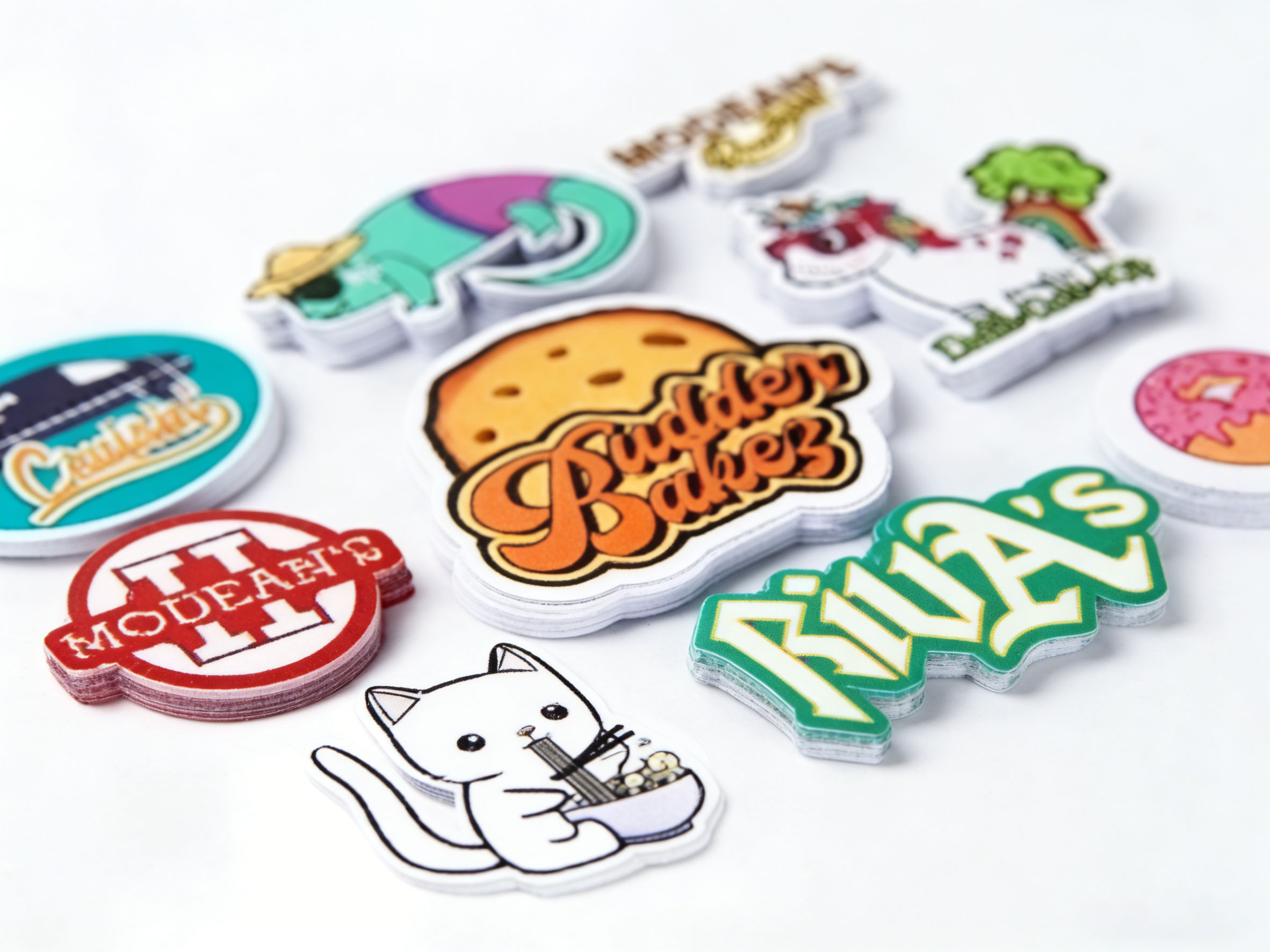
At their core, stickers are a combination of three layers: a face material (the visual layer), an adhesive (the bonding agent), and a liner (the backing paper you peel off). However, thinking of them solely as “labels” misses their modern function. Today, stickers are handshake replacements, packaging enhancers, and mobile billboards.
The evolution of printing technology has blurred the lines between a “sticker” and a “premium product.” We now have substrates that mimic the feel of velvet, adhesives that bond to oily metals, and laminates that block UV rays for years. Understanding that a sticker is a technical assembly—not just a printed piece of paper—is the first step toward making a choice that aligns with your brand’s physical presence.
Before you even look at a catalog, you need to assess the job you’re asking the sticker to do. These are the three questions I ask every customer before we even discuss materials or finishes:
The Surface Texture: Is it smooth glass or rough, fibrous kraft paper? A sticker that adheres perfectly to a glossy plastic tube might lift off a recycled cardboard box within hours because the porous surface breaks the adhesive bond. Some surfaces—like low-energy plastics (polyethylene, polypropylene)—require specialty adhesives to stick at all.
The Environmental Exposure: Will this sticker live on a bathroom mirror (high humidity), a shipping box (abrasion), or a car bumper (UV and temperature swings)? Environment dictates material choice more than aesthetics does. A beautiful paper sticker will fail in a week outdoors; a vinyl sticker is overkill for a dry indoor box.
The Lifecycle and Removal Plan: Is this a 3-day event promo that needs to come off cleanly, or a 5-year equipment label that must never budge? Defining the lifespan upfront saves you from overpaying for durability you don’t need—or under-delivering on durability you do. Also consider: will you need to remove these later? If yes, removable adhesive is non-negotiable.
Once you have clear answers to these three questions, you’re ready to make decisions across the four technical categories that define any sticker: Material (what it’s made of), Finish (how it looks and feels), Cut (its shape), and Format (how it’s delivered). The table below shows how your answers map to these categories:
| If you need… | Focus on… |
|---|---|
| Resistance to moisture, sun, or abrasion | Material (vinyl, PET) + Finish (lamination) |
| A specific visual or tactile feel | Finish (gloss, matte, foil, soft-touch) |
| A custom silhouette or easy peeling | Cut (die-cut vs. kiss-cut) |
| Fast application at scale | Format (rolls vs. sheets) |
You have a great design, but you’re staring at a dropdown menu filled with terms like “kiss cut,” “polyester,” and “holographic.” It’s frustrating—because picking the wrong one means stickers that peel, fade, or just look cheap.
The right sticker type depends on four things: what it’s made of (material) , how it looks and feels (finish) , how it’s cut (cut) , and how it arrives at your door (format) . Get these four right, and your sticker will perform exactly as intended—whether it’s living on a coffee cup, a car bumper, or a glass jar.
Below, I’ll walk you through the most common choices in each category, just like I do with my own customers when they ask: “What should I actually order?”
Material is the foundation. It decides whether your sticker survives rain, refrigeration, or rough handling. Here are the main ones we print every day.
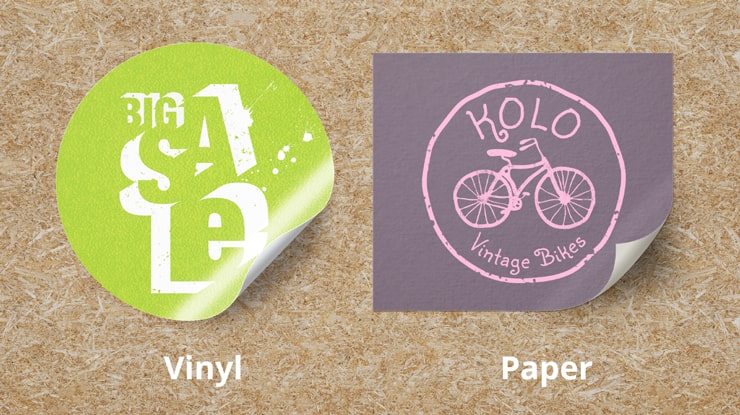
You need a sticker that can survive the dishwasher, the sun, or a daily commute. Paper will fall apart. Vinyl stickers won’t.
Vinyl is a plastic-based material that’s waterproof, UV-resistant, and tear-proof. It’s the safest choice for water bottles, laptops, car bumpers, and any outdoor application. In our factory, we print on vinyl using UV or eco-solvent inks that bond permanently—giving you 3 to 5 years of outdoor life.
Two types matter:
Calendered vinyl: Cost-effective, works on flat or slightly curved surfaces. Good for 3–5 years outdoors.
Cast vinyl: Thinner, more flexible. Conforms to complex curves (helmets, vehicle panels) and lasts 5–7 years outdoors.
| Feature | Vinyl Stickers | Paper Stickers |
|---|---|---|
| Water Resistance | 100% waterproof | Absorbs moisture, swells |
| Tear Strength | Stretches, hard to tear | Tears easily |
| Outdoor Life | 3–7 years | Weeks to months |
| Best Use | Products, cars, laptops | Dry packaging, indoor labels |
If you’re unsure where your customer will stick your design, choose vinyl. It covers 90% of use cases.
You’re labeling dry goods—bakery boxes, shipping cartons, or product packages that stay indoors. You want a natural look without overpaying for durability you don’t need.
Paper stickers are the budget-friendly option for short-to-medium term indoor use. They come in two main forms:
Uncoated paper: Writable surface. Perfect for batch numbers, dates, or artisan packaging.
Coated paper (gloss or matte): Better color vibrancy, light moisture resistance. Great for retail packaging that stays dry.
Paper stickers will absorb moisture and tear easily if used outdoors or in refrigeration. Keep them for dry environments, and they’ll serve you well.
Your product labels need to resist oils, chemicals, or extreme temperatures—think cosmetic jars, industrial equipment, or medical devices. Vinyl won’t hold up.
Polyester (PET) is a high-performance synthetic. It won’t shrink or stretch, handles solvents and heat (from freezer to autoclave), and resists yellowing from UV exposure. Clear PET gives a “no-label” look on glass; white PET provides excellent opacity for demanding environments.
Use PET for chemical containers, electronics, any application where dimensional stability matters.
You need waterproof labels for beverage bottles or refrigerated products, but you don’t require the extreme chemical resistance of PET.
Polypropylene is the cost-effective waterproof alternative. It’s stiffer than vinyl, handles refrigeration well, and offers good opacity. It’s the standard for beer bottles, food packaging, and retail price labels that see moisture but not heavy chemicals.
Your brand is built on sustainability. Sticking PVC plastic on a compostable box feels wrong.
Eco-friendly stickers are made from materials like kraft paper, sugarcane fiber (bagasse), or stone paper. They’re paired with compostable adhesives. But they come with trade-offs: they’re essentially fancy paper. Limited moisture resistance, shorter lifespan, and they won’t survive outdoor exposure.
| Material | Appearance | Durability | Disposal |
|---|---|---|---|
| Kraft Paper | Natural brown, textured | Low (indoor only) | Compostable / recyclable |
| Sugarcane (Bagasse) | Textured matte white | Low to medium (splash-resistant) | Compostable |
| Stone Paper | Smooth, waterproof | Medium | Tree-free, not biodegradable |
Use eco stickers on dry packaging where the customer sees the material as part of your brand story. Don’t use them on products that will sit in rain or condensation.
Static Cling: No adhesive—sticks via static electricity. Perfect for temporary window signs that need to be moved or removed cleanly.
Reflective: Contains glass beads that bounce light back. Essential for safety labels, emergency signage, and visibility applications.
Fluorescent (Neon): Highly pigmented paper that “glows” in daylight. Great for sale bursts, warehouse color-coding, or temporary notices. Neon pigments fade quickly in direct sun—months, not years.
Material gives you durability; finish gives you personality. The same vinyl sticker can feel completely different with a gloss vs. matte finish.
You want colors to pop on the shelf. Your packaging needs to grab attention from across the room.
Gloss finishes are high-sheen and reflective. They make colors look more saturated and contrast sharper. It’s the most common finish for retail packaging because it catches light and draws the eye.
Feel: Smooth, slick.
Best for: Product labels, promotional stickers, anything under retail lighting.
Trade-off: Shows fingerprints and smudges.
You’re going for a modern, premium look. Your packaging has a minimalist design with fine text that shouldn’t glare.
Matte finishes absorb light rather than reflecting it. The result is a soft, velvety surface that feels sophisticated and hides fingerprints well. Text-heavy designs are much easier to read without glare.
Feel: Smooth with a subtle texture; often called “soft-touch.”
Best for: Luxury packaging, wine labels, cosmetics, any brand aiming for an understated premium feel.
Trade-off: Slightly less vibrant colors; can show scuffs over time without lamination.
You’re launching a limited edition product or appealing to a younger, trend-focused audience. Flat color feels too boring.
Holographic stickers use a metalized vinyl base that diffracts light into a rainbow spectrum. The effect is embedded in the material—it won’t wear off.
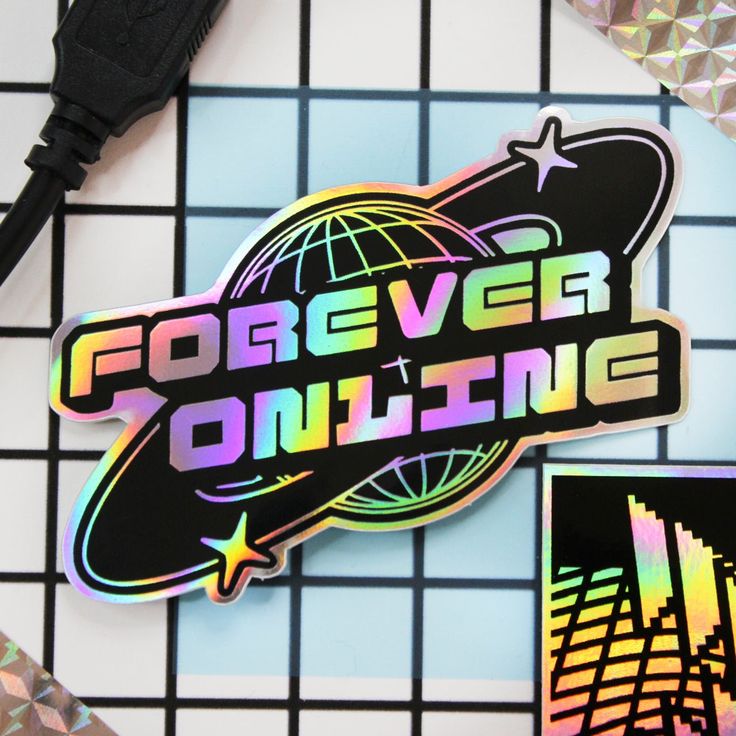
On holographic material, any area that’s white in your file becomes rainbow; any area that’s black blocks the effect. This lets you create designs where only certain elements “glow.” Keep text thick and high-contrast—thin fonts disappear in the light play.
Best for: Merch, limited drops, brands targeting streetwear or youth demographics.
Trade-off: Scratches more easily than standard vinyl; requires laminate for protection.
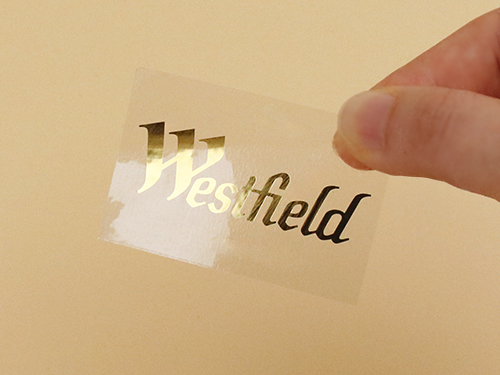
You run a luxury brand—weddings, cosmetics, premium candles. You need a label that signifies elegance and quality.
Foil stickers use gold, silver, or rose gold metallic paper to create a sophisticated, reflective finish. There are two ways to achieve this:
Hot foil stamping: A heated die presses into the material, leaving a debossed metallic impression. The premium standard for wine and high-end packaging.
Printing on metallic stock: More affordable, still delivers the reflective luxury look.
Foil works best on matte backgrounds. The contrast between a soft matte surface and shiny metallic accent creates the “expensive” feel. Keep foil stickers indoors—they’re not built for outdoor exposure.
Soft-touch: A velvety coating that feels luxurious. Common in cosmetics and high-end consumer goods.
Embossed: Raised texture that adds tactile dimension. Often combined with foil for premium packaging.
Canvas / Linen: Simulates fabric texture. Adds an artisan, handmade feel.
The cut determines the sticker’s silhouette and how it behaves during application.
You want your customers to take your sticker and immediately put it on their laptop. A square with excess white background looks unfinished.
Die-cut stickers are cut all the way through the material and liner to match the exact shape of your design. This creates a premium, standalone product that looks intentional.
How it works: A digital blade or steel die cuts the shape precisely. The excess material (the “matrix”) is removed, leaving only your stickers.
Best for: Individual stickers for sale, swag bags, giveaways.
Visual impact: No extra border. The sticker is exactly the shape of your artwork.
You have multiple designs on one sheet, or your artwork has delicate edges that would get bent if cut individually.
Kiss-cut stickers are cut through the sticker layer but leave the paper liner intact. The result is a square or rectangular sheet with peelable stickers arranged on it.
How it works: The blade is calibrated to cut only the top layer. The liner acts as a backing sheet—which you can also print on (branding, instructions, QR codes).
Best for: Sticker sheets with multiple designs, event handouts, retail packaging where customers peel the sticker themselves.
Application speed: Faster than die-cut for high-volume manual application—the extra liner gives you something to hold onto.
| Feature | Die-Cut | Kiss-Cut |
|---|---|---|
| Backing Paper | Cut to shape | Square or rectangular |
| Peeling Speed | Slower (requires fingernail) | Faster (easy to bend and flick) |
| Best For | Individual sale, swag | Sheets, high-volume hand application |
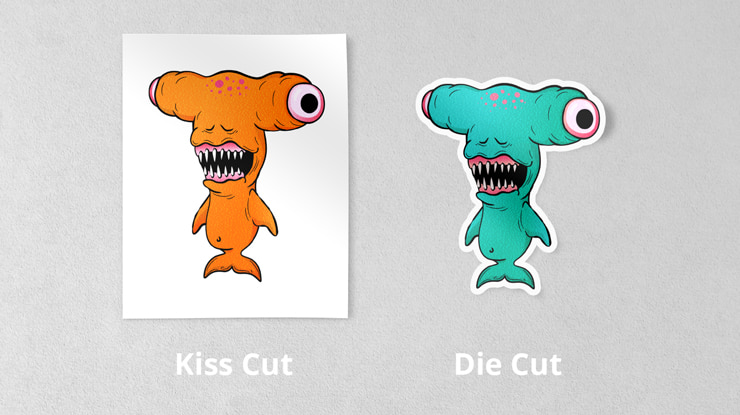
Standard shapes: Circles, ovals, squares, rounded rectangles. No custom die cost; faster turnaround. Rounded corners also reduce the chance of “dog-earing” (corners peeling up).
Custom shapes: Any silhouette that follows your artwork. Requires a custom die or digital cutting. Adds a one-time tooling cost but creates a distinctive brand asset.
Sharp 90-degree corners are the weak point of any sticker. They catch on fingernails and pockets. If you’re not doing a custom shape, at least choose rounded corners—they physically reduce lifting.
Format is about workflow. Two stickers with identical material and cut can cost differently and apply differently based solely on how they’re delivered.
Each sticker is a separate piece. They arrive stacked or bagged, ready for hand distribution.
Best for: Giveaways, retail sticker packs, low-volume application.
Sticker sheets are exactly what they sound like: multiple stickers arranged on a flat sheet, typically kiss-cut for easy peeling. Sheets can be letter-size or custom dimensions.
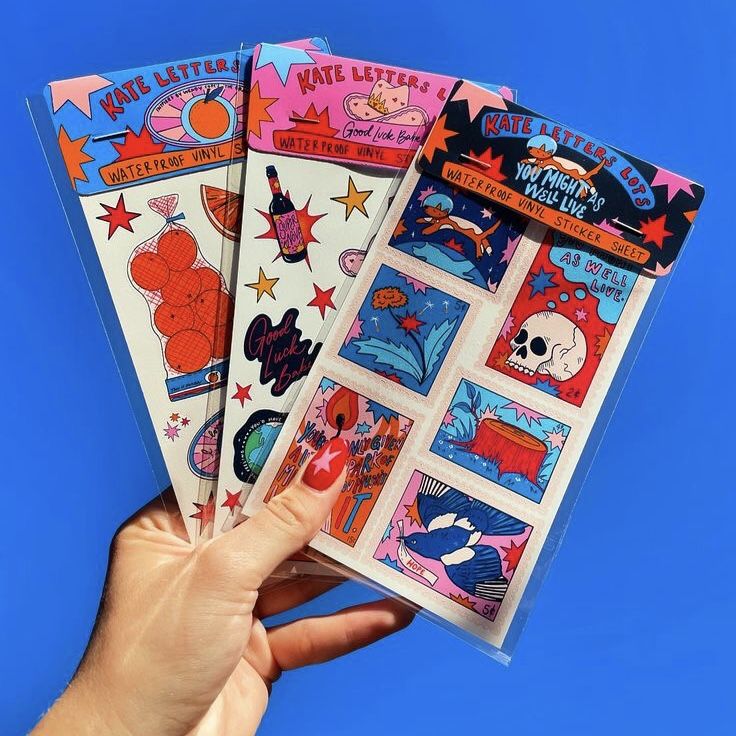
Best for: Event handouts, retail displays with multiple designs, seasonal multi-design packs.
Advantage: Easy to store; backing can be branded with your logo or instructions.
Stickers wound onto a roll with a silicone-coated liner. Rolls are the standard for industrial and high-volume applications.
Best for: High-volume packaging, fulfillment centers, any application requiring hundreds or thousands of identical labels applied daily.
Advantage: Compatible with automatic label applicators; fastest application speed; consistent positioning.
Trade-off: Higher upfront tooling for roll winding; less practical for small quantities.
If your team applies stickers by hand and you’re doing more than 500 units a month, switch to rolls. The time savings alone will pay for the format difference.
When you approach your next sticker project, don’t start with “I want holographic stickers.” Start with these four questions:
Material: What surface am I applying to? Will this face moisture, sun, or abrasion?
Finish: What visual feel do I want—bold, premium, understated, eye-catching?
Cut: Do I need a custom shape, or will a standard shape work? Will I hand these out individually or as sheets?
Format: How many will I apply per day? Am I doing this by hand or with equipment?
The answers will lead you to the right combination. And if you’re ever unsure, vinyl with a gloss finish, die-cut to your shape, delivered in rolls—that’s the “safe” bet that covers most professional applications.
You can pick the right material and finish and still get mediocre results if the underlying print specs are off. These are the details that decide whether stickers apply cleanly, stay put, and keep looking good after a week of real use.
Adhesive choice comes down to whether you need clean removal or long-term hold:
Permanent adhesive: Uses solvent-based acrylic that creates a strong, long-term bond. Once set, removal usually requires heat or solvents. Use this for anything you can’t afford to shift, curl, or slide during transit.
Removable adhesive: Uses rubber-based formula that allows for clean removal for up to six months. Essential for temporary window signs, seasonal promotions, or any application where the sticker needs to come off without residue.
High-tack adhesive: Specifically formulated for difficult surfaces like low-surface-energy plastics (polyethylene, polypropylene) or textured surfaces like corrugated cardboard. If standard vinyl won’t stick to your plastic product, this is the solution.
A laminate is a clear film applied over the printed sticker. It serves two critical functions: protection and structure.
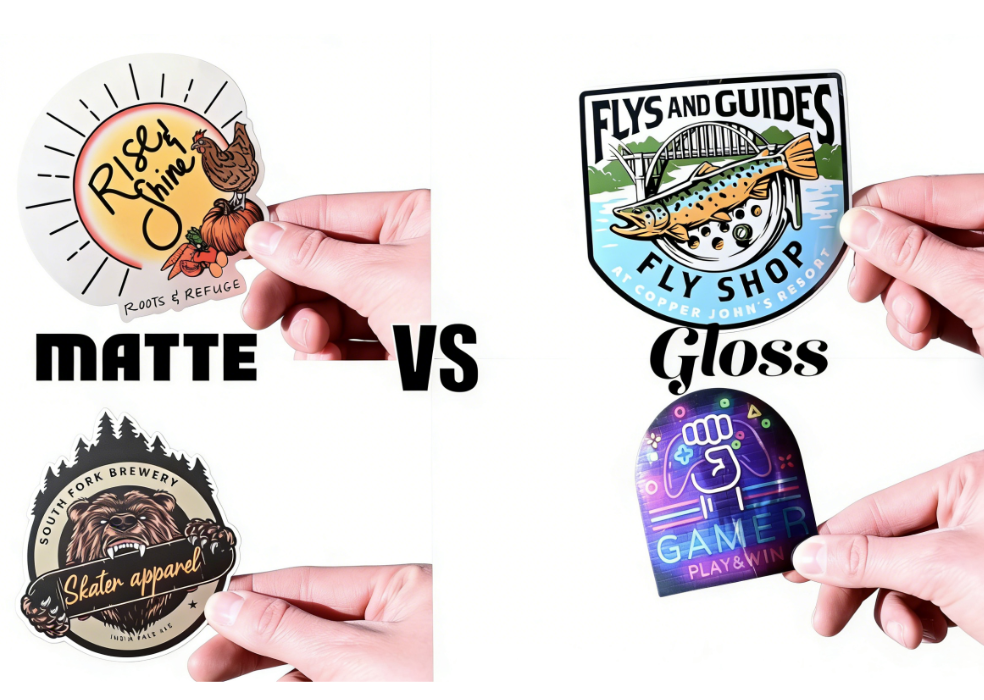
Gloss laminate: Adds a thick, shiny layer that enhances color contrast and provides excellent scratch and water resistance. Great for products that will be handled frequently.
Matte laminate: Adds a soft-touch, non-glare finish that resists fingerprints and gives a luxurious, understated feel. It also hides minor surface imperfections better than gloss.
UV laminate: Specifically formulated to block ultraviolet light. Essential for outdoor stickers that need to resist fading over years of sun exposure.
Digital Inkjet: Best for short runs and high detail with no plate costs. Pigment-based inks offer better UV resistance than dye-based inks. This is what enables no-minimum-order flexibility.
Screen Printing: The go-to for solid colors, metallic inks, and high-volume runs. It lays down a thicker ink layer that is more durable and opaque than digital, especially for white ink applications on clear materials.
White Ink Underprinting: Critical for clear stickers. Standard CMYK inks are translucent. Without a layer of white ink underneath, your design will disappear when applied to dark surfaces like glass bottles or aluminum cans.
Understanding what drives the price up helps you budget smarter. It’s rarely just the “size” that matters.
Tooling (Die Charges): For custom shapes, a rotary die (for roll stickers) or a flatbed die (for sheets) is required. These are one-time setup costs. Kiss-cut sheets often have higher setup costs than simple roll stickers due to the complexity of the sheet layout.
Material Gauge (Thickness): A thicker vinyl (e.g., 4mil vs. 2mil) costs more and feels premium, but it is also harder to conform to tight curves. Thinner materials are cheaper and more flexible but feel flimsy.
Run Length: Digital printing has no minimum order but a higher per-unit cost. Flexographic or screen printing has high setup costs but the per-unit price drops dramatically at high volumes (usually 5,000+ units).
Post-Press Finishing: Lamination, foil stamping, and intricate die-cutting add labor and material waste, increasing the final price.
Format: Roll stickers require specialized equipment for slitting and rewinding, making them more expensive for small runs than sheet stickers, but far cheaper in high-volume packaging workflows.
Choosing the right sticker isn’t an art; it’s a process of elimination. Use this 4-step logic framework to narrow your options.
Step 1: Analyze the Application Surface
Is the surface smooth, textured, or porous? For low-surface-energy plastics (like untreated polypropylene bottles), you must use a high-tack adhesive. For porous cardboard, a paper sticker with a strong adhesive often works better than a vinyl sticker, which may pucker over time.
Step 2: Audit the Lifecycle Environment
Will this sticker face:
Moisture/Chemicals? → Vinyl or PET with permanent adhesive and laminate.
UV Light? → Vinyl with UV-resistant inks or laminate.
Abrasion? → Thick laminate (gloss or matte) is mandatory.
Heat (e.g., dishwasher)? → Polyester (PET) with a thermal-resistant adhesive is required; vinyl will usually fail.
Step 3: Define the Lifespan & Removal Plan
Days to Months (Promos): Paper or removable vinyl. Low cost, easy removal.
Years (Branding): Cast vinyl with permanent adhesive and laminate.
Indefinite (Asset Tags): Polyester (PET) with high-temp permanent adhesive.
Step 4: Match Format to Workflow
Hand Application (Few units/day): Sheets or kiss-cut sheets are easy to manage.
High-Volume Packaging (Hundreds/day): Rolls are essential for speed and consistency, especially if you use a label applicator machine.
We know that navigating the complexities of adhesives, laminates, and tooling can feel like learning a new language. That’s where we come in. At StickerForgeco, we don’t just print stickers; we engineer custom labels and stickers to match your exact operational needs—without the friction of traditional manufacturing.
We’ve built our model around the realities of modern business. You shouldn’t have to order 10,000 units just to test a new product launch, and you shouldn’t have to wait three months for a reorder. Our service is structured to give you the agility of an in-house print shop with the pricing power of a global manufacturer.
Here is what makes us different:
No Minimum Order (Digital Printing): We leverage state-of-the-art digital presses to produce premium, durable stickers with zero minimum quantity. Whether you need 50 stickers for a local event or 500 for a test market, we bring the same quality to every order. No waste, no excess inventory—just exactly what you need, when you need it.
Factory Direct Pricing (Save 30%): By manufacturing in-house, we eliminate the middleman markups common in the print brokerage industry. You get wholesale pricing on every order, whether it’s a single sheet or a bulk roll. We pass the savings of our streamlined supply chain directly to you.
9-Day Global Delivery: We understand that speed to market is critical. Our optimized production workflow and logistics network ensure that your custom stickers—from proof approval to your doorstep—arrive in just 9 business days globally. Tight deadline? We’ve got you covered.
We also specialize in industry-specific solutions. Whether you need high-chemical-resistance labels for the cosmetics industry, freezer-grade stickers for food logistics, or durable decals for the automotive sector, StickerForgeco provides the technical expertise to ensure your stickers perform perfectly in their specific environment. We treat every project as a partnership, ensuring your vision is executed with precision and speed.
Q: What’s the difference between a “kiss-cut” sheet and a “die-cut” sticker?
A: A die-cut sticker is cut completely through the material and liner, resulting in a single, individual sticker. A kiss-cut sheet cuts through the top layer (the sticker material) but leaves the paper liner intact, allowing multiple stickers to remain on a single backing sheet. Kiss-cut sheets are ideal for handouts with multiple designs, while individual die-cuts are better for automated application or single-item use.
Q: Can I put vinyl stickers on my car windows?
A: Yes, but choose wisely. For permanent exterior application, use cast vinyl with a permanent adhesive and a UV laminate. For interior application (inside the glass), a standard vinyl with permanent adhesive works fine. Avoid using removable adhesive on exterior windows, as heat and sun can make it difficult to remove later.
Q: What’s the difference between glossy and matte vinyl stickers?
A: The choice between a vinyl sticker glossy and a vinyl sticker matte comes down to visual preference and function. Glossy vinyl stickers have a high-sheen, reflective surface that makes colors pop and is great for retail packaging where you want to grab attention. Matte vinyl stickers offer a soft, non-glare finish that feels premium, hides fingerprints well, and is ideal for minimalist branding or text-heavy designs. Both are durable and waterproof—it’s really about the look and feel you want for your brand.
Q: Are waterproof stickers the same as weatherproof stickers?
A: Not exactly. Waterproof means the material and ink won’t disintegrate when wet. Weatherproof includes waterproofing but also adds UV resistance to prevent fading from sunlight and adhesive stability to handle temperature fluctuations (from freezing cold to scorching heat). For outdoor use, always request weatherproof, not just waterproof.
Q: How do I prepare my artwork for custom shapes?
A: For a custom die-cut shape, you need to provide a vector file (AI, PDF, or SVG) with a separate cut line (usually in a spot color named “CutContour”). Keep all critical text and design elements at least 0.125 inches (3mm) away from the cut line to prevent them from being trimmed off. If you don’t have a vector file, our design team at StickerForgeco can help create one from your high-resolution artwork.






 +8618128095554
 sales@stickerforgeco.com
 +8618128095554