
Get bulk orders for 30% less than local suppliers, plus free samples.
Get bulk orders for 30% less than local suppliers, plus free samples.
In the world of product packaging and branding, every detail matters. From the texture of the packaging to the font on the tag, each element contributes to the story your brand tells. Among the most crucial, yet often overlooked, decisions is the choice of your product label. It is the silent salesperson on your shelf, the first point of physical contact between your customer and your brand.
When it comes to creating a sophisticated, modern aesthetic, two contenders often rise to the top: Matte Silver Labels and Matte Labels. At first glance, they may seem similar—both offer a non-glossy, subdued finish that exudes elegance. However, the subtle distinction between a simple matte finish and a matte metallic sheen can dramatically alter the perception of your product. One whispers understated luxury, while the other speaks of sleek, modern technology.
Choosing incorrectly can lead to a mismatch between your brand identity and your product's presentation. This guide will demystify these two popular label types, exploring their unique characteristics, ideal applications, and key differences, ensuring that your next custom order makes precisely the impact you intend.
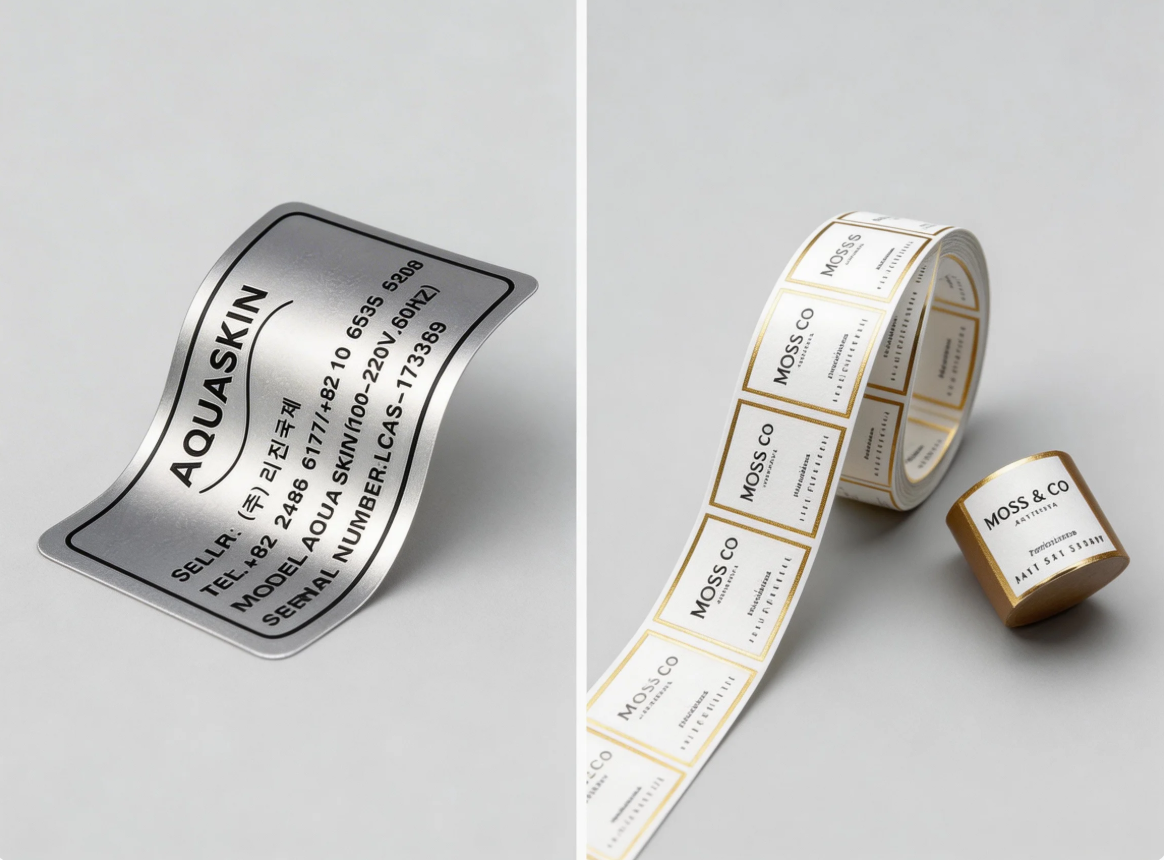
A Matte Silver Label is a type of label crafted from a metallic-based material—such as polyester (PET) or specialized coated paper—that features a non-reflective, matte finish . Unlike its glossy counterpart, which shines brightly under light, a matte silver label possesses a soft, muted sheen. It retains the cool, sleek appearance of silver but without the distracting glare .
The "matte" aspect refers to the surface coating, which diffuses light rather than reflecting it directly. This creates a smooth, flat visual that feels incredibly sophisticated and modern. The silver base provides a subtle luminosity that makes colors printed on top of it—like blacks, whites, or spot colors—appear to pop with contrast and depth.
Matte silver labels are prized not just for their beauty but also for their robust performance characteristics. Here are the standout features:
Non-Reflective Surface: The primary feature is the elimination of glare. This makes the label incredibly easy to read under direct lighting, whether on a retail shelf or a sunlit job site .
Premium Aesthetic: The combination of a metallic base and a soft finish conveys a sense of luxury, sophistication, and high-end quality. It suggests that the product inside is premium and worth a closer look .
Excellent Durability: Often made from materials like PET (polyester), matte silver labels are highly resistant to tearing, abrasion, moisture, chemicals, and extreme temperatures. This makes them suitable for both indoor and harsh outdoor environments .
Fingerprint Resistant: The matte finish does a far better job at hiding smudges and fingerprints compared to gloss or untreated metallic surfaces, ensuring your product looks pristine on the shelf .
High Contrast for Text: The silver backdrop provides an excellent canvas for dark or bold-colored text, ensuring maximum readability for important information, barcodes, and serial numbers .
A Matte Label refers to any label (typically paper or synthetic) that has a dull, non-glossy finish. The term "matte" describes the coating applied to the surface of the material. This coating scatters light, resulting in a flat, smooth texture that feels soft to the touch .
Unlike matte silver labels, standard matte labels do not have a metallic base. They are usually white, kraft, or clear with a matte overlaminate or coating. This makes them the go-to choice for brands seeking an organic, rustic, or minimalist look. The absence of shine allows the design and typography to take center stage without any distracting reflections.
Matte labels offer a distinct set of benefits that make them a staple in the packaging industry:
Subdued and Natural Look: Matte labels offer a gentle, understated appearance that is often associated with authenticity, craftsmanship, and organic products. They feel less "commercial" than their glossy counterparts .
Superb Readability: Just like matte silver, standard matte finishes eliminate glare, making text-heavy labels, warnings, and nutritional information easy to read in any lighting condition .
Easy to Write On: The porous, non-slick surface of a matte label accepts pen, marker, and pencil very well. This is ideal for applications requiring hand-written information like date stamps, batch numbers, or pricing .
Tactile Softness: The texture of a matte label is pleasant to touch, adding a layer of sensory experience to the product that a slick, glossy finish cannot replicate.
Versatile and Cost-Effective: Matte paper labels are often a more economical choice for short-term applications, indoor products, and businesses looking for a high-end look without the premium cost of specialty materials.
Thanks to their durability and upscale appearance, matte silver labels are the preferred choice for a wide range of high-end and industrial applications :
Electronics and Appliances: Ideal for serial number plates, warning labels, and brand badges on laptops, adapters, kitchen appliances, and audio equipment where a technical, sleek look is required.
Cosmetics and Perfumes: Used on high-end skincare bottles, perfume vials, and makeup packaging to convey luxury and sophistication.
Beverage and Spirits: Perfect for premium wine bottles, craft beer, and artisanal spirits where a metallic yet refined look elevates the perceived value.
Industrial and Safety Labels: Applied to machinery, tools, and chemical containers where resistance to heat, abrasion, and chemicals is necessary, and readability under harsh lighting is critical .
Asset Tags: Used by companies to track IT equipment, office furniture, and industrial assets due to their durability and resistance to wear .
Matte labels shine in environments where a gentle, hand-crafted, or highly readable aesthetic is the priority :
Organic and Natural Food Products: Ideal for labeling jars of honey, organic coffee bags, or artisan bread wrappers, reinforcing a message of natural authenticity.
Wine and Craft Spirits: While silver is for glamour, standard white or kraft matte labels are a staple for wineries and distilleries aiming for a traditional, rustic, or vineyard-style look.
Home Goods and Candles: Used on glass jars, tins, and containers for candles, soaps, and diffusers to create a cozy, warm, and inviting feel.
Shipping and Logistics: The go-to choice for address labels, barcode labels, and inventory tags because they are easy to scan and write on .
Stationery and Branding: Applied to notebooks, gift boxes, and custom mailers for a clean, professional, and minimalist brand presentation.
To help you visualize the differences at a glance, here is a detailed comparison table:
| Feature | Matte Silver Label | Matte Label (Standard) |
|---|---|---|
| Appearance | Metallic, sleek, modern, and luminous with a cool tone. | Flat, solid color (usually white/kraft), organic, and rustic. |
| Surface Finish | Non-reflective, smooth with a metallic substrate. | Non-reflective, smooth, or textured paper feel. |
| Light Reflection | Minimal glare; diffuses light softly. | No glare; completely diffuses light. |
| Durability | High (especially PET) – resistant to water, chemicals, and tearing. | Moderate to Low (paper) – best for indoor, dry environments. |
| Best For... | High-tech, luxury, industrial, and long-lasting applications. | Organic, rustic, artistic, and short-term indoor applications. |
| Tactile Feel | Smooth, cool to the touch. | Soft, warm, and sometimes textured. |
| Price Point | Generally higher due to metallic materials. | Generally more cost-effective. |
| Writing Ease | Moderate (requires specific pen types). | Excellent (easily accepts pencil/pen). |
Making the final decision boils down to a careful analysis of your brand identity, product environment, and functional needs. Ask yourself these key questions:
1. What is Your Brand Identity?
Choose Matte Silver if your brand is modern, luxurious, technological, or performance-driven. Think skincare serums, gaming peripherals, or high-end spirits.
Choose Standard Matte if your brand is earthy, organic, artisanal, or minimalist. Think farmer's market jams, organic teas, or handmade soaps.
2. Where Will the Product Be Used?
Choose Matte Silver if the product will face moisture, temperature changes, or rough handling (e.g., a water bottle, outdoor tool, or industrial machine) .
Choose Standard Matte if the product lives in a controlled, dry environment like a pantry, office desk, or bathroom shelf.
3. What is the Primary Goal of Your Label?
Choose Matte Silver if you need the label to stand out with a subtle "premium" glow and provide high durability.
Choose Standard Matte if you need maximum readability for dense text, plan to hand-write information, or want a soft, approachable look .
4. What is Your Budget?
Choose Matte Silver if you have room in your budget for a premium material that doubles as a durability feature.
Choose Standard Matte if you are looking for a high-quality, professional look that is cost-effective for smaller batches or indoor products.
When it comes to custom matte label customization, StickerForgeco stands out as a trusted partner for businesses of all sizes—here’s why:
• Responsive service & fast lead times: Our team supports you throughout the process, and we deliver on time without compromising quality.
Quality Guaranteed – Satisfaction guaranteed by our quality promise.
Q1: Are matte silver labels more durable than regular matte paper labels?
Generally, yes. Matte silver labels are often made from synthetic materials like Polyester (PET), which are inherently resistant to water, tearing, and chemicals. Standard matte labels are frequently paper-based and best suited for indoor, dry applications .
Q2: Can I print variable information, like barcodes, on both types of labels?
Absolutely. Both matte and matte silver finishes are excellent for barcodes and text because they eliminate glare that can confuse scanners. However, for thermal transfer printing, you must ensure the label material is compatible with your printer ribbon .
Q3: Will a matte silver label look like shiny metal?
No. The "matte" in its name is key. It has a metallic luster but not a reflective, mirror-like shine. It offers a subtle, sophisticated sheen that is very on-trend for modern packaging .
Q4: Is it possible to write on matte silver labels with a permanent marker?
While possible, it can be more challenging than on paper matte labels due to the non-porous nature of the synthetic material. We recommend testing specific markers (like permanent or metallic markers) to ensure the ink adheres and dries properly .
Q5: Which option is better for a product that will be used outdoors?
Matte Silver, specifically one made from a material like Polyester (PET), is the superior choice. It offers the UV, moisture, and temperature resistance required to survive outdoors without fading or peeling.




 +8618128095554
 sales@stickerforgeco.com
 +8618128095554