Get bulk orders for 30% less than local suppliers, plus free samples.
Get bulk orders for 30% less than local suppliers, plus free samples.
Let’s start with an uncomfortable truth: most wine is bought long before it is opened. The consumer stands in a store aisle, under fluorescent lights, surrounded by hundreds of competitors. They cannot taste your wine. They cannot smell your wine. All they can do is look at your bottle — and the single most visible element on that bottle is the label.
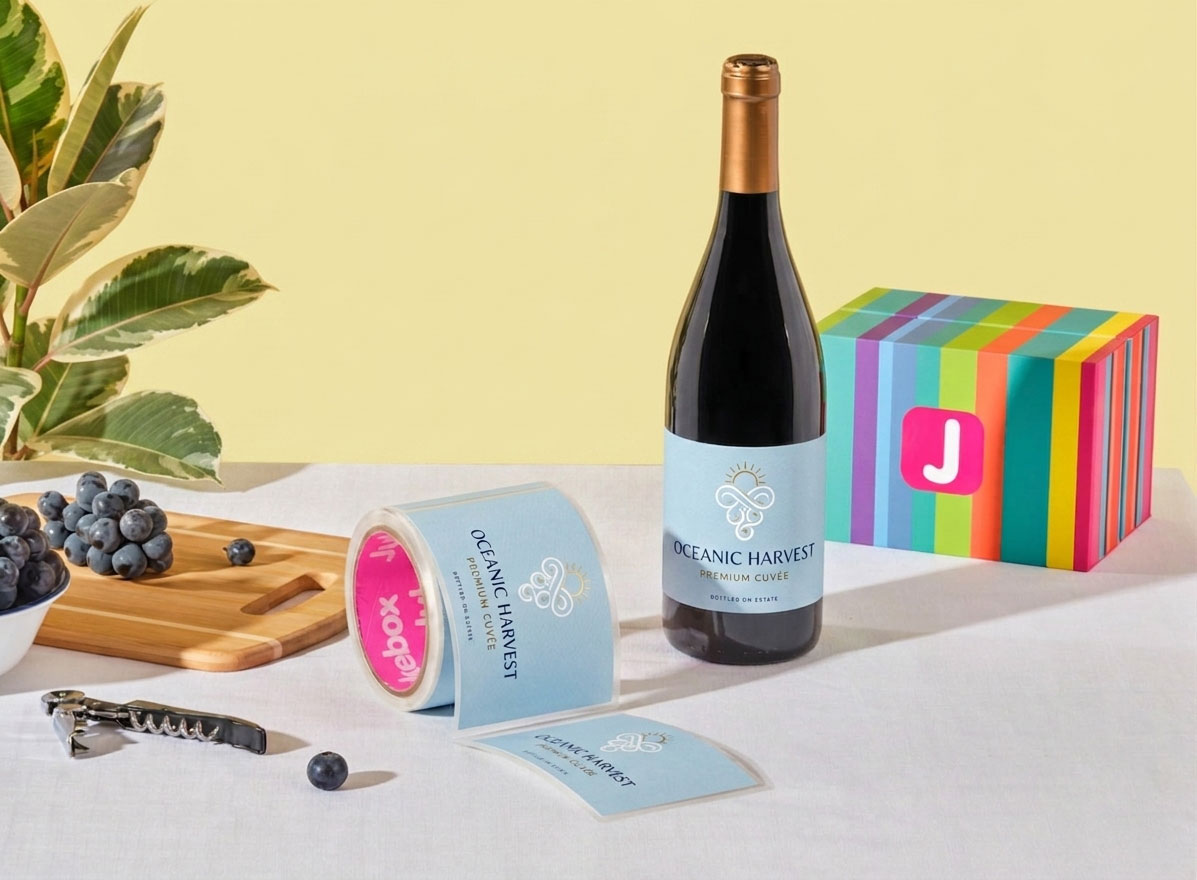
If your label looks cheap, feels flimsy, or fails to communicate quality within three seconds, your wine — regardless of what is inside — has already lost. This article goes deep into the science, strategy, and practical realities of premium wine labels. You will learn what they are, why they matter, how they function, common mistakes to avoid, and how to choose a supplier that treats your brand as seriously as you do.
A wine label is the printed information carrier attached to a wine bottle. But it is far more than a simple sticker.
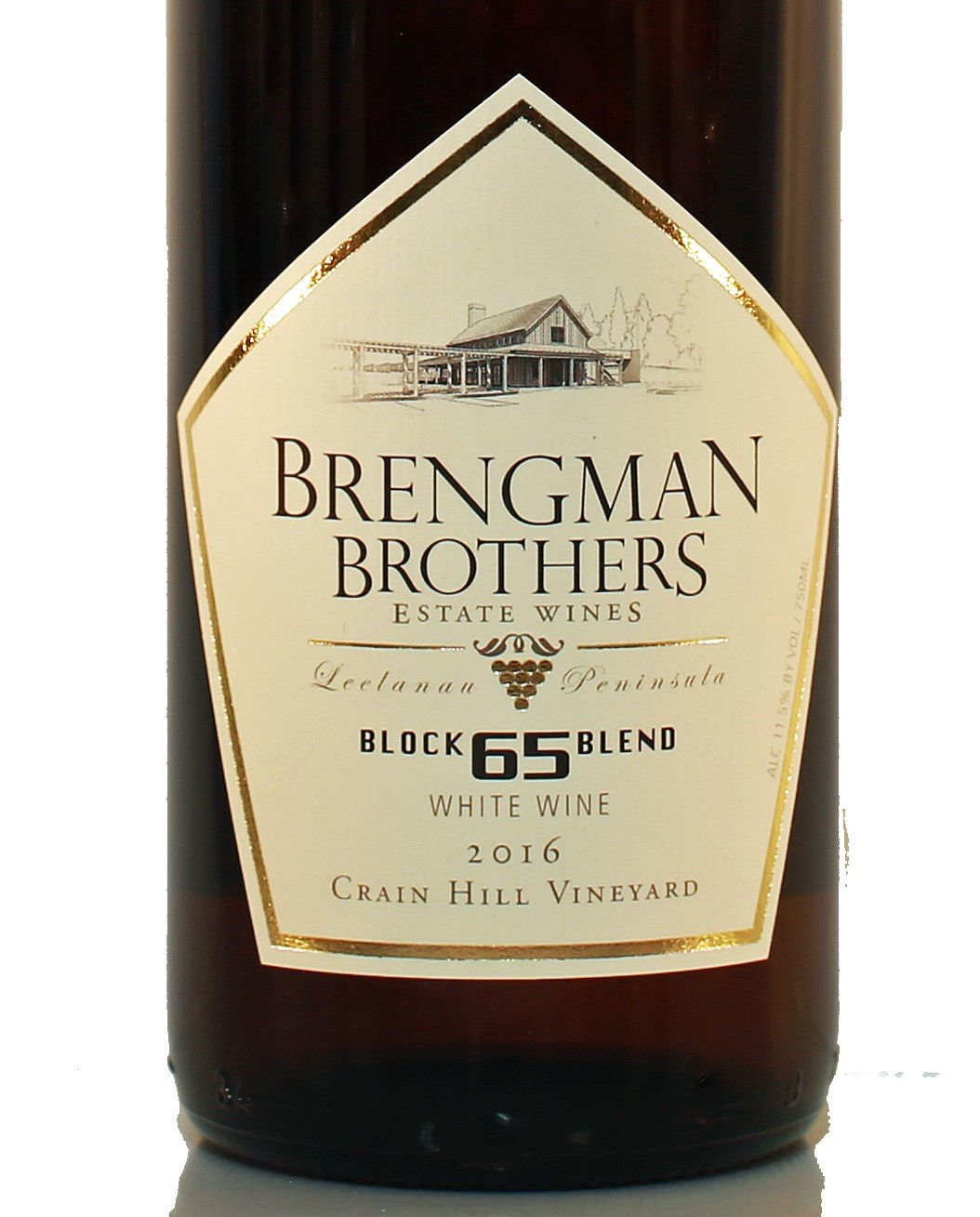
In functional terms, a wine label serves four purposes: identification (what the wine is and who made it), differentiation (standing out on a crowded shelf), storytelling (conveying mood and brand personality without words), and protection (surviving cold storage, condensation, handling, and UV exposure).
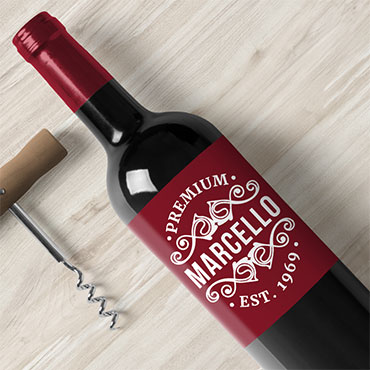
A complete wine label set typically includes:
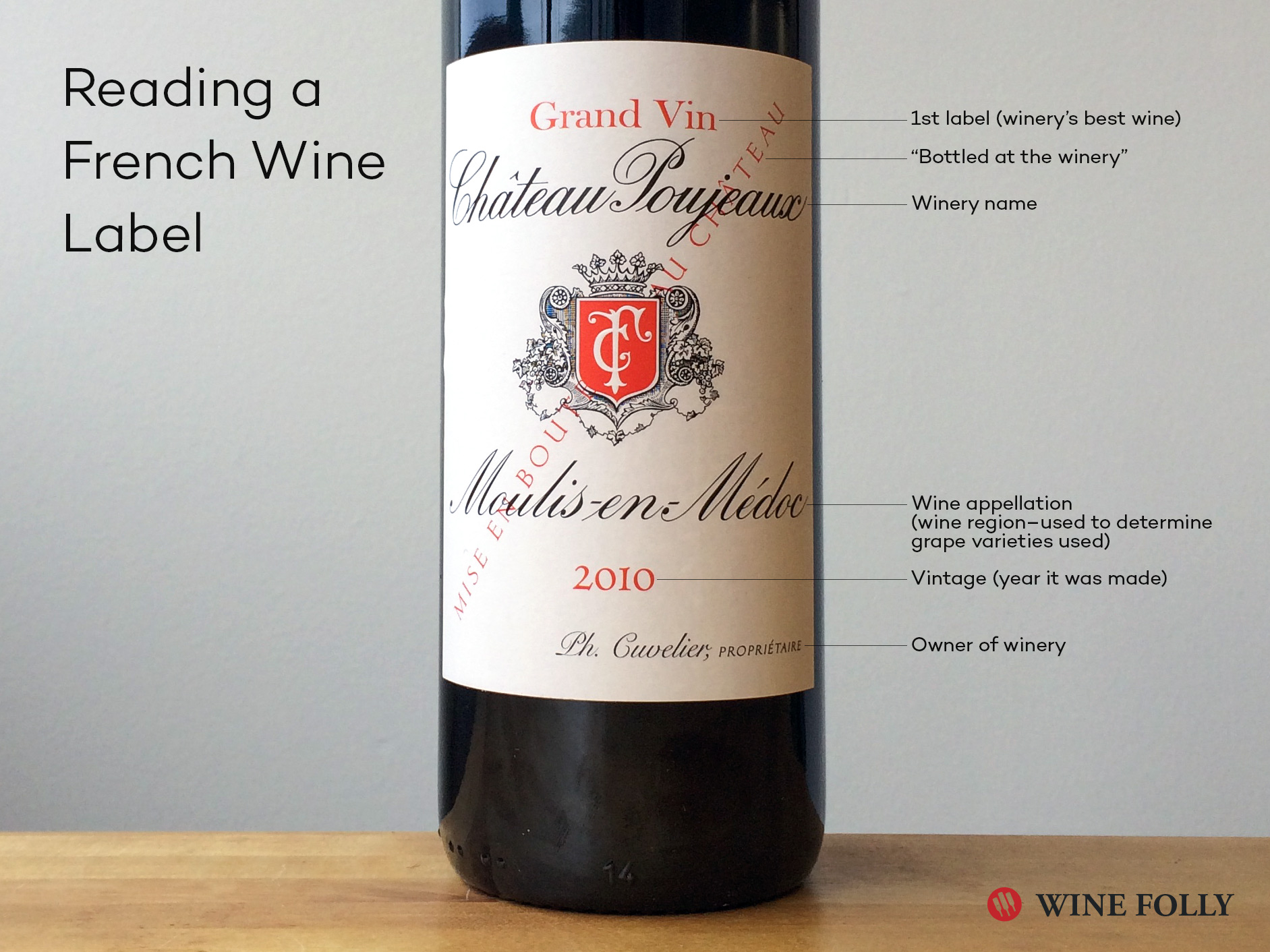
Front label – Producer name, grape variety, region, vintage, alcohol content, volume.
Back label – Tasting notes, food pairings, legal disclaimers, and importer information (especially for cross-border sales).
Neck label – Small brand reinforcement around the bottleneck.
Capsule label – Tamper evidence or sequential numbering for collectible wines.
In short, a wine label is never "just a sticker." It is a precision-engineered brand asset that must inform, persuade, survive, and comply — all at once.
Let's quantify the importance with a simple retail reality: the average consumer spends 6 to 10 seconds choosing a bottle of wine in a supermarket. For premium or specialty wine shops, the time is slightly longer — perhaps 20 to 30 seconds — but the first impression happens in the first three seconds.
During those three seconds, the shopper's brain runs a rapid, subconscious evaluation based entirely on visual cues. Research in consumer behavior (including studies published in the Journal of Retailing) shows that packaging quality directly influences perceived product quality. In wine specifically, a 2017 study by researchers at the University of Adelaide found that consumers consistently rated the same wine higher when presented in a heavier bottle with a premium label — compared to a lighter bottle with a standard label. The wine inside was identical. Only the packaging changed.
This is called signaling theory in economics. A premium label signals that the producer has invested in quality. If a winery is willing to spend more on materials and printing, the reasoning goes, they are likely also willing to spend more on grapes, barrels, and aging. Whether this logic holds in every case is debatable. But in the mind of the consumer, it holds almost every time.
Beyond signaling, a wine label serves three critical brand functions:
First, shelf-blocking. In competitive retail, the goal is not just to be seen — it is to be remembered. A distinctive label creates a visual anchor. When the consumer later sees that same bottle in a restaurant wine list or an online shop, they recognize it instantly. That recognition shortens the decision cycle and increases purchase probability.
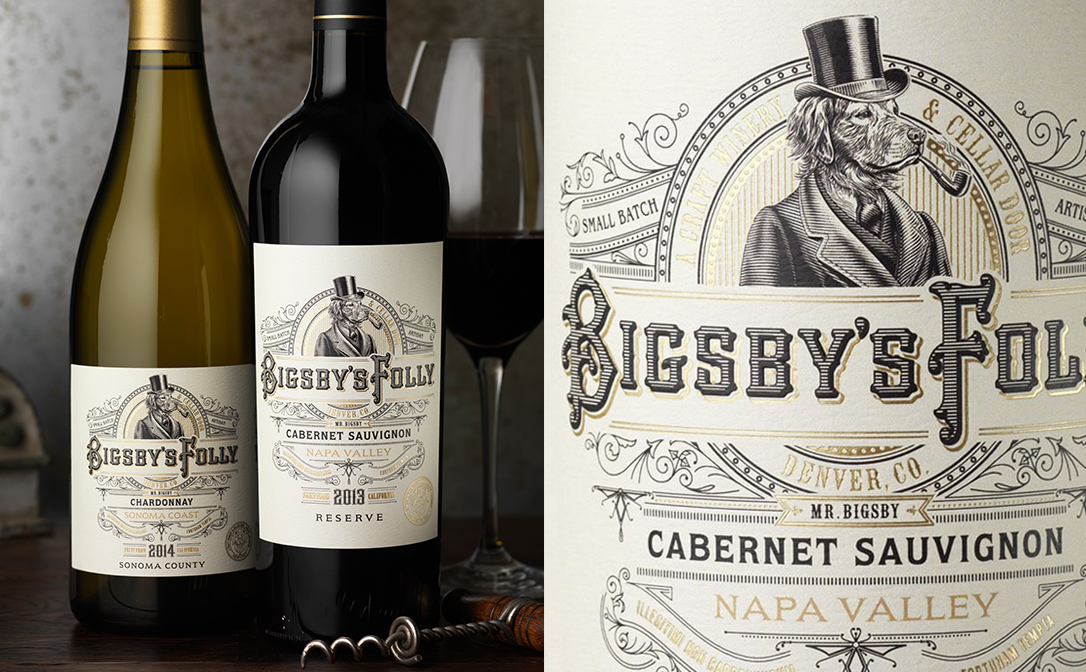
Second, price justification. A 50-dollar wine needs to look like a 50-dollar wine. Thin, glossy paper with generic clip-art graphics signals low value. Thick, textured stock with precise die-cutting and specialty finishes signals premium status. The label acts as a visual receipt for the price paid. If the label looks cheap, the consumer feels cheated — even if the wine inside is exceptional.
Third, compliance without compromise. For wineries exporting to international markets, the back label often becomes a dumping ground for ugly legal text, barcodes, and warning symbols. A premium label supplier integrates these requirements seamlessly into the design, so compliance does not ruin aesthetics.
In short: your label is not packaging. It is silent salesmanship. And like any salesman, if it looks untrustworthy or unprepared, the customer walks away.
What separates a truly premium wine label from a standard one? The differences are both visible and invisible. Below is a detailed breakdown of the seven essential features.
| Feature | Standard Label | Premium Label | Why It Matters |
|---|---|---|---|
| Adhesive type | General-purpose permanent | Freezer-grade acrylic or specialty cold-resistant | Wine is stored cold. Standard glue turns brittle and fails at 5–10°C. |
| Moisture resistance | Poor to moderate | High (film-based or treated paper) | Condensation from ice buckets or coolers causes paper to warp and edges to curl. |
| UV stability | Not specified | UV-stable inks and coatings | Retail shelf lighting fades cheap inks within weeks. Premium labels stay vibrant for years. |
| Tear resistance | Low (thin paper tears easily) | High (reinforced fibers or film lamination) | Bottles are handled, shipped, and polished. Thin paper shows wear immediately. |
| Die-cutting precision | ±0.5 mm tolerance | ±0.1 mm tolerance | Misaligned labels look amateurish. Precise cutting signals professional quality. |
| Substrate weight | 80–100 gsm | 120–160 gsm or more | Heavier paper feels substantial in hand. Light paper feels cheap. |
| Finish options | Gloss or matte only | Soft-touch, textured, embossed, debossed, foil-stamped, spot UV | Texture creates tactile engagement. Touching a premium label reinforces the perception of quality. |
Premium suppliers also provide full traceability. Each batch of labels is logged by material lot number, adhesive batch, and print run. If a problem appears weeks or months later, the cause can be traced and corrected immediately.
Understanding how a wine label "works" requires looking at three distinct phases: the manufacturing phase, the application phase, and the in-use phase. Each phase has its own requirements and failure modes.
A wine label begins as a digital design file. Converting that file into a physical label requires four precision steps:
Step 1 — Prepress and color management. Colors on a computer screen (RGB) are not the same as colors on paper (CMYK). Professional suppliers use spectrophotometers to calibrate their presses and produce contract proofs — physical print samples that the client approves before full production. Without this step, a deep burgundy on screen might become a dull brown on the bottle.
Step 2 — Substrate selection. The label material is chosen based on use case (cold storage? ice bucket? long aging?), design requirements (texture? metallic effect?), and application method (manual or machine labeling). Each substrate interacts differently with inks, coatings, and adhesives.
Step 3 — Printing. Depending on quantity and quality requirements, the printer uses either digital printing (short runs, fast turnaround, variable data) or flexographic/offset printing (long runs, lower per-unit cost, higher consistency). Digital printing has improved dramatically and now rivals traditional methods for many wine label applications.
Step 4 — Die-cutting and finishing. The printed roll or sheet is cut into individual labels using a sharp steel die. Finishing steps may include lamination, foil stamping, embossing, or spot UV coating. Each finishing step adds cost but also adds perceived value.
The label must be applied to the bottle — either by hand (for small wineries) or by automated labeling machine (for medium to large producers). Automated labelers fall into two main categories:
Pressure-sensitive labelers: A peel plate strips the label from its liner and applies it to the bottle as it passes. These machines run at 50–300 bottles per minute.
Roll-fed labelers: A continuous roll of labels is cut and glued in-line. Less common for premium wines but used for very high volumes.
For the label to work with a pressure-sensitive labeler, three parameters must be correct:
Label stiffness: Too floppy, and the label folds onto itself at the peel plate.
Liner thickness: Too thin, and the liner tears during unwinding. Too thick, and peel force becomes inconsistent.
Adhesive tack: Too low, and the label doesn't grab the bottle. Too high, and repositioning becomes impossible.
A premium label supplier asks for your machine model and speed before producing the labels. They will adjust material and adhesive specifications to match your equipment.
Once applied, the label must survive the real world. Common failure modes include:
Edge lifting: Adhesive fails at the label perimeter, allowing moisture or dirt to creep underneath.
Warping: Paper absorbs moisture and expands unevenly, creating wrinkles or bubbles.
Fading: UV exposure breaks down dye-based inks (pigment-based inks are far more durable).
Scratching: Soft coatings or uncoated paper shows every abrasion.
A premium label is designed to resist all four failure modes for the intended life of the bottle — whether that is three months on a retail shelf or ten years in a collector's cellar.
Wine labels can be classified by substrate material, printing process, and functional specialization. Below is a practical guide.
| Material | Feel | Best For | Limitations |
|---|---|---|---|
| Uncoated paper | Natural, slightly rough | Organic wines, rustic brands, small batches | Poor moisture resistance; shows dirt easily |
| Gloss coated paper | Smooth, shiny | Mass-market wines, sharp photo reproduction | Can look generic; scratches visible |
| Matte coated paper | Smooth, non-reflective | Mid-range to premium wines | Less tactile than uncoated or textured stock |
| Kraft paper | Brown, fibrous, textured | Eco-friendly or handcrafted positioning | Limited color reproduction; rustic only |
| Polypropylene film | Smooth or matte, plastic feel | Ice wines, high-humidity environments, long aging | Less premium tactile perception |
| Textured art paper | Linen, felt, or laid finish | Luxury wines, limited editions | Higher cost; may require special adhesives |
| Process | Run Length | Cost Per Label | Quality | Turnaround |
|---|---|---|---|---|
| Digital printing | Short (500–5,000) | Higher (no economies of scale) | Very good (modern presses) | Fast (3–7 days) |
| Flexographic (flexo) | Long (10,000+) | Lower | Good to very good | Slower (setup intensive) |
| Offset lithography | Medium to long (2,500+) | Medium to low | Excellent (sharp detail) | Moderate to slow |
Removable labels: Adhesive allows clean removal. Useful for seasonal promotions or reusable bottles (e.g., wine club members who return bottles).
Tamper-evident labels: Perforated or destructible material shows clear evidence of removal. Used for premium bottles to guarantee authenticity.
Temperature-sensitive labels: Ink changes color when the bottle reaches a certain temperature. Useful for sparkling wines or shipping verification.
Anti-counterfeit labels: Holographic foils, microtext, or QR codes with unique serial numbers. Essential for high-value wines (above $100 per bottle).
After working with hundreds of wineries and bottlers, certain mistakes appear repeatedly. Avoid these at all costs.
Standard permanent adhesives work fine at 20–25°C. But wine lives in coolers, cellars, and ice buckets. At 5–10°C, standard adhesives become brittle. Labels peel at the edges or fall off entirely. Always specify freezer-grade or cold-resistant acrylic adhesive for wine applications.
Hand-applied labels tolerate almost any material. Automatic labelers do not. A label that works on a slow rotary machine may jam a high-speed linear labeler. Provide your supplier with:
Machine make and model
Operating speed (bottles per minute)
Labeler type (pressure-sensitive or roll-fed)
Bottle diameter and curvature
Retail shelves under fluorescent or LED lighting emit UV radiation. Cheap dye-based inks fade noticeably within 4–8 weeks. A wine intended for retail needs pigment-based inks or UV-stable overcoatings. Otherwise, by the time the consumer buys it, the label may look washed out.
A label that looks perfect in a dry room may fail completely when a bottle comes out of an ice bucket. Condensation seeps into unprotected paper edges, causing curling, bubbling, or delamination. Test your label by refrigerating a bottle overnight, then placing it in room temperature and observing for 2 hours. If the label shows any edge lifting or warping, it will fail in real use.
The back label is where legal text, warnings, and barcodes live. Many wineries design the front label beautifully, then cram ugly text onto the back in a tiny font. This damages the overall brand impression. A premium supplier helps integrate back-label requirements into a clean, readable, still-attractive design — often using the same substrate and finish as the front label for consistency.
Choosing a supplier is not just about price per thousand labels. It is about finding a partner who understands the full system: design, material science, printing, adhesive chemistry, application equipment, and real-world use conditions.
Criterion 1 — Sample consistency. Request two samples produced at least two weeks apart. Compare them side by side. Are the colors identical? Die-cutting precise? Adhesive behavior consistent? Inconsistent samples indicate poor process control.
Criterion 2 — Technical questions. A good supplier asks you questions before quoting. They will want to know:
Where will the wine be stored and sold?
Will bottles go into ice buckets?
What labeling machine do you use (make and model)?
How long does the wine typically sit on retail shelves?
Do you need removable, permanent, or freezer-grade adhesive?
If a supplier quotes without asking these questions, they are guessing. Guessing leads to failures.
Criterion 3 — Emergency responsiveness. Printing presses break. Materials go out of stock. Orders get delayed. Ask potential suppliers: "If I need a rush order of 5,000 labels in 5 days, can you do it?" The answer reveals their operational flexibility.
Sustainability: Does the supplier offer recycled papers, biodegradable films, or water-based adhesives? For eco-positioned brands, this matters greatly.
Certifications: Look for FSC (Forest Stewardship Council) for paper sources, and ISO 9001 for quality management.
Data security: For variable-data labels (sequential numbers, QR codes), ensure the supplier has secure handling processes to prevent counterfeiting.
At StickerForgeco, we manufacture high-end labels and stickers for businesses across virtually every industry — food and beverage, cosmetics and personal care, household products, industrial goods, retail packaging, and beyond. Labels are our craft. Quality is our baseline.
Within the beverage world, we are proud to supply premium labels to wineries, cideries, distilleries, and beer brands as well. We understand that different beverages demand different label characteristics. A beer label that sits on a wet bar top needs different moisture resistance than a wine label that rests in a chilled cellar. A spirit label that ages on a back bar for years needs different UV stability than a limited-edition wine label designed for a single season.
Our approach is simple: we listen to your specific application, then recommend the optimal combination of material, adhesive, finish, and printing process. We do not force a one-size-fits-all solution. Instead, we draw from our broad experience across industries to find what works best for your bottle, your brand, and your use conditions.
What we offer specifically for wine brands:
Material expertise: From textured art papers and natural kraft stocks to waterproof films and eco-friendly recycled substrates. We help you match the tactile feel to your brand positioning.
Cold-resistant adhesives: Engineered for refrigerated storage, ice buckets, and high-humidity wine cellars. Your labels stay attached and flat — no curling, no peeling.
Specialty finishes: Soft-touch lamination, foil stamping (gold, silver, rose, holographic), embossing and debossing, spot UV, screen printing, and custom die-cutting.
Short-run digital printing: Perfect for small vintages, direct-to-consumer releases, or test batches. Order exactly what you need — no waste, no overstock.
We also provide free material swatch kits, press proofs before full production runs, and technical support to ensure your labels run smoothly on your own bottling equipment — whether you apply them by hand or use a high-speed automatic labeler.
Your wine is crafted with care. Your label should be too.
Reach out to StickerForgeco for a quote or a sample pack — and see how the right label elevates everything you bottle.
Q1: Can wine labels survive immersion in an ice bucket?
Yes — but only if they are specifically designed for it. Standard paper labels with general-purpose adhesive will curl, bubble, or fall off within minutes. A premium label uses waterproof film (polypropylene) or treated paper combined with cold-resistant, moisture-resistant acrylic adhesive. Always specify the ice bucket use case to your supplier before printing.
Q2: What is the minimum order quantity for custom wine labels?
It depends on the printing method. Traditional flexographic or offset printing typically requires 10,000+ labels to be economical. However, digital printing — which StickerForgeco uses for short runs — has no minimum order. You can order 500 labels for a small test batch or limited release. The per-label cost is higher than massive runs, but you avoid waste and inventory holding costs.
Q3: How do I know if a label will work with my automatic bottling line?
Three factors determine compatibility: label stiffness (not too floppy), liner thickness (consistent peel force), and adhesive tack (grabs quickly without slipping). Provide your supplier with your labeler make, model, and operating speed. A professional supplier will either confirm compatibility or recommend adjustments. Better suppliers will send a test roll for you to run on your line before committing to the full order.
Q4: Can I get waterproof labels that still look and feel like premium paper?
Yes. Synthetic paper materials — such as YUPO or polypropylene films with matte coatings — closely mimic the look and feel of uncoated or matte paper while being fully waterproof and tear-resistant. They can be printed with offset or digital presses and accept most finishing processes (foil, embossing, soft-touch lamination). The tactile difference is minimal to the average consumer, but the durability difference is enormous.

 +8618128095554
 sales@stickerforgeco.com
 +8618128095554